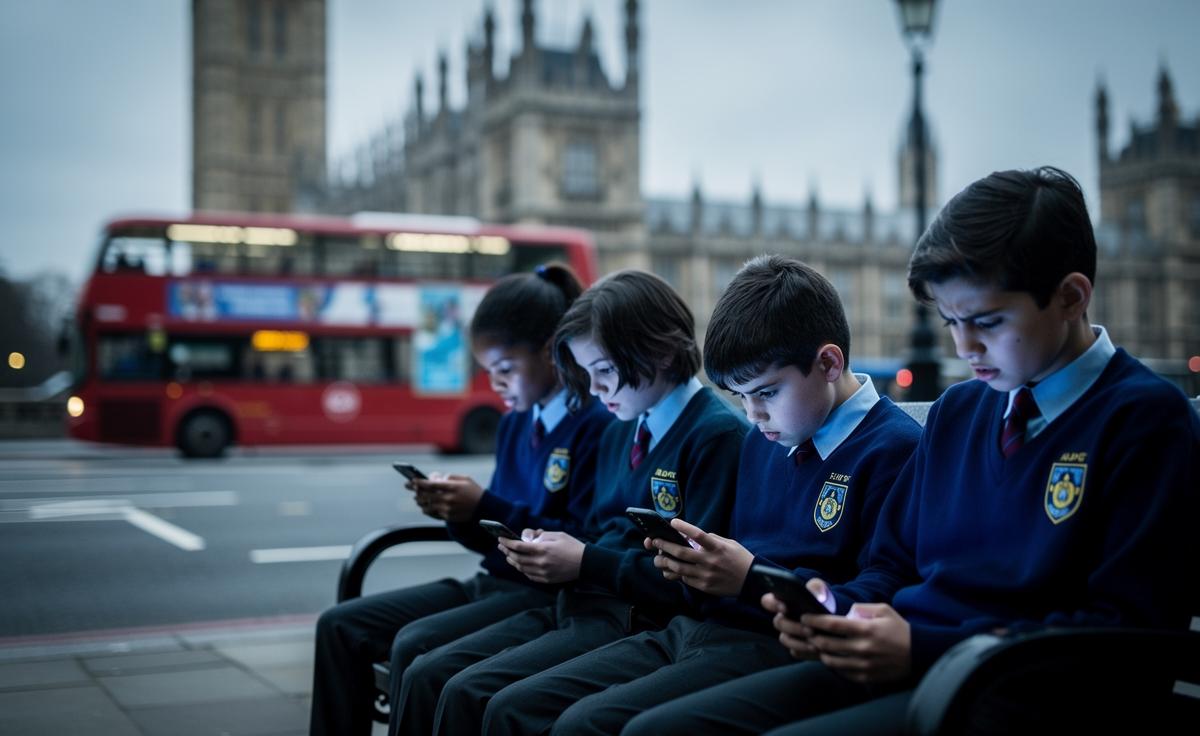
In a nutshell
- 🔔 The House of Lords backed an under-16 social media ban by 261–150 (majority 111), sending the proposal to the House of Commons for scrutiny.
- 🗳️ The cross-party amendment to the Children’s Wellbeing and Schools Bill cites mounting evidence of harm from teens spending five to seven hours a day on social media.
- 🕒 A three-month consultation led by Liz Kendall will assess the ban, overnight curfews, and anti-doom-scrolling measures, with findings expected in the summer.
- ⚖️ Supporters including Lord Nash, Baroness Kidron, and Baroness Benjamin demand swift action, while Lord Clement-Jones warns a blanket ban could stunt digital literacy.
- ✍️ A public letter signed by Hugh Grant and Esther Ghey urged action; ministers pledged a future amendment empowering the Secretary of State to enact consultation outcomes.
The UK’s House of Lords has fired the starting pistol on a potentially sweeping change to children’s online lives, backing an under-16 social media ban by 261 votes to 150. The cross-party move, framed as an “Australian-style” model, now heads to the House of Commons amid intensifying lobbying and public scrutiny. The government suffered a meaningful defeat in the Lords, yet simultaneously opened a three-month consultation on curfews, “doom-scrolling” controls, and the headline ban itself. Parents’ frustrations were a recurring theme: many feel powerless against algorithmic feeds and the scale of content their children face daily. The proposal’s momentum is undeniable. So are the questions it raises about enforcement, digital literacy, and the role of Big Tech in shaping children’s attention and wellbeing.
What the Lords Voted For and Why It Matters
Peers backed a cross-party amendment to the Children’s Wellbeing and Schools Bill that would prohibit mainstream social media access for those under 16, while opening the door to complementary measures such as overnight curfews and tools to reduce doom-scrolling. The vote—261 in favour, 150 against—signals a rare alignment across party lines on online harms, and reflects the perception that parents have been left to shoulder an impossible burden. The amendment’s passage in the Lords forces the issue onto the Commons agenda and raises the stakes for ministers who recently launched a “short, sharp” consultation. That process, confirmed by Technology Secretary Liz Kendall, will weigh benefits and drawbacks, and report back in the summer.
Supporters cast this as a necessary reset. They argue social platforms were never designed for children, and that relentless feeds, push notifications, and recommendation engines drive use far beyond healthy limits. Opponents warn that a blanket ban risks replacing one problem with another: a digitally sheltered childhood followed by a sudden flood of content at 16, without the resilience and literacy to navigate it. Whatever the outcome, the vote has moved the debate squarely from theory to legislation.
| Item | Detail |
|---|---|
| Lords vote | 261–150 (majority 111) |
| Measure | Amendment to Children’s Wellbeing and Schools Bill to ban social media for under-16s |
| Consultation | Three months, launched this week; findings expected in the summer |
| Ministerial promise | Future amendment to let the Secretary of State enact consultation outcomes |
| Notable supporters | Lord Nash, Baroness Kidron, Baroness Benjamin, Hugh Grant, Esther Ghey |
| Key concerns | Digital literacy, enforcement, and tech industry influence |
The Case for the Ban: Safety, Pressure on Parents, and Momentum
Champions of the policy say the evidence is overwhelming. Lord Nash, the Conservative former schools minister who proposed the amendment, told peers that teenagers are spending “five, six, seven or more” hours a day on social media and that the resulting harms are now plainly documented. In his view, the government’s consultation risks being a delay tactic at the very moment decisive action is needed. That frustration was echoed by Baroness Kidron, the filmmaker and children’s rights advocate, who warned that a consultation can become “the playground of the tech lobbyist,” and that political inaction remains the industry’s most effective shield.
Supporters say the debate is not abstract. It is about daily harms—self-harm material, misogyny, extremism, addictive design—that parents cannot reasonably control without help. Baroness Benjamin, a Liberal Democrat peer and vice-president of Barnardo’s, framed the moment starkly: “Now is the time for us to act decisively because each minute we wait more damage is done to our children’s wellbeing.” A high-profile letter backing the amendment was signed by Hugh Grant and Esther Ghey, the mother of Brianna Ghey, whose murder in 2023 shocked the nation. It argued: “Children are being served up extreme content without seeking it out. Parents know this has to stop.” For advocates, the Commons now has both a mandate and a moral imperative.
Concerns and Practical Challenges: Digital Literacy, Enforcement, and Industry Power
Sceptics warn that a blunt ban could backfire. Lord Clement-Jones, for the Liberal Democrats, argued that shielding children until 16 might produce a “sterile digital environment” and leave them ill-prepared for the moment they gain access. The dilemma is real: how to reduce harm without stunting literacy. Critics fear that switching from zero to full exposure at a birthday risks shock, not safety. There are also thorny enforcement questions—age assurance mechanisms, privacy trade-offs, and how platforms will verify identity without surveilling families. The feasibility of consistent, rights-respecting enforcement will define success or failure.
Another concern is displacement. If mainstream platforms shut under-16s out, will children migrate to less regulated spaces where harms are harder to track? Policymakers must consider graduated access, curated educational content, and stronger safeguards aligned with the UK’s existing framework under the Online Safety Act. Age-appropriate design, friction for late-night use, and default-safe settings could run alongside a ban to avoid a cliff-edge. The government insists it will act “robustly,” but the shape of that action—and whether it balances liberty, privacy, and protection—remains hotly contested.
What Happens Next: Commons Scrutiny, Consultation Outcomes, and Possible Timetable
The bill now moves to the House of Commons, where MPs will interrogate the amendment’s scope, proportionality, and enforceability. In parallel, the government’s three-month consultation—promised by Liz Kendall as “short and sharp”—will gather evidence on a full ban, curfews, and anti-doom-scrolling measures. Ministers have pledged a future amendment empowering the Secretary of State to enact the consultation’s conclusions. If the Commons accepts that enabling power, the pathway to swift secondary legislation opens, potentially compressing timelines once findings land in the summer.
Expect intense lobbying. Platforms will argue for literacy, parental tools, and design changes; campaigners will push for a clear legal bar, enforced by robust age checks. Schools, clinicians, and parents’ groups will contest the details—exemptions for messaging, the treatment of educational platforms, and penalties for non-compliance. A staged implementation is plausible, with lead-in periods and independent oversight. The government, for its part, says it will “work with experts, parents and young people” to get the approach right. What emerges could reshape the UK’s digital childhood for a generation.
Britain stands at a digital crossroads. The Lords have applied pressure; the Commons must now test the policy’s rigour, practicality, and fairness. Families want clarity. Tech firms seek workable rules. Schools need guidance they can deliver without overreach. Whether the final model is a full ban, a phased system with curfews, or a hybrid built on tougher design standards, the political cost of inaction has risen sharply. As the consultation begins and the evidence stacks up, where do you believe the line should be drawn between children’s protection and preparation for the online world we know they will inherit?
Did you like it?4.4/5 (25)