In a nutshell
- 🛋️ Why dogs love sofas: comfort, warmth, your scent, elevated proximity; behaviour reinforced by allowed naps and your attention as accidental rewards—it’s about reinforcement history, not defiance.
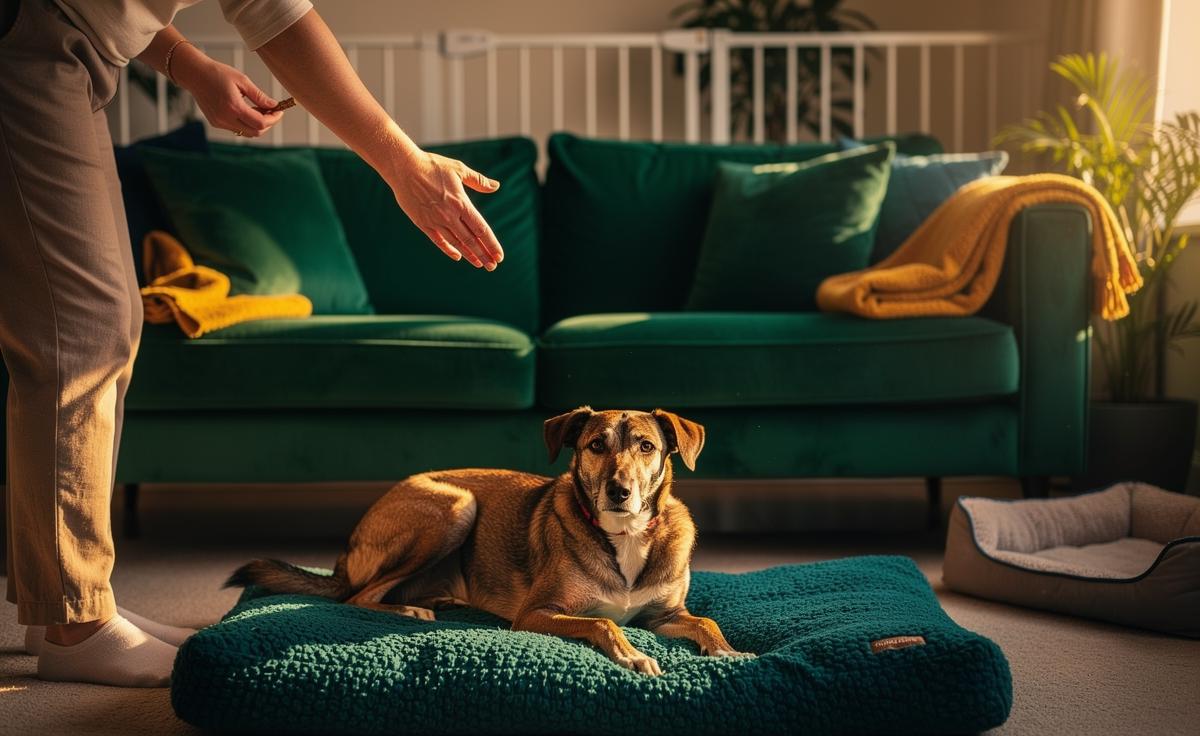
- 🔁 Simple training shift: replace “Off!” battles with Differential Reinforcement of Incompatible behaviour (DRI)—create a relaxation station (mat/bed) and pay generously for “settle” so the mat beats the couch.
- 🧭 Practical protocol: short, frequent sessions; add the cue “On your mat”; reward duration; manage access (gates/throws/leads); introduce distractions gradually; fade treats to intermittent reinforcement.
- ⚖️ Sofa policies—Open Access, Invitation-Only, or No Sofa: choose one for clarity; balance bonding with hygiene; use washable throws and a high-quality dog bed placed near you.
- 📊 Make it stick: track “first choice to mat” counts, celebrate small wins, and seek an ABTC-registered behaviourist for guarding, anxiety, or settling issues; consistency and small, timely rewards drive lasting change.
If you share a home with a dog in the UK, chances are you’ve uttered “Off the sofa!” more times than you can count. Yet the moment you leave the room, there they are—curled into the cushions like a seasoned commuter settling into a first-class seat. Here’s the uncomfortable truth: your couch isn’t the problem; your training strategy probably is. The most effective behaviour change comes from making the right choice irresistibly easy—and the wrong one gently irrelevant. Below, we unpack why dogs keep choosing the couch and the simple training shift behaviourists recommend, rooted in calmness, clarity, and consistent reinforcement rather than scolding and tug-of-war battles.
Why Your Dog Loves the Sofa
Your dog’s sofa obsession is not defiance; it’s a textbook case of reinforcement history. The couch is warm, cushioned, and saturated with your scent—three signals of safety. It places your dog at human height, increasing social proximity, a powerful reward in itself. Elevated vantage points also let vigilant breeds monitor doorways and windows, satisfying innate guarding and scanning behaviours. In multi-dog homes, the sofa offers a scarce resource: the softest bed with the best view. Every time your dog dozes there undisturbed, the behaviour is stamped in.
There’s a subtler loop at play: your attention—eye contact, talking, even pushing a dog off—can act as accidental rewards. Many “couch surfers” are actually working through boredom or mild separation distress. When the sofa equals contact and comfort, it wins every time. Fresh UK data add context: the PDSA’s latest Paw Report estimates more than 11 million dogs live with us, and in city flats where beds are scarce and radiators rule winter, the sofa is the comfiest, warmest, most social perch in the house.
The Simple Training Shift Behaviourists Recommend
Most owners play whack-a-mole with “Off!”—a cue that interrupts but doesn’t teach a better option. The behaviourist-approved pivot is to replace the sofa habit with a competing, reinforced behaviour: a relaxation station on a mat or bed. This is known as Differential Reinforcement of Incompatible behaviour (DRI). Instead of punishing the couch jump, you pay generously—food, touch, and calm praise—for “settle on the mat.” Reward what you want, early and often, until it becomes your dog’s default.
Make the environment do some work. In the first fortnight, manage access: use a throw or a temporary baby gate, keep leads on for easy redirection, and pre-load the mat with hidden treats. Pair the mat with life rewards—your return from the kettle, the Sunday paper, a visitor at the door. Every “good choice” is banked value. Crucially, clarify rules: invited sofa time can coexist with a rock-solid mat cue. In UK rentals or households with kids, a consistent “By invitation only” policy prevents rehearsal of door-dashing onto guests’ laps.
Step-By-Step: Teach a Relaxation Station
Case study—Alfie, a timid rescue lurcher in Manchester. He paced, hovered, and parked on the sofa the moment backs were turned. In ten days, his owners shifted to a mat protocol and saw a quiet transformation. Here’s the distilled plan:
- Day 1–3: Sprinkle kibble on a textured mat; mark “Yes” as paws touch it. Feed five tiny treats for any lie-down on the mat. Keep sessions to 2 minutes, 5 times daily.
- Day 4–6: Add a cue—“On your mat.” Reward duration: 3, 5, then 8 seconds of stillness. Place the mat where the sofa view would be.
- Day 7–10: Introduce mild distractions (you sitting on the sofa). Pay double on the mat. If Alfie hops up, calmly guide him down and cue the mat; no scolding.
- Week 3: Fade food to intermittent rewards. Add “Settle” as a calm stroke on the chest every minute he stays put.
Quiet, predictable reinforcement builds deep relaxation faster than arguing with impulse. Alfie now gets invited up for film nights, but during work calls or when guests arrive, “On your mat” wins instantly—because that mat has a richer history of pay-outs than the couch.
Pros vs. Cons: Sharing the Sofa vs. Setting Boundaries
Whether you allow sofa snuggles is a lifestyle choice, not a moral one. The key is clarity and hygiene. Below is a quick reference that UK families—especially those juggling muddy walks and cream upholstery—can use to decide.
| Option | Pros | Cons | Training Tweak |
|---|---|---|---|
| Open Access Sofa | Comfort, bonding, warmth | Hair, odour, guarding risk | Teach “On your mat” and “By invitation” cue |
| Invitation-Only | Predictable, cleaner, safer for kids | Requires consistency | High-value rewards for waiting calmly on mat |
| No Sofa | Protects furniture, supports allergies | Dog may seek alternatives | Upgrade bed quality; place near you for proximity |
Clarity beats compromise: decide a rule, teach it, and make the correct choice feel like the best seat in the house. Add practicalities—washable throws, lint rollers, and a waterproof mattress beneath your dog’s bed—to keep standards high without daily battles.
To make this stick, layer in simple metrics. Track a week of “first choice” behaviours: does your dog head to the mat unprompted? Are sofa attempts dropping? A quick tally on the fridge turns progress visible and motivating. If you hit a snag—resource guarding, separation issues, or a dog that can’t settle—consult a ABTC-registered behaviourist. Small, well-timed reinforcements beat big, occasional ones—consistency is your superpower. With the right structure, you can keep your upholstery intact and your bond stronger than ever. What will your household rule be—and how will you reward the first calm choice your dog makes today?
Did you like it?4.5/5 (22)