In a nutshell
- 🧴 Use white distilled vinegar as the pantry hero: a 1:1 vinegar–water mix breaks down many fresh stains and neutralises odours fast.
- ⏱️ Follow the 90-second spot-clean: lift solids, blot (don’t rub), mist lightly, allow brief dwell time, blot again, then rinse and weight with a towel.
- ✅/❌ Pros vs. Cons: Great for coffee/tea, red wine, and fresh pet urine; avoid for mud (let dry first) and blood (use cold water). Grease may need a mild surfactant; always patch test delicate dyes.
- 🧰 Prioritise readiness and technique: keep a labelled spray bottle, microfibre cloths, and white towels; use controlled moisture and finish with a plain-water blot to prevent residue and tide marks.
- 🏠 Real-world wins and maintenance: quick saves in rentals and family homes, plus monthly light refreshes in high-traffic areas; on wool and heirlooms, keep applications light and make the patch test non-negotiable.
Spills wait for no one. Whether it’s a slosh of coffee during a Zoom call or a sticky splash of blackcurrant squash mid–school run, the key to saving your carpet (and your deposit) is speed and simplicity. The simplest fix is probably already in your kitchen: white distilled vinegar. This humble staple, mixed with water and applied correctly, can break down fresh stains fast, tame odours, and leave fibres looking revived. When time is short and panic is rising, a ready-to-spray vinegar solution lets you spot-clean instantly—no special kit, no technician, no waiting for a delivery. Here’s how to make it work, where it excels, and when to tread carefully.
The Pantry Hero: Why White Vinegar Works Instantly
White distilled vinegar contains around 5% acetic acid. That mild acidity is powerful enough to disrupt the bonds in many common household stains—especially those with alkaline residues such as coffee drips, tea rings, and fresh pet accidents. It also helps neutralise odours at the source rather than masking them, which is why a quick spritz-and-blot can be so effective. Crucially, vinegar evaporates cleanly when diluted, leaving less sticky residue behind than sugary cleaners that can attract re-soiling. Used promptly, it can lift a mark before it sets and stop a minor mishap becoming a lasting eyesore.
On most synthetic carpets (nylon, polyester, polypropylene), a 1:1 mix of vinegar and water is gentle yet effective. It’s also typically safe for wool when diluted—wool prefers slightly acidic conditions—though over-wetting is your enemy. Always work with light applications and absorbent towels. Blot, don’t rub—rubbing distorts the pile and can drive pigment deeper. If you’re unsure about dye stability (think hand-dyed rugs or vivid patterns), perform a patch test on an inconspicuous area first. That 30-second precaution can spare you a bigger headache later.
Step-By-Step: The 90-Second Spot-Clean Method
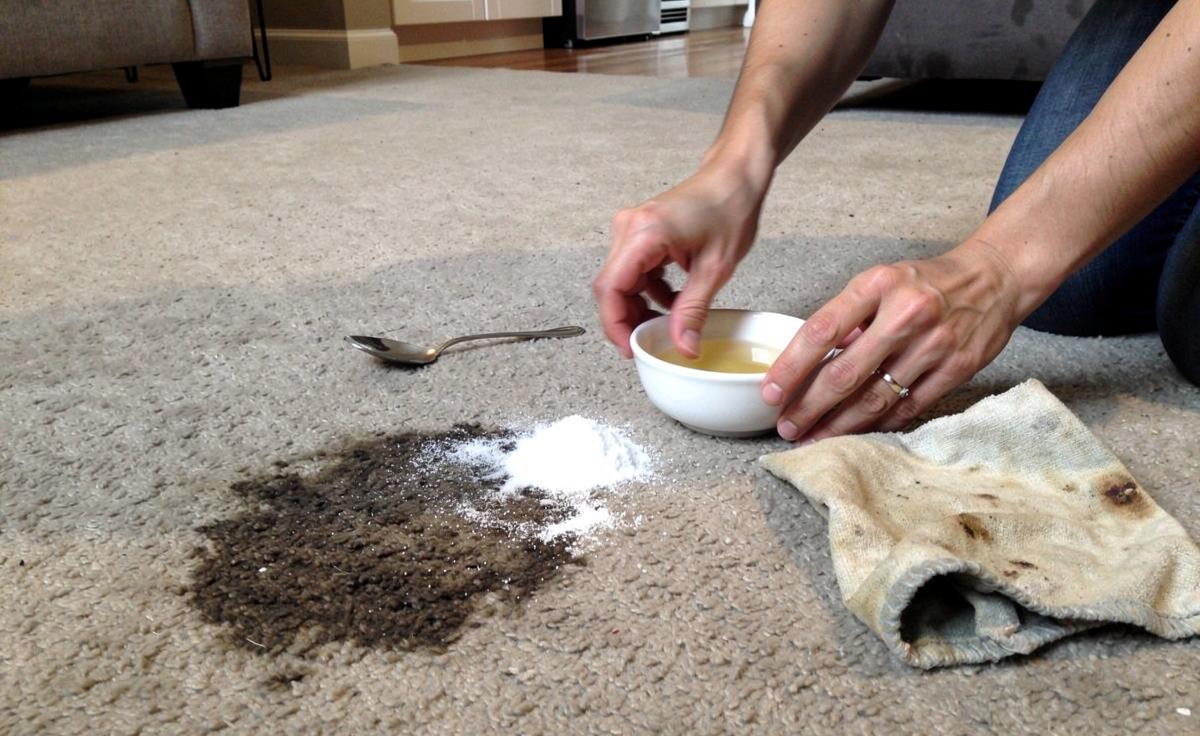
Speed is everything with fresh spills. Keep a labelled spray bottle filled with a 1:1 solution of white vinegar and cool water in the cupboard or under the sink. First, quickly lift solids with a spoon or card. Next, press a clean, white cloth onto the spill to remove as much liquid as possible. The first minute is where you win or lose the stain. Lightly mist the area with your vinegar solution—do not soak. Press down with a fresh section of cloth, working from the outside towards the centre to stop the stain “walking” across the fibres.
Allow 60–90 seconds of dwell time for the vinegar to break bonds, then blot again with firm, downward pressure. If the mark persists, apply a second light mist and repeat. Follow with a quick rinse: spritz plain water and blot to remove any residual acidity from the carpet tips. Stack a folded towel over the area, weigh it down with a book for 20–30 minutes, then lift and fluff the pile with fingers or a soft brush. The goal is controlled moisture in, maximum moisture out, so the stain lifts without leaving a tide mark.
- Kit to keep handy: 500 ml spray bottle, white vinegar, microfibre cloths, plain white towels.
- Golden rule: blot vertically, never scrub sideways.
- Finish: quick cold-water spritz and blot to neutralise any residual tang.
Pros and Cons: When Vinegar Shines—and When It Doesn’t
Vinegar is a brilliant first responder, but not a silver bullet. Its strengths sit squarely with fresh spills, light tannins, and general odour control. It’s budget-friendly, biodegradable, and reduces reliance on perfumed detergents that can leave sticky residues. As a same-day triage tool, vinegar is hard to beat. But there are caveats. Very delicate dyes—particularly on vintage or hand-dyed rugs—can migrate when exposed to moisture of any kind, vinegar included. Blood is protein-based and can set with acids; for that, cool water is safer. And heavy grease typically needs a surfactant (washing-up liquid) for a full break-down, though vinegar can still help with the final rinse and odour.
Use this quick-glance guide to decide when to reach for your spray and when to pause for a patch test:
| Stain Type | Vinegar? | Reason/Tip |
|---|---|---|
| Coffee/Tea | Yes | Mild acid disrupts tannins; act fast and blot well. |
| Red Wine | Yes, swiftly | Helps lift colour; limit moisture and keep blotting. |
| Grease/Make-up | Partial | Vinegar assists, but a gentle surfactant may be needed. |
| Mud/Soil | No | Let it dry, vacuum, then address any lingering marks. |
| Blood (fresh) | No | Use cold water first; acids can set protein. |
| Pet Urine (fresh) | Yes | Neutralises odour; for old stains, consider enzyme care. |
From London Flats to Family Homes: Field Notes and Practical Add-Ons
In a North London rental with pale beige carpet, I watched a parent tackle an apocalyptic splash of squash minutes before a letting agent’s inspection. Armed with a pre-mixed vinegar spray and two white towels, they blotted, misted, and weighted the spot while the agent checked the kitchen. Ten minutes later: no halo, no sticky residue, no panic. What saved the day wasn’t chemistry alone, but readiness—having the bottle to hand. That’s the tactical advantage of vinegar: it’s available, cheap, and effective in the very moments a stain can become permanent.
Build a small routine. Keep a 1:1 vinegar–water bottle under the sink with fresh cloths. Vacuum weekly so dust doesn’t turn damp into mud. For high-traffic zones, a quick monthly refresh—light mist, blot, and dry—prevents grey shading. On wool, keep applications light and always finish with a plain-water blot. If you own hand-dyed or heirloom rugs, make the patch test non-negotiable. The best carpet care is calm, quick, and measured: apply lightly, blot firmly, and let time and towels do the rest. That rhythm protects fibres and helps stains vanish without drama.
Vinegar won’t replace every specialist cleaner, but as a first responder it’s an overachiever: accessible, fast, and reassuringly simple. One bottle, one habit, countless saves. Keep it mixed, keep it visible, and you’ll cut through everyday spills before they settle into next month’s regrets. The secret is to act immediately, blot patiently, and finish cleanly. Where in your home would a ready-to-grab vinegar spray make the biggest difference—and which stubborn stain are you keen to challenge first?
Did you like it?4.6/5 (22)