In a nutshell
- 🧬 Flexibility declines after 60 due to collagen cross-linking, sarcopenia, reduced joint lubrication, and sedentary habits that tighten hip flexors; the nervous system also “guards” end ranges it doesn’t trust.
- 🧍♀️ One high-impact move: the Half-Kneeling Hip Flexor Stretch with a posterior pelvic tilt targets the iliopsoas and rectus femoris, restoring hip extension, posture, and stride while reducing low-back overwork.
- 🧠 Technique essentials: balance with a chair, “tuck your tail,” keep ribs stacked, breathe slowly, hold 30–60s for 2–3 sets/side; try standing or “couch” variations and avoid lumbar over-arching or bouncing.
- 📅 Consistency > intensity: practice daily for 4–6 weeks, ideally after a warm walk; pair with light glute activation; modify if you have knee/hip/spine issues and consult a GP or physio.
- 📈 Real-world wins: simple, no equipment and high return; trade-offs include kneeling discomfort and attention to the tuck; track progress via stride length, standing comfort, and posture photos.
Stiff joints are not a foregone conclusion of ageing, yet many Britons over 60 quietly accept shrinking ranges of motion as the price of a good life lived. As a reporter who interviews clinicians and older athletes across the UK, I’ve learned that flexibility declines for reasons both biological and behavioural—and that one carefully chosen move can shift the needle faster than scattergun stretching. Below, we unpack the real culprits behind tightness, why your go-to hamstring tug may not help, and the single stretch that meaningfully restores stride length, posture, and everyday comfort. The goal isn’t circus-level bendiness; it’s confident, pain-free movement you can bank on daily.
Why Flexibility Declines After 60
Ageing changes the body’s materials and the way we use them. Collagen in tendons and fascia becomes more cross-linked, increasing stiffness; muscle fibres shrink with sarcopenia; and joints can lose lubrication after decades of use. That combination reduces the body’s willingness to glide through its end ranges. Add to this a lifetime of small protective patterns—guarding a sore knee, avoiding stairs—and tissues remodel around what we repeatedly do. Motion is information for the body; when inputs shrink, capacities follow.
Lifestyle choices compound the biology. Long bouts of sitting shorten hip flexors at the front of the hips, while the brain learns to keep you inside a narrow, “safe” range. The result is a cascade: restricted hip extension forces the lower back to arch more during walking, shoulders round to balance the centre of mass, and hamstrings feel “tight” not just from shortness but from guarding. The NHS recommends regular activity, plus strength and balance work, yet many over-60s find the sheer variety of advice overwhelming. The fix is less about doing everything and more about picking the right lever to pull consistently.
There’s also a perceptual twist: what feels like muscle tightness can be the nervous system limiting you because it doesn’t trust your strength at the end range. That’s why aggressive toe-touching often backfires. Improving flexibility means persuading the system, not prying it open. Cue one high-value target that unlocks multiple chains at once: the hip flexors.
The Single Stretch That Moves the Needle
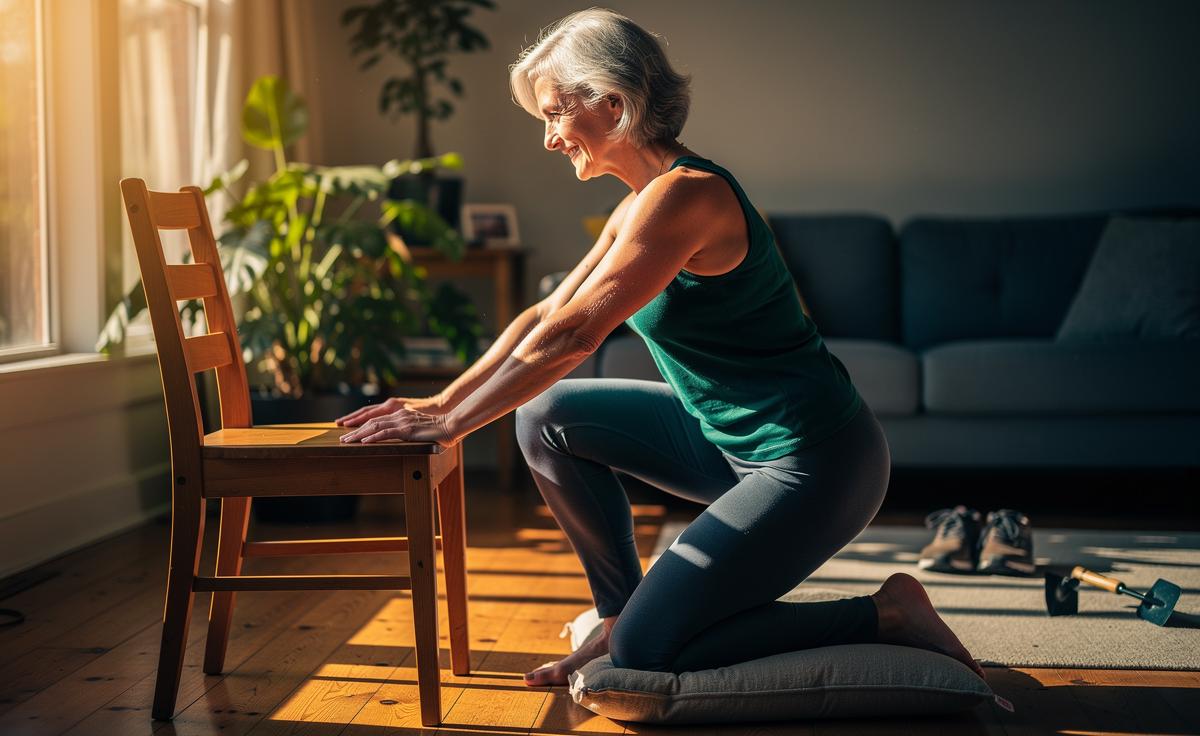
If you only add one move, make it the Half-Kneeling Hip Flexor Stretch with a Posterior Pelvic Tilt (think of gently tucking your tail). This position lengthens the iliopsoas and rectus femoris—the front-of-hip muscles that tighten from hours sitting at the table, in the car, and on the sofa. When these muscles soften and the pelvis can sit neutrally, the glutes re-engage, stride length returns, and the lower back stops overworking to “fake” hip extension. Free the front of the hip, and the rest of the chain starts behaving.
Why this, not another hamstring pull? Because hip flexor stiffness is a hidden bottleneck for over-60s. It limits walking speed, makes standing tall feel tiring, and can even flatten your foot’s push-off, subtly sapping balance confidence. By restoring hip extension, you improve upright posture, breathing mechanics, and how safely you hinge to pick things off the floor. It’s the rare stretch with whole-body dividends. And unlike contortionist moves, it requires no equipment, just a cushion and a chair for support. Small, precise, and repeatable beats heroic and sporadic every time.
Step-By-Step: How to Do the Half-Kneeling Hip Flexor Stretch
Set up beside a chair or wall for balance. Place a soft cushion under the knee of the side you’re stretching. Bring the other foot forward so you’re in a stable half-kneeling “lunge.” Now, the crucial cue: gently tuck your tail (posterior pelvic tilt), as if zipping up snug jeans. Keep your ribs stacked over your hips. You should feel a growing length along the front of the kneeling hip or thigh—not a jam in your lower back. Hold for 30–60 seconds, breathing slowly through your nose. No pinching, no bouncing, just steady ease.
- Balance with one hand on the chair.
- Tuck the pelvis, then gently shift your body forward 1–2cm without losing the tuck.
- Keep the back glute lightly “on” to assist the stretch.
- Relax your jaw and shoulders; think “long exhale.”
- Repeat 2–3 sets per side.
- Stand, walk 30 steps, and notice the difference in stride.
Variations: If kneeling is uncomfortable, try a standing version—heel to bum with a strap or towel, slight tail tuck, knees together, light support at the chair. If you want more, the “couch stretch” (back knee near a sofa) is potent—use only if your knees tolerate deep bend. Common mistakes include over-arching the lower back (losing the tuck), turning the front foot out for fake range, and holding your breath. The quality of the tuck and calm breathing matter more than how far you lunge.
Make It Stick: Frequency, Safety, and Real-World Wins
Consistency trumps intensity. Do this stretch daily for 4–6 weeks, ideally after a short warm walk or gentle marching in place. Pair it with a light set of glute squeezes (5–8 breaths) to “own” the new range. On busy days, micro-dose: 30 seconds per side before you head out, 30 seconds per side before bed. What changes your body is what you do often, not what you do once. If you’ve had a hip replacement, knee pain, or spinal surgery, ask your GP or physio how to tailor the angle and depth. For most, a cushion, a chair, and patience are all that’s needed.
| Pros | Cons |
|---|---|
| Simple, no equipment; big return on time | Kneeling can be uncomfortable without padding |
| Improves posture, stride length, and comfort standing | Requires attention to the pelvic tuck cue |
| Pairs well with walking and balance work | Not a complete solution for every joint limitation |
Anecdotally, readers report fast wins. One retiree in Leeds told me she felt “two inches taller” within a fortnight, walking the park loop without her familiar lower-back grumble. Track your progress to keep motivation honest: note how far behind you your trailing leg feels during a stroll, whether standing to cook feels lighter, or how quickly you settle into a cinema seat without fidgeting. Consider simple markers like step count comfort, ease tying shoes, or a photo of your side-on posture each Sunday. When the hips open, everyday life gets easier—and that is the point.
Flexibility after 60 isn’t about chasing extremes; it’s about reclaiming strong, usable ranges so you can walk, garden, travel, and play with grandkids without bargaining with your body. By targeting the front of the hips with one precise stretch, you reduce the strain elsewhere and coax confidence back into your movement. Start today with a cushion and a chair, breathe steadily, and notice the quiet improvements stack. What small daily window will you choose to make this one stretch a non-negotiable part of your routine?
Did you like it?4.6/5 (27)