In a nutshell
- 🕒 A simple 20-minute “Switch-Off” routine—Log, Lessen, Loosen, Link—uses a brain dump, environmental reset, gentle stretches/breathing, and a consistent cue to help you switch off faster.
- 🧠 It works by leveraging cognitive offloading (two-column “To Do” vs “Not Tonight”), the Zeigarnik effect, and stimulus control, while dim light supports melatonin and slow breathing boosts vagal tone.
- 📋 Practical touches: a minute-by-minute plan, an “If it’s 10 pm, then I start” prompt, low-cost tools (pen, paper, lamp), and a repeatable scent/playlist to build a reliable sleep association.
- ⚖️ Pros vs. Cons: cheap, portable, and modular with quick wins vs. timing friction for shift workers or carers—adapt by splitting into blocks, voice-noting, or auto-dimming; seek a GP if insomnia persists.
- 🌙 Focus on consistency over intensity: expect quicker drop-off and fewer 3 a.m. ruminations within two weeks; the “Not Tonight” column is a standout habit to stop evening overthinking.
After a long British workday and a commute that seems to stretch with every signal failure, the hardest button to press is the one that powers down your mind. Yet a small, deliberate ritual can make a disproportionate difference. Below is a 20‑minute, evidence‑tinted routine I’ve road‑tested with families, freelancers, and frontline workers. It’s simple enough to start tonight, costs nothing, and dovetails with NHS sleep‑hygiene guidance without demanding perfection. The aim isn’t miracle sleep; it’s a cleaner handover from doing to being. Applied consistently, it helps you switch off faster by clearing cognitive clutter, signalling safety to the nervous system, and dimming the day—literally and figuratively.
The 20-Minute “Switch-Off” Routine
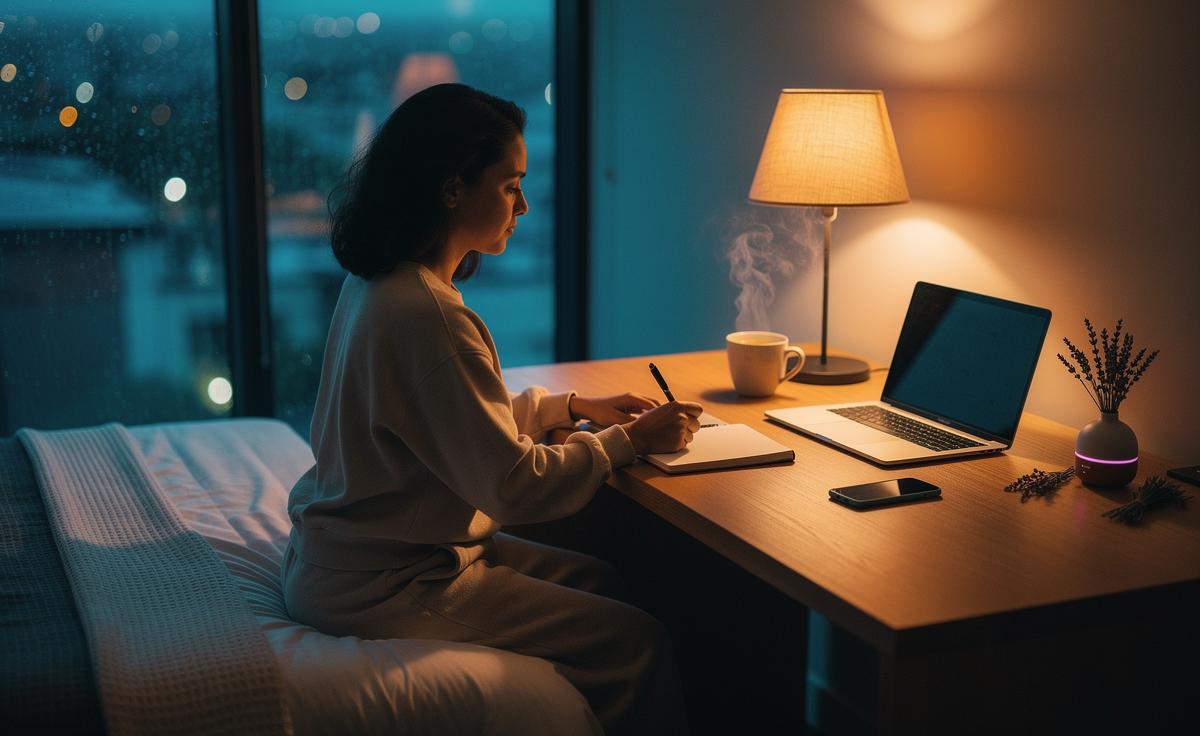
Think of this as four Ls: Log what’s on your mind, Lessen light and stimulation, Loosen the body and breath, and Link a reliable cue to bedtime. The secret is sequence. Start at a set time you can keep most nights, not an ideal you’ll abandon by Thursday. Here’s a compact version I suggest to readers who juggle kids, shift rotas, or deadlines. You can run it at the kitchen table or on a hotel desk, no special kit required beyond paper, a pen, and a lamp you can dim.
| Minute | Action | Why It Helps |
|---|---|---|
| 0–3 | Park work: close tabs, write “tomorrow’s top one” on paper. | Reduces open loops and evening rumination. |
| 3–8 | Two‑column brain dump: “To Do” vs “Not Tonight”. | Performs cognitive offloading; lowers mental load. |
| 8–12 | Environmental reset: tidy five items; dishes to sink; blinds half‑drawn. | Visual calm reduces arousal and decision friction. |
| 12–16 | Loosen: gentle neck/hip stretches + slow breathing (6 breaths/min). | Activates parasympathetic “rest and digest”. |
| 16–18 | Low‑light hygiene: warm shower or face wash; pyjamas on. | Heat drop post‑wash cues sleepiness; routine signals safety. |
| 18–20 | Link your cue: dim lamps; screens off; same scent or playlist nightly. | Builds a reliable sleep association. |
Two tweaks make this stick. First, use an “if‑then” prompt: “If it’s 10:00 pm, then I start my wind‑down.” Second, remove snags in advance—put your notepad by the kettle, set lamps to a warmer tone, and pre‑choose your winding‑down track. A London reader told me that writing “not tonight” next to tasks freed her from doom‑scrolling; permission not to finish is often the fastest way to finish the day.
Why This Works: Brain Science Without the Jargon
When you scribble “tomorrow’s top one” and dump the rest into a “not tonight” column, you’re short‑circuiting the brain’s urge to keep uncompleted tasks active (psychologists call this the Zeigarnik effect). That note on paper acts as a proxy for progress, telling your prefrontal cortex it’s safe to stand down. Environmental resets do a similar job: fewer visual cues mean fewer prompts to act, which dials down mental chatter. Less input, less internal noise. Add a predictable cue—lavender on your wrist, the same mellow playlist—and you’re training a Pavlovian link that nudges your nervous system toward rest quicker each night.
Breathing at around six cycles per minute and pairing it with light stretching increases vagal tone, shifting you from sympathetic “go‑mode” to parasympathetic “slow‑mode”. Think of it as a handbrake that works on signal, not willpower. Meanwhile, dimming lights—especially blue‑rich overheads—supports melatonin timing. Warmer bedside lamps or a low‑lumen bulb maintain circadian friendliness without turning your home into a cave. NHS guidance is clear on this direction of travel: keep a steady bedtime, wind down consistently, and watch your caffeine window in the afternoon.
There’s also stimulus control at play. Reserving the bed for sleep and intimacy, not inbox triage, prevents your brain from tagging the duvet as “work adjacent”. And about that “nightcap”: alcohol may make you drowsy, but it fragments sleep and blunts deep stages. A small camomile, a warm shower, or simply cool air in the room are kinder cues. The routine succeeds not by being fancy, but by stacking small nudges that collectively tip your physiology toward sleep readiness.
Pros vs. Cons for Real-World Schedules
On the plus side, this routine is cheap, portable, and modular. You can run it in a bedsit or a Premier Inn; the tools are a pen, paper, and a lamp. It reduces decision load at the exact time your willpower is wobbling, and it respects that most of us have partners, flatmates, or teens returning from shifts. The biggest win is speed: you spend 20 minutes to reclaim an hour you’d otherwise leak to scrolling. It also complements therapy or medication plans without competing with them—and it’s easy to pause for a crying baby or a late‑night parcel knock.
Downsides? If you’re a shift worker, a carer, or neurodivergent, strict timing may feel punitive. Solve for friction, not perfection: split it into two 10‑minute blocks; voice‑note your brain dump if handwriting jars; pre‑program lamps to auto‑dim at your anchor time. Parents can move the stretch‑and‑breath earlier, when the house is louder, and keep the final two minutes—dim, cue, lights—to mark the end of the evening’s second shift. If insomnia persists for weeks, check in with your GP to screen for pain, anxiety, sleep apnoea, or medication effects.
Why longer wind‑downs aren’t always better: expansive rituals invite procrastination. Twenty minutes sits below the “I’ll do it tomorrow” threshold but is long enough to hit the big levers—offload, environment, body, light. Once the habit is automatic, feel free to extend with a few pages of a novel or a bath. But the core is intentionally small. Consistency beats intensity for sleep. Your goal is to make switching off the default, not the exception that needs a perfect day to execute.
If you try one thing tonight, try the “not tonight” column—it’s a quiet thrill to close the book on a day you’ve already captured for tomorrow. Pair it with low light and five minutes of slow breathing, and you’re signalling to your body that the work is safely parked. Over a fortnight, you’ll likely notice quicker drop‑off and fewer 3 a.m. task avalanches. What tiny tweak would make this routine fit your life—earlier dimming, a scent cue, or a stricter phone cutoff—and how will you test it this week?
Did you like it?4.4/5 (25)