In a nutshell
- 🧠 Why balance declines after 50: small drops in visual, vestibular, and proprioceptive inputs plus sarcopenia, yet neuroplasticity means stability can be retrained.
- 🦶 How exercises enhance stability: strengthen feet, calves, and hips while “reweighting” senses; use head turns, eyes-closed drills, and dual-tasking for real-life resilience in 6–8 weeks.
- 🛡️ Safe routine: 10–15 minute “micro-doses” 3–5 days/week—tandem stance, sit-to-stand, heel-to-toe walk, single-leg stance, calf raises—plus clear progressions and safety cues.
- ⚖️ Pros vs. Cons + Myths: fewer falls and better confidence vs. over-challenge risks; no wobble board needed; consistency beats intensity; supported by NHS-backed Otago and FaME programmes.
- 📈 Track and integrate: measure single-leg stance weekly, weave drills into chores, and learn from case gains (e.g., 4→18 seconds), prioritising moderate challenge and habit-building.
After 50, many of us notice the ground feels a touch less certain. As a UK physiotherapist, I see the same pattern weekly: people feel steady until a small wobble on a kerb or a missed step exposes a gap in balance, strength, and reaction time. The good news is that stability is highly trainable. Targeted balance exercises can recalibrate your nervous system, strengthen the feet and hips, and cut fall risk without fancy kit or hours in the gym. With UK data showing roughly one in three adults over 65 experiences a fall annually, small, consistent practice delivers outsized returns. Here’s how and why it works—plus a safe, evidence-led routine you can start today.
Why Balance Declines After 50: The Physiotherapist’s Lens
Balance is a multi-sensory negotiation between the visual, vestibular (inner ear), and proprioceptive (joint and muscle) systems. After 50, each can lose a few percentage points of fidelity: minor cataract changes, slower vestibular reflexes, and reduced ankle sensation from long hours in stiff shoes. Add sarcopenia (age-related muscle loss), polypharmacy, and occasional low vitamin D, and the body’s “micro-corrections” become less crisp. This isn’t inevitable decline—it’s a training opportunity. Neuroplasticity persists well into later life; precise drills can reweight sensory inputs and rebuild confidence.
In clinic, I explain three control strategies: the ankle strategy (tiny foot and calf adjustments for subtle sways), the hip strategy (quick trunk shifts for bigger perturbations), and the stepping strategy (a rapid step to widen your base). After 50, we often see ankle underuse and delayed stepping. Focused practice sharpens these responses. Case in point: Moira, 62, improved single-leg stance from 4 to 18 seconds in six weeks by rehearsing narrow-stance tasks and step-recovery drills. Confidence follows competence—and reduces cautious, stiff walking that can paradoxically raise fall risk.
How Balance Exercises Enhance Stability: From Ankles to Brain
Effective balance work builds strength where it matters—feet, calves, hips—and upgrades the brain’s sensory “blend”. Standing on a narrower base challenges foot intrinsics and ankle reflexes; turning the head stimulates the vestibulo-ocular reflex (VOR); closing the eyes nudges proprioception to the forefront. Each tweak teaches the nervous system to keep you upright under everyday distortions—dim lighting, uneven paving, a grandchild tugging your sleeve. Evidence from UK falls-prevention programmes shows that 2–3 short sessions weekly can drive measurable gains within 6–8 weeks.
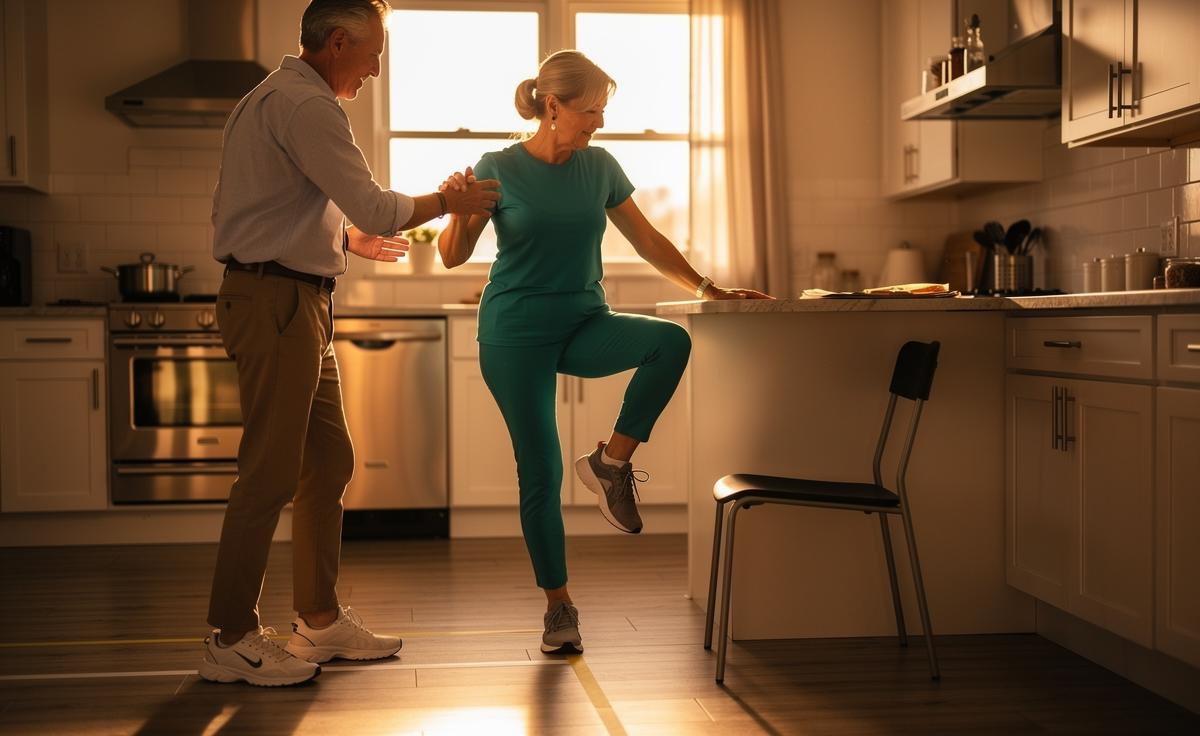
Practical cadence matters. I recommend “micro-doses”: 10–15 minutes, three to five days a week, alongside normal walks. Start with a stable surface and a countertop for light support, progress to staggered stance, then single-leg. Layer in dual-tasking (e.g., reciting months backwards while balancing) to simulate real life, where the brain juggles movement and thought. Add strength anchors—sit-to-stand repeats, heel raises—to cushion joints and power corrective steps. Better stability isn’t about circus tricks; it’s about rehearsing the exact micro-skills daily life demands.
A Safe, Evidence-Led Routine You Can Start Today
Use a firm surface, wear supportive shoes, and keep one hand hovering over a stable worktop. Aim for three sessions per week, resting a day between if fatigued. Stop and consult a GP if you have sudden dizziness, chest pain, or new neurological symptoms. Otherwise, keep efforts at a “challenging but safe” 6–7/10 difficulty—slight wobble, no panic. Small, regular practice outperforms rare, heroic sessions.
Sample progression (4–6 weeks):
- Tandem stance (heel-to-toe), 3 x 30–45 seconds each side; add head turns.
- Sit-to-stand from a chair, 3 x 8–12; narrow your stance over time.
- Heel-to-toe walk along a counter, 2–3 passes; add a light conversation (dual-task).
- Single-leg stance by the wall, 3 x 15–30 seconds each leg; progress eyes-softened gaze.
- Calf raises, 3 x 10–15; later, add a backpack for load.
| Exercise | Start Dose | Progression Cue | Safety Note |
|---|---|---|---|
| Tandem stance | 3 x 30s/side | Head turns, then eyes closed “peek” | Light fingertip support allowed |
| Sit-to-stand | 3 x 10 | Narrow feet, slower lowering | Use arms if form falters |
| Heel-to-toe walk | 2 passes | Add dual-task speaking | Stand tall, hover hand on counter |
| Single-leg stance | 3 x 20s/leg | Turn head; soft-focus gaze | Abort if pain or spinning |
Track one number weekly—single-leg stance hold time—and celebrate any gain of 3–5 seconds as genuine progress.
Pros vs. Cons, Myths, and Why More Isn’t Always Better
Balance training boasts clear upsides but benefits most when right-sized. Doing too much, too soon can provoke fear, over-fatigue, and avoidable stumbles. Here’s a quick scan of trade-offs and misconceptions I address in clinic, plus how to sidestep them with calm, consistent practice.
| Pros | Cons / Risks |
|---|---|
| Fewer falls, better walking confidence, quicker reactions | Over-challenge can cause trips if unsupervised |
| Improved joint alignment and foot strength | Transient calf/foot soreness early on |
| Sharper dual-tasking for real-life distractions | Mild dizziness with excessive head turns |
Myth-busting highlights: you don’t need wobble boards; your kitchen worktop is perfect. Strength training isn’t separate—every sit-to-stand is a balance drill. And no, “no pain, no gain” doesn’t apply. The goldilocks dose is 10–15 minutes, 3–5 days weekly, at moderate challenge, ideally woven into chores—brushing teeth in tandem stance, heel raises while the kettle boils. NHS-backed programmes such as Otago and FaME show meaningful fall reductions with precisely this mix. Consistency beats intensity, especially after 50.
In short, balance isn’t a fixed trait; it’s a trainable capacity that responds quickly to deliberate practice. By tuning ankle and hip strategies, sharpening sensory inputs, and threading strength into everyday moments, you can build stability that travels with you—across pavements, stairs, and busy corridors. Keep sessions brief, purposeful, and safe; measure one metric to stay motivated; and lean on community classes or a physiotherapist if you need tailored progressions. What small, sustainable balance habit could you start this week to make tomorrow’s steps feel steadier?
Did you like it?4.5/5 (29)