In a nutshell
- 🌿 Choose forgiving herbs: start with mint, chives, and thyme/rosemary for reliability, add basil for flavour if you can keep it warm and evenly moist; match the herb to your light and begin with starter plants for fast wins.
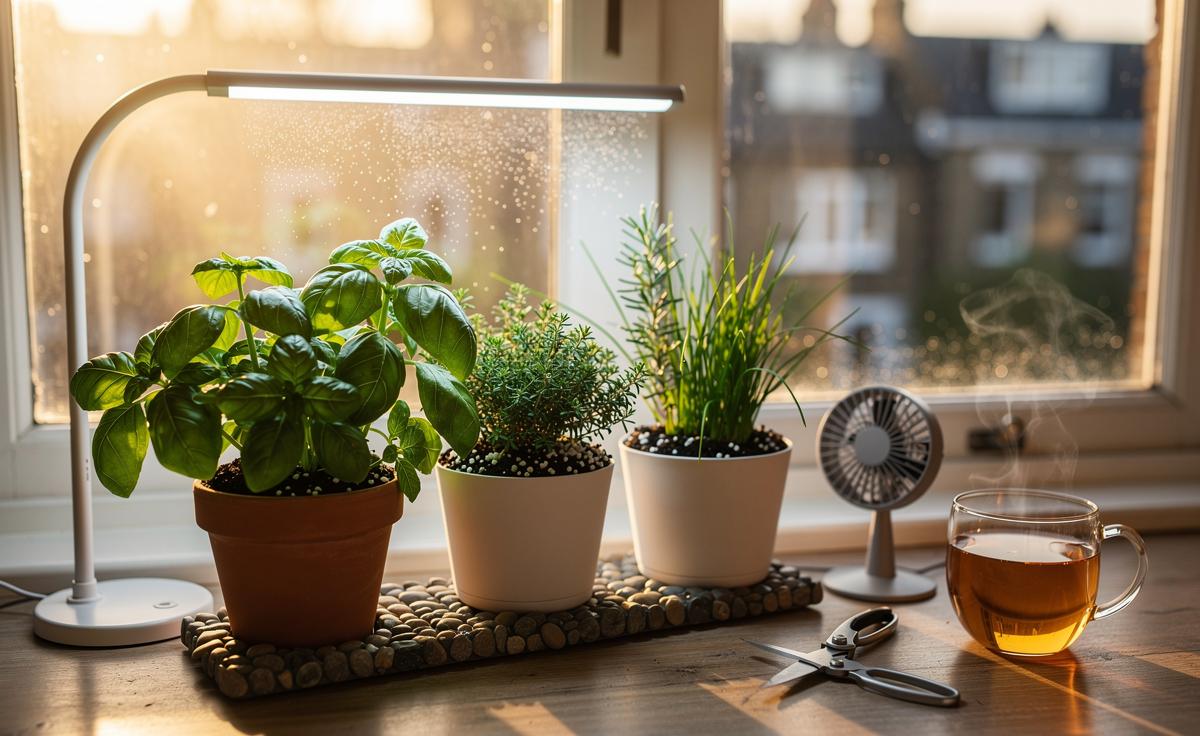
- 💡 Nail light and placement: use bright south/east-facing sills or a 4000–6500K LED on a timer (10–12 hrs); rotate weekly, keep temps at 18–24°C, group on pebble trays for humidity, and place pots where you’ll see them daily.
- 🪴 Get soil and watering right: prioritise drainage (pots with holes + peat-free mix plus 20–30% perlite), water thoroughly then let the top 1 cm dry; try bottom watering; self-watering pots Pros vs. Cons—great for basil/parsley/mint, but avoid for thyme/rosemary.
- ✂️ Feed and prune for productivity: apply half-strength liquid fertiliser every 2–3 weeks in active growth, skip in midwinter; pruning (pinch above nodes) drives bushy plants; never remove more than a third; follow a simple weekly routine and root supermarket cuttings.
- 🛠️ Troubleshoot fast: leggy growth = more light; yellowing = wet roots; handle fungus gnats with drier soil, sand, sticky traps; clear aphids with rinses and neem/soap; boost airflow for mould and accept basil’s natural lifecycle—then replant.
City kitchens and rented flats aren’t exactly cottage gardens, yet your worktop can still deliver a daily pinch of flavour. The trick to growing herbs indoors without a “green thumb” is to design your setup so the plants do most of the work. Think light on a timer, pots that drain well, and a short weekly ritual you can’t forget. I road-tested this in a draughty London flat: from January’s short days to July’s heat, a handful of reliable herbs survived my deadlines and travel. Small, steady habits beat heroic gardening sprints every time. Here’s a simple, journalist-approved playbook that just works.
Choose the Right Herbs for Low-Effort Indoor Wins
Success starts with choosing plants that suit your space and schedule. Mint and chives forgive missed waterings and lower light, while thyme and rosemary relish bright windows but sulk if overwatered. Basil delivers the biggest flavour bang, yet it wants warmth and consistent moisture. For renters or beginners, mix easy “workhorses” with one or two fussier flavour stars so you’re never without something to snip. Match the herb to the sill, not the recipe fantasy. If in doubt, buy small starter plants rather than seeds—the head start makes all the difference on bleak winter days.
Use the quick-reference table below to pair herbs with light and care needs. Note that “hours” refer to bright, indirect light; overcast UK days count, and a simple clip-on LED can bridge the gap. Keep pots small at first—excess soil stays wet too long and invites rot. When a plant doubles in size, up-pot by one step only, never to a cavernous container.
| Herb | Light Target (hrs/day) | Watering | Flavour/Use | Difficulty |
|---|---|---|---|---|
| Basil | 6–8 | Evenly moist; avoid soggy | Fresh pesto, salads | Moderate |
| Mint | 4–6 | Moist; tolerates lapses | Tea, tabbouleh | Easy |
| Chives | 4–6 | Lightly moist | Eggs, soups | Easy |
| Parsley (Flat-Leaf) | 5–7 | Even moisture | Gremolata, garnish | Moderate |
| Thyme | 6–8 | Let topsoil dry | Roasts, stews | Easy–Moderate |
Light, Temperature, and Placement: Set-and-Forget Strategies
Herbs are sun-powered. In UK homes, a south-facing or bright east-facing sill is prime. If you only have a dim corner, add a budget LED (4000–6500K “daylight”) 6–12 inches above leaves for 10–12 hours. Put it on a timer and forget it. Consistent light beats occasional blasts of sunshine. If plants lean towards the window, rotate the pot a quarter-turn each week. A sheet of white card behind the pots bounces light back—an old photographer’s trick that costs pennies and yields sturdier growth.
Herbs like a steady 18–24°C. Keep them away from radiators and winter draughts; both wilt leaves and confuse moisture needs. Kitchens and offices run dry, so group pots on a tray of pebbles with a splash of water under—not in—the pots to soften the humidity swings. A tiny USB fan on low helps prevent stagnant air and mould. And a rule that saved my basil through February deadlines: place herbs where you see them daily—visibility prevents neglect. If your worktop is the coffee hub, that’s where the pots belong.
Soil, Pots, and Watering: Why More Isn’t Always Better
Indoor herbs fail more from kindness than cruelty. More water is not better—more drainage is. Choose pots with holes and pair them with saucers. Fill with a peat-free multipurpose mix lightened with 20–30% perlite or grit. This keeps oxygen at the roots and lets extra water escape. Water thoroughly, then wait until the top centimetre is dry (thyme and rosemary prefer two). If you’re a chronic over-waterer, try bottom watering: set the pot in a shallow bowl for 10–15 minutes, then drain. Leaves stay dry, roots sip what they need.
Self-watering pots can be brilliant—if you use them right. Here’s a quick “Pros vs. Cons” snapshot for herbs:
- Pros: Consistent moisture for basil and parsley; fewer daily chores; cleaner worktops.
- Cons: Easy to overfill; thyme/rosemary resent constantly damp roots; algae can bloom in clear reservoirs.
My rule of thumb: reservoir for basil, parsley, and mint; classic terracotta for thyme and rosemary. When repotting supermarket herbs (often crammed with many seedlings), split the root ball into two or three clumps and pot them separately. They’ll breathe, you’ll save money, and the harvest doubles in a fortnight.
Feeding, Pruning, and Harvesting: The Lazy Gardener’s Calendar
After four weeks in fresh compost, begin a light, regular feed: a balanced, liquid fertiliser at half-strength every 2–3 weeks during active growth. Skip feeds in midwinter if plants idle under short days. Overfeeding makes lush, floppy growth that tastes bland, so err on the light side. Pruning is not optional—it’s productivity. Pinch basil above a node (where two leaves meet the stem) to force side shoots; harvest mint and parsley by cutting outer stems first. Never remove more than a third of a plant at once; it’s the difference between a one-off meal and months of garnish.
Here’s the rhythm that kept my window-garden giving while I filed stories on deadline: Mondays, a quick finger test for moisture; Wednesdays, rotate pots 90 degrees; Fridays, harvest a handful and top up the pebble tray. Once a month, rinse pots and saucers to prevent salt build-up. For fresh starts, root supermarket cuttings of mint or basil in a glass of water, then pot them up when you see robust white roots. It’s cheaper than seed and faster in a cold flat.
Troubleshooting Without Panic: Quick Fixes That Work
Leggy, floppy stems? That’s nearly always light. Move closer to the window or nudge the LED an inch lower. Yellowing leaves often point to wet roots—check for standing water in saucers and refresh the potting mix if it smells sour. Fungus gnats buzzing from the soil mean it’s staying too damp; allow the top to dry, add a sprinkle of sand on the surface, and lay a yellow sticky trap. For aphids, a gentle shower under the tap plus a neem or soap spray every few days clears colonies without drama.
Mould on soil is cosmetic but a sign of poor airflow—space pots apart and run that USB fan. Brown, crispy leaf tips usually spell low humidity; group plants and avoid blasts from radiators. If you bring a new plant home, quarantine it for a week to avoid hitchhiking pests. And remember: herbs are annual or semi-annual by nature—when basil flags after months, it’s not failure, it’s a fresh start. Compost, replant, and you’re back in business by next week’s risotto.
Indoor herbs are a micro-habit with outsized returns: brighter meals, greener kitchens, and a small daily victory that doesn’t depend on the weather. By choosing forgiving plants, automating light and watering, and pruning little but often, you can keep a living larder on the sill through every season. If my draft-ridden Hackney windowsill can turn out pesto and mint tea on a Tuesday, yours can too. The only real question is where you’ll put the first pot. Which herb are you starting with this week—and what’s the one tweak you’ll make to guarantee it thrives?
Did you like it?4.4/5 (25)