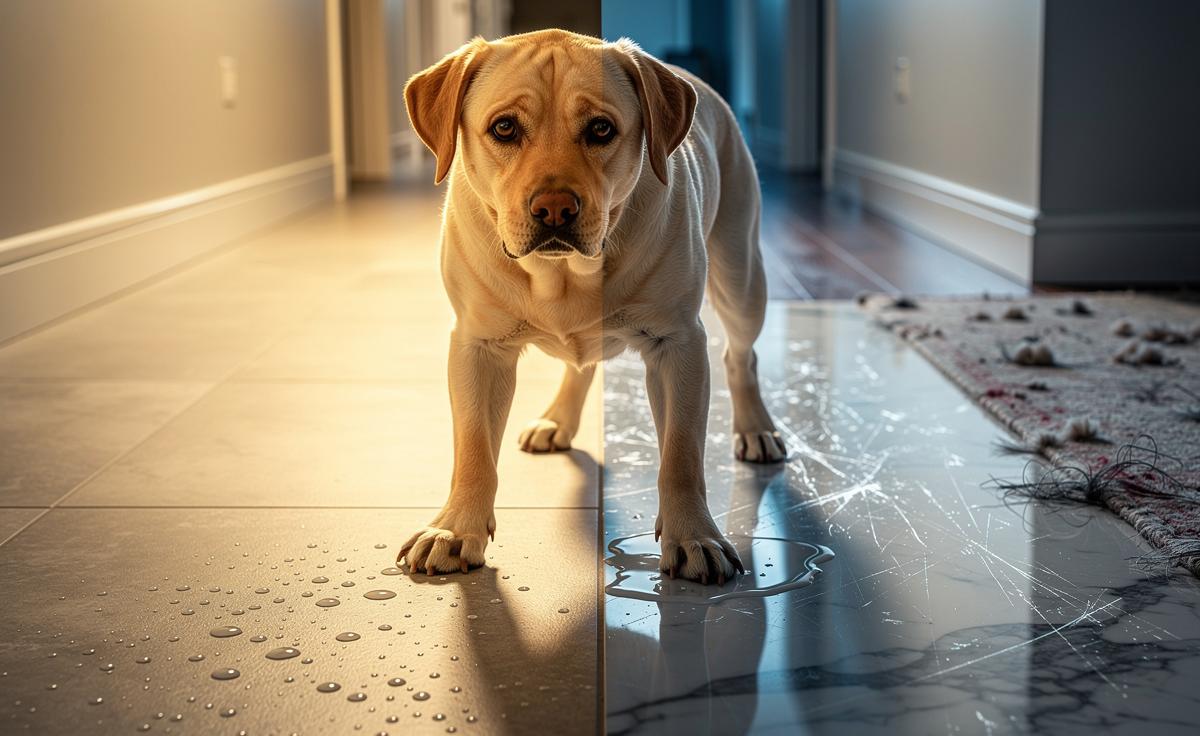
In a nutshell
- 🐾 Best floors for dogs: Waterproof vinyl, tile (preferably textured porcelain), and waterproof laminate offer strong scratch resistance, waterproofing, and easy cleaning, with better comfort and grip for paws.
- 🚫 Floors to avoid: Hardwood (scratches, stains), carpet (traps fur/dander/fleas, odours), and marble (porous, etches, slippery) are high-maintenance and less forgiving of accidents and muddy paws.
- 🧰 Quick upgrades: Trim nails, add washable mats at doors, use a waterproof bowl tray, deploy runners/anti-slip treatments, and choose matte over glossy finishes to boost traction and protect surfaces.
- 🧽 Cleaning routine: Dry mop fur, vacuum weekly with a pet tool, damp-mop using a pet-safe cleaner, and seal grout/stone; keep an enzymatic cleaner on hand for fast accident response.
- 🎯 How to choose: Prioritise waterproofing, traction, and ease of maintenance over aesthetics; factor in your dog’s age, size, and energy level, with tile also offering potential resale value benefits.
Dog ownership reshapes your home from skirting boards to sofa throws. The biggest battleground? Your floors. Claws click, bowls spill, muddy paws barge in, and the odd accident arrives at exactly the wrong time. It’s not about perfection; it’s about priorities: scratch resistance, waterproofing, easy cleaning, and traction. Get those right and the rest follows. Choose with your pet’s age and habits in mind, not just colour charts. The best dog-friendly floors balance durability with comfort underfoot and safe grip. Here’s a clear guide to the winners and the problem surfaces, plus practical fixes if you’re living with less-than-ideal flooring right now.
Best Types of Flooring for Dogs
Waterproof vinyl flooring tops the list for most busy, multi-pet homes. It’s resilient against puddles and muddy stampedes, and today’s planks and tiles come with tough wear layers that shrug off claw marks. It’s also stain-resistant, cost-effective, and slightly “givey” underfoot, so your dog’s joints take less of a pounding. Look for textured, matte finishes for grip, click-fit systems for painless installation, and truly waterproof products (not simply “water-resistant”) in kitchens, hallways, and utility spaces. If accidents are likely, choose waterproof surfaces first, aesthetics second.
Tile—especially quality porcelain—is a close second. It’s highly scratch-resistant, handles splashes all day, and wipes clean in seconds. The caveat: glossy tiles can be slippery, particularly for seniors or large breeds. Opt for textured or matte tiles, add runners where the dog sprints, and seal grout to block stains. Bigger-format tiles mean fewer grout lines to faff with, which makes your weekly clean simpler and faster. As a bonus, tile’s durability and style can nudge resale value upward in many markets.
Modern waterproof laminate flooring has improved dramatically. Many ranges resist scuffs and everyday scratching and are easy to mop. Always check the product’s waterproof rating and warranty terms; some are built for spills, others are not. Use a quality underlay to soften noise from click-clack claws. Keep standing water off any laminate, and you’ll enjoy a durable, great-looking surface that doesn’t blow the budget.
Flooring to Avoid (and Why)
Hardwood looks glorious but can be unforgiving in real-world dog life. Pet accidents and water bowls leave dark patches; claws mark softer species; refinishing is disruptive and costly. If you already have timber, keep nails short, add strategic runners, and clean spills immediately. Carpet is cosy yet problematic: it absorbs accidents, traps fur, dander, and even fleas, and can harbour odours despite diligent cleaning. Low-pile, stain-resistant fibres help, but wall-to-wall in high-traffic dog zones is a gamble. Marble is beautiful, but porous and comparatively soft. It stains, etches, and scratches, and polished finishes can be treacherously slick.
If you’re renovating with a dog in mind, steer clear of surfaces that soak, stain, or slip. Where avoidance isn’t practical, deploy workarounds: seal stone, use washable rugs at flashpoints (doors, bowls, beds), and train your dog to station on mats during feeding and grooming. These small choices blunt the risks without redesigning the entire house.
| Floor Type | Scratch Resistance | Water Resistance | Slip Risk | Cleaning | Notes |
|---|---|---|---|---|---|
| Waterproof Vinyl | High | Waterproof | Low (textured) | Easy | Soft underfoot; budget-friendly |
| Tile (Porcelain/Ceramic) | Very high | Excellent | Medium–High if glossy | Easy | Seal grout; boosts resale |
| Waterproof Laminate | High | Good (check rating) | Low–Medium | Easy | Use quality underlay |
| Hardwood | Low–Medium | Poor | Medium | Moderate–Hard | Prone to scratches and stains |
| Carpet | Low | Poor | Low | Hard | Traps fur/dander; stains linger |
| Marble | Low | Poor | High | Tricky | Porous; etches and scratches |
How to Make Any Floor More Dog-Friendly
Even if your flooring isn’t ideal, practical tweaks can transform everyday life. Start with the dog, not the décor: keep nails trimmed and filed to reduce scratching and slipping; tidy fur between paw pads for grip. Place absorbent, washable mats at entrances to catch grit before it turns into sandpaper under paws. Set bowls on a waterproof tray or rubber-backed rug. Accidents happen. Fast clean-up with an enzymatic cleaner is the single best defence against stains and odours.
Add traction where your dog accelerates: landings, sofa routes, the hallway sprint track. Runners and low-pile area rugs with non-slip underlay are inexpensive and effective. For tile, choose textured finishes or increase grip with discreet anti-slip treatments. On laminate and vinyl, stick to matte rather than high-gloss surfaces to keep paws planted. Furniture pads help stop heavy pieces from scuffing softer floors when excited tails knock into them.
Build a quick-clean routine that suits your space. Dry mop for fur, vacuum weekly with a pet tool, and damp-mop as needed with a pet-safe cleaner suitable for your floor type. Seal grout and any natural stone on schedule. In winter, keep de-icer salts at bay with a boot room mat and a towel by the door. These simple habits protect finishes, reduce noise, and make the home calmer and safer for you and your dog.
Picking floors with a dog in mind isn’t about compromise; it’s about smart trade-offs that keep your space resilient, hygienic, and comfortable. Prioritise waterproofing, traction, and easy maintenance, then layer in warmth with rugs where it matters. Your dog’s age, size, and energy level should guide the final decision far more than trends on a sample board. With that in mind, which surfaces would you trust beneath wet paws and wagging tails in your own home—and why?
Did you like it?4.5/5 (20)