In a nutshell
- 🧪 Hygiene research shows shoes are vectors for faecal bacteria, metals, and pesticides; a shoe-off policy cuts indoor transfer and floor bioburden.
- 🧼 Dirt moves via adhesion, entrapment, and abrasion, with moisture boosting transfer; pairing an outdoor scraper with an indoor absorbent mat significantly reduces tracked contamination.
- ✅ Pros vs. Cons: cleaner, quieter floors and lower exposure vs accessibility and social frictions—solved with slippers, overshoes, a bench, and clear cues at the door.
- 🛠️ Practical setup: adopt a two-mat system, a ventilated rack/tray, HEPA vacuuming and microfibre mopping, rotate and wash mats weekly, and set shoes-off zones for bedrooms/playrooms.
- 🚪 Bottom line: source control at the threshold keeps floors cleaner with less effort, especially in urban homes with metal-rich dust; even a “wet or muddy off” rule delivers most benefits.
Walk a few metres in city rain, across a forecourt, through a park—and your soles become a travelling scrapbook of the day. Hygiene research consistently shows that shoes are efficient vectors for grit, microbes, and chemical residues. That cocktail ends up on living-room floors, where it can be stirred back into the air with every step or handprint from a toddler. As more UK households adopt a shoe-off policy, the question is not cultural but practical: does it measurably keep floors cleaner? The evidence—microbiological swabs, particle counts, and dust chemistry—suggests yes. Below, I unpack the science, clear up myths, and offer journalist-tested ways to make the habit stick without fuss or awkwardness.
What the Science Says About Shoes and Indoor Contamination
Studies sampling shoe soles routinely find faecal indicator bacteria, urban dust rich in metals (from brake and tyre wear), and traces of pesticides from lawns or verges. While the survival of every germ varies, the key point is transfer: shoes touch the ground outdoors and the floor indoors, repeatedly, creating a low-effort conveyor belt. Once on floors, particles become a reservoir that can be resuspended into breathable air or picked up on hands, especially in homes with children or pets.
Researchers tracking indoor air quality often emphasise source control—reduce what enters, then clean what remains. A simple behaviour change, like leaving shoes by the door, is a classic source-control step. It reduces the influx of coarse grit (which scratches finishes) and fine dust (which holds allergens and metals). Cleaner floors are not just about appearances; they are about lowering exposure pathways, from crawling infants to anyone who eats snacks on the sofa and drops crumbs to the rug.
There’s nuance. Not all microbes found on shoes will cause illness, and not every home has the same risk profile. But across diverse studies, removing shoes is consistently associated with lower floor bioburden, less abrasive dust, and fewer cleaning cycles needed to maintain a hygienic baseline.
How Dirt Travels Indoors: Mechanisms and Myths
Transport happens through three main mechanisms: adhesion (sticky or wet soles), entrapment (deep tread patterns), and abrasion (grit grinding into flooring, creating more dust). Moisture is the accelerator. In wet weather, shoes pick up more material, and each step has greater transfer efficiency. Carpets act like sponges for fine particles; hard floors show dirt sooner but are easier to wet-clean thoroughly. The right doormat combination—scraper outside, absorbent inside—cuts transfer markedly, especially when paired with a shoe rack or tray at the threshold.
Why “More Disinfectant” Isn’t Always Better: Wiping floors with strong biocides is not a substitute for source control. Overuse can irritate lungs and skin and won’t remove embedded grit or metals. Mechanical removal—vacuuming with a HEPA filter, microfibre mopping—outperforms scent-heavy clean-ups after contamination has already spread.
| Contaminant | Typical Outdoor Source | How Shoes Track It | Indoor Persistence |
|---|---|---|---|
| Faecal bacteria | Pavements, public loos, pet waste | Moist soles, deep treads | Days on floors; longer in rugs |
| Metals (e.g., lead, copper) | Road dust, brake/tyre wear | Dry dust adhesion; grinding | Weeks; accumulate in fibres |
| Pesticide residues | Treated lawns, verges | Oil-soluble films on soles | Days to weeks; bind to dust |
| Allergens | Pollen, spores, pet parks | Latch to dust and fabric | Seasonal; resuspend with traffic |
Pros and Cons of a Shoe-Free Home
Pros
- Cleaner floors, longer: Less tracked grit means fewer scratches on wood or vinyl and fewer visible marks on tiles.
- Lower exposure: Reduces indoor pathways for microbes, metals, and allergens, notably for children and pets.
- Quieter, calmer home: Soft-soled slippers dampen footfall in flats and terraces—your downstairs neighbour will thank you.
- Lower cleaning demand: Mechanical cleaning works better when you start with less incoming dirt.
Cons (and fixes)
- Accessibility needs: Some guests require orthotics. Offer clean overshoes or allow medical footwear—comfort and dignity first.
- Cold floors: Provide washable slippers in multiple sizes; a small rug by the rack helps in winter.
- Social awkwardness: A friendly sign by the door, a visible rack, and an obvious bench make the expectation effortless.
- Unexpected tradespeople: Keep disposable shoe covers for short visits; for longer work, lay a protective runner.
My own London flat became a case study: after a rainy fortnight, we switched to a door-side routine—rack, bench, two mats. The mop water went from murky grey to faintly cloudy. It wasn’t scientific glory, but it was an everyday win.
Practical, Evidence-Informed Ways to Implement the Habit
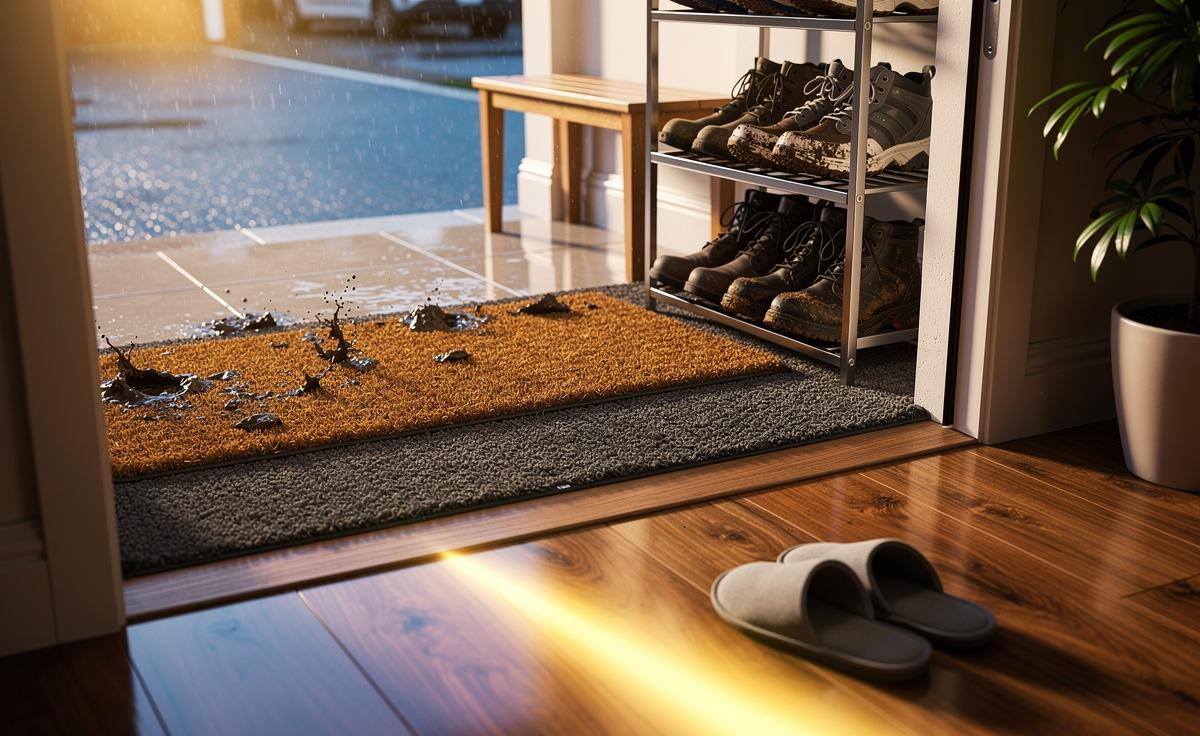
Think of your doorway as a mini airlock. Start with a two-mat system: a coarse scraper outside and a washable absorbent mat inside. Place a bench for balance, a ventilated rack or tray for damp shoes, and a basket of guest slippers. Make the clean choice the easy choice by arranging the space so shoe removal is an obvious first step.
Then tackle cleaning frequency. Vacuum entry zones with a HEPA-filtered machine to trap fine particles. Use microfibre pads for mopping—mechanical lift beats perfumed residues—and wash doormats weekly. Reserve stronger disinfectants for spill clean-ups or illness, not daily use. On rainy days, rotate two indoor mats so one can dry fully, reducing microbial growth.
For families, create zones: shoes-off areas for bedrooms and playrooms; tolerate slippers in living spaces. Labelling children’s slippers or hooks helps habit formation. Flats near busy roads benefit most, as urban dust is richer in metals. If a completely shoe-free policy feels too strict, adopt a “wet or muddy off, clean soles okay” compromise—research suggests most benefits come from stopping the dirtiest entries.
Every home is a negotiation between convenience and care, but the hygiene case is straightforward: stop contaminants at the threshold and your floors will stay cleaner with less effort. Whether you live on a rural lane or beside a ring road, a shoes-off routine trims the flow of microbes, metals, and muck—and softens your home’s soundscape, too. How might you redesign your doorway this week—mats, rack, bench, slippers—to make the clean choice the easiest habit for family and friends?
Did you like it?4.6/5 (21)