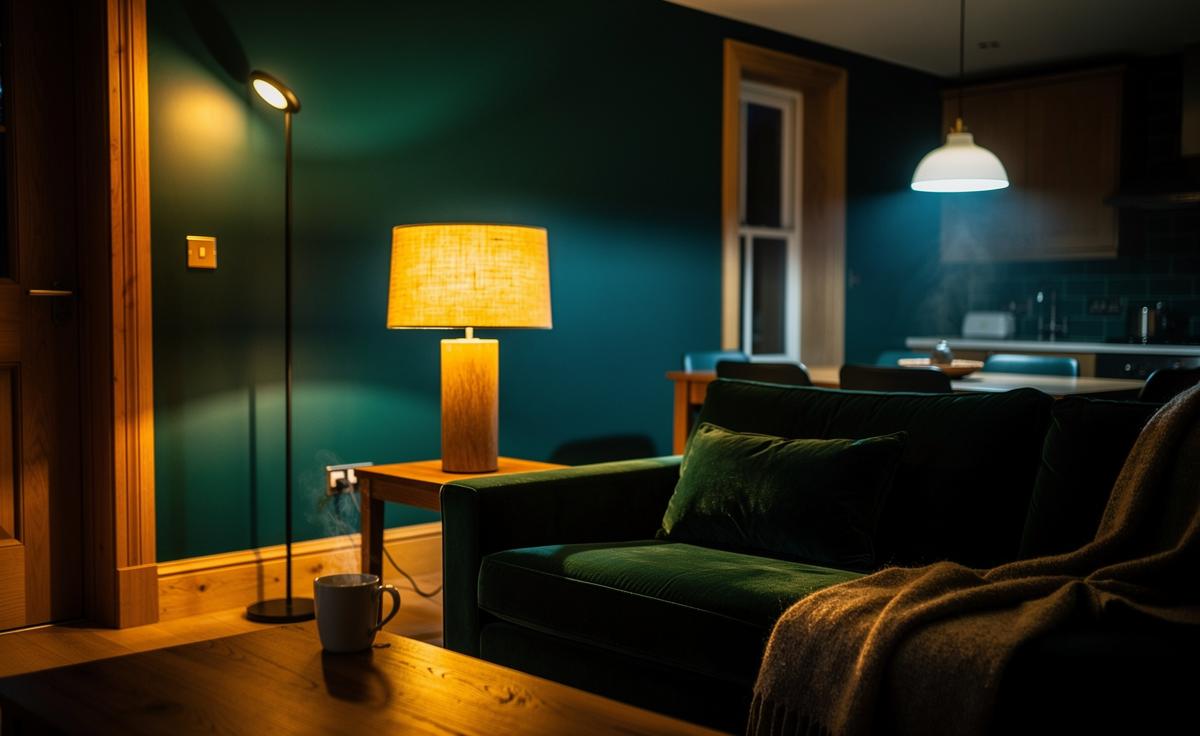
In a nutshell
- 💡 Switch to warmer bulbs (2700K–2200K) and dim in the evening to soften contrast, enrich textures, and create an instantly cosier mood.
- 🧭 Layer lighting—ambient/task/accent—and control height/placement (eye-level shades, corner uplighters) for comfort and depth; aim for CRI 90+ to flatter colours.
- 🪞 Use wall bounce, fabric shades, and diffusers to eliminate glare and hotspots; keep one cooler source only for tasks, not ambience.
- ⚖️ Warm vs. cool: 2700K enhances calm and dimensionality; 4000K+ offers clarity but can feel clinical—cosiness comes from tone and contrast, not sheer lumens.
- ⏱️ Follow the 20‑minute plan: swap three bulbs, reposition a floor lamp to wash a wall, add a dimmer/smart “Cosy” scene—often under £25 for a night-and-day transformation.
There’s a tiny change you can make this evening that will transform the feel of your rooms before the kettle has boiled: switch your brightest, coolest lamps to a warmer colour temperature and lower the level. In UK homes, we love crisp light for chores, but it can turn living spaces chalky and restless after dark. By choosing bulbs around 2700K to 2200K and dimming to soften contrast, you invite depth, texture and calm back onto your walls. One tweak—warmer, lower light—can create a cocooning glow that flatters faces, fabrics and paint in seconds. Here’s how to do it, and why it works, with tips that suit rentals, budgets and busy lives.
The One-Tweak Fix: Shift to Warmer Light After Dusk
Swap any cool-white (often labelled 4000–6500K) evening lamps for warm-white versions. Look for packaging that reads 2700K or “Warm Glow,” and—if you can—choose “warm-dim” LEDs that get more amber as they dim. This simple shift nudges your room from “office bright” to “fireside soft” without buying new fixtures. Warmer light reduces harsh shadow edges, brings out the grain in timber, and makes skin tones appear healthier. When light temperature drops, rooms gain visual depth and psychological ease.
For immediate results, target three touchpoints: the sofa-side lamp, the kitchen table pendant and the bedside. If your lamp uses a shade, add a thin diffuser or swap to a fabric shade to mellow hotspots. Point floor lamps at a wall to bounce light—this spreads a golden wash that’s kinder on eyes than a bare glare. Keep one cooler source for tasks (like chopping), but let the rest run warm and low after 7pm. Your goal is contrast control: fewer bright points, more gentle pools.
| Kelvin (K) | Look and Feel | Best For | Quick Fix |
|---|---|---|---|
| 2200–2400K | Candlelit amber | Late evenings, wind-down | Warm-dim LEDs in table lamps |
| 2700K | Classic warm white | Living rooms, bedrooms | Standard warm-white bulbs |
| 3000K | Slightly crisper warm | Kitchen/dining mix | “Soft white” LEDs |
| 4000K+ | Cool/neutral office | Utility, garage, daytime | Reserve for tasks only |
Layering, Dimming, and Height: Small Moves, Big Mood
The cosiest rooms don’t run on a single ceiling light; they use layers. Start with ambient (a bounced floor lamp), add task (a reading lamp angled to the page), then sprinkle accent light (a picture light or a tiny uplighter behind a plant). This stack lowers glare and pumps up texture. If you can add a dim-to-warm bulb or simple inline dimmer to at least one lamp, you gain a volume knob for atmosphere. Cosiness is less about darkness and more about control.
Height matters as much as colour. Place lamp shades roughly at eye level when seated (about 1.1–1.3m from the floor) to avoid hard downward shadows on faces. Push tall uplighters near corners to wash across two walls—this visually enlarges tight terraces and flats. If your pendant is bluntly bright, fit a frosted bulb or add a diffuser disc to soften the hotspot on the table. And mind the CRI (colour rendering index): aim for CRI 90+ to make reds and woods glow. Good placement plus warm output beats simply buying brighter bulbs.
- Ambient: Bounced wall wash from a floor lamp.
- Task: Directional reading or desk lamp, shielded from view.
- Accent: Low-watt spots for art, shelves, or plants.
Warm Bulbs vs. Bright White: Why ‘More Light’ Isn’t Always Better
It’s tempting to equate brightness with quality, but evening comfort relies on contrast and tone more than raw lumens. Bright, cool-white light (4000K+) helps for cleaning and paperwork, yet it can flatten paint colours, desaturate textiles and jack up visual fatigue. In contrast, a 2700K lamp at 40–60% output creates readable, relaxed spaces where shadows are softer and objects feel more dimensional. When you chase maximum lumens at night, you sacrifice depth and calm.
Think in zones rather than wattage. Keep circulation areas slightly dimmer, spotlight where activity happens, and warm everything else. This approach uses fewer watts and smaller bulbs, often improving both bills and mood. If you’ve installed LED panels that feel sterile, introduce two warm, low lamps to rebalance the scene. The result is a layered envelope of light, not a single blast from above. Cosiness is the art of sculpting light, not flooding it.
- Pros (Warm 2700K–2200K): Calming tone, flattering skin and materials, better depth.
- Cons (Warm): Slightly less crisp for needlework; keep a task lamp handy.
- Pros (Cool 4000K+): High clarity for chores and spreadsheets.
- Cons (Cool): Can feel clinical, amplifies glare, flattens colour.
A 20-Minute Plan for a Cosier Lounge Tonight
Time-poor? Here’s a field-tested routine from a Hackney rental I visited last week. We swapped one pendant bulb and two lamps, added a cheap dimmer, and moved a floor lamp to face a wall. The transformation was instant: paint looked richer, and the sofa stopped feeling like a dentist’s chair. Small, reversible tweaks outpunch big renovations when they target light quality.
Do this in order: replace the brightest living-room bulb with a 2700K (or 2200K if dimmable); shift a floor lamp to bounce off a pale wall; add a fabric shade to the side table lamp; and cut the overall level to 50–60%. If you have a smart speaker, create a “Cosy” scene: warm lights at 40%, task lamp at 70%, everything else off. Cost? Often under £25 if you already own lamps. Placement plus warmth equals immediate atmosphere.
- Swap bulbs: 2700K in living spaces, 3000K in kitchen, 2200K for bedtime.
- Reduce hotspots: frosted bulbs, diffusers, or shade liners.
- Bounce light: aim a lamp at a wall or ceiling, not at eyes.
- Dial it down: add an inline dimmer or smart routine.
Cosiness isn’t a mystery; it’s a small calibration of colour temperature, contrast, and placement. Tonight, change one bulb to 2700K, move a lamp to wash a wall, and dim until the room’s edges soften—then notice how conversations slow and corners invite you in. The right warmth at the right level can make even a rental feel like a retreat. Which lamp will you tweak first, and how will you layer the rest to build your perfect evening glow?
Did you like it?4.6/5 (30)