In a nutshell
- 🚿 Use the towel trick to intercept water before it evaporates: sweep tiles, glass, and mirrors with a dry microfibre towel to lower humidity and prevent mould.
- 🌀 Hang the damp towel in airflow: drape it high near an extractor or cracked window so ventilation carries moisture out, then leave the fan running to finish the job.
- 📊 Pros vs. Cons: Pros—low-cost, fast dry-down, renter-safe, cleans as it dries; Cons—needs clean towels and adds light laundry; it complements, not replaces, good ventilation.
- 🧼 Materials & hygiene: Choose microfibre for capillary action and grip; keep a dedicated towel, hot-wash every 1–3 uses; add a glass cloth for streak-free mirrors.
- 🏠 Windowless/rental tips: Use a fan with a 10–20 min run-on, keep the door ajar, open screens, weekly biofilm clean on grout/silicone, and pre-warm on cold snaps to cut condensation.
After a hot shower, most UK bathrooms become a cloud of steam that lingers on tiles, mirrors, and grout—prime territory for condensation and, eventually, mould. There’s a simple, low-tech fix professionals swear by: a towel trick that mops up excess moisture in minutes and speeds ventilation. It costs nothing, takes less than two minutes, and doesn’t require gadgets. The premise is straightforward: remove liquid water from surfaces before it evaporates into the air, then position the towel where airflow whisks the remaining moisture out. Do this consistently and bathrooms dry faster, stay fresher, and resist mould growth. Here’s how to make it work—even in small, windowless spaces common across British rentals.
How the Towel Trick Works
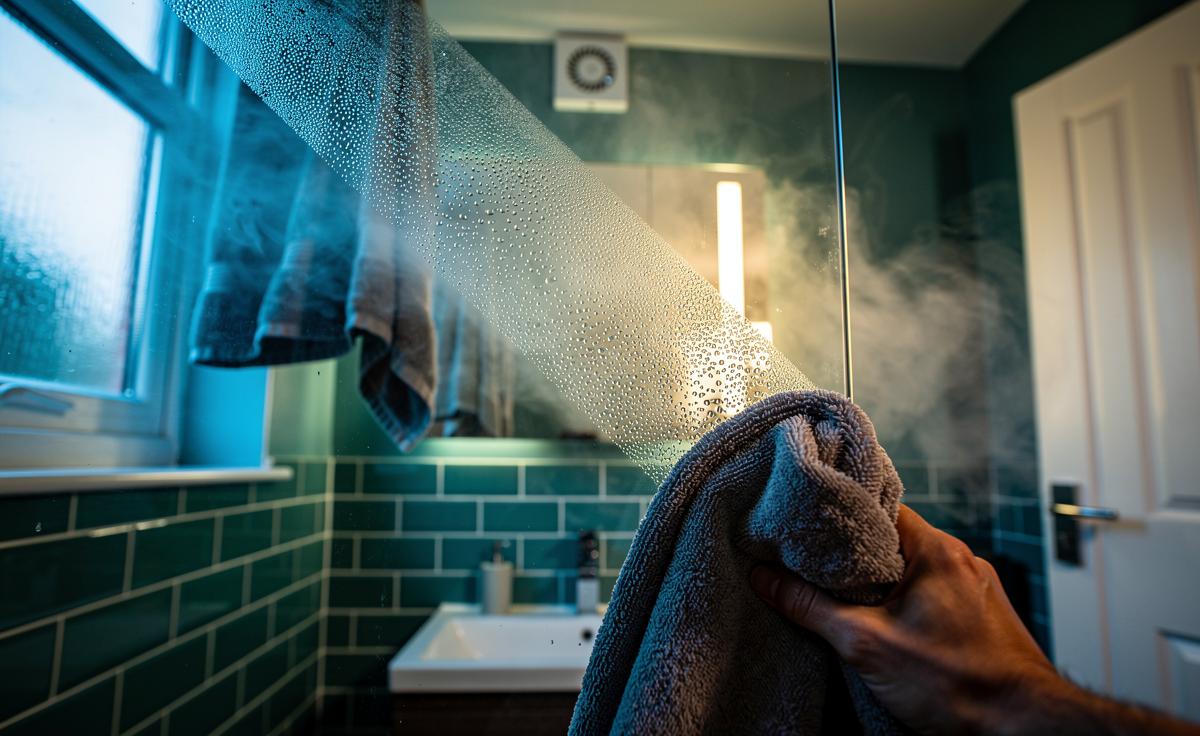
The secret is to intercept water before it vaporises. Every drop left on tiles or glass will evaporate into the room, pushing up relative humidity and feeding mould on grout and silicone. A large, dry microfibre bath towel uses capillary action to pull liquid water off surfaces quickly. You’re effectively “squeegeeing” with fabric: sweeping down walls, mirrors, and screens so moisture ends up in the towel, not the air. By lowering the moisture load at the source, your extractor fan or trickle vent has far less work to do.
There’s a second, clever move. Once the towel is damp, don’t dump it on a radiator to release steam back into the room. Instead, hang it high—on a shower rail or door—so it presents a broad surface to airflow from an extractor fan or slightly open window. That air stream carries moisture out rather than re-cycling it indoors. Think of the towel as a disposable “moisture net” that captures droplets, then hands them to ventilation for export. This neat pairing of absorption plus cross-ventilation is what dries bathrooms quicker and keeps black mould at bay.
Step-By-Step: The Two-Minute Towel Sweep
Used right, the towel trick is fast, repeatable, and renter-friendly. Follow this quick routine after every shower:
- Before you start: Switch on the extractor fan and, if possible, crack a window or leave the door ajar to create a slight draught.
- Fold a clean, dry microfibre towel into a thick pad. Sweep tiles, glass, and mirrors in vertical strokes from top to bottom, wringing into the basin if saturated.
- Give special attention to grout lines, silicone edges, and the bottom lip of shower screens where condensation and soap residue linger.
- Wipe fittings, shelves, and the cistern lid—flat surfaces trap invisible films that keep rooms humid.
- Finish with the floor outside the shower tray to stop residual damp spreading.
Now the “wick-dry” part: shake the towel once, then drape it lengthways across the shower rail or door so it hangs in front of the fan’s airflow or the path to a window. This turns the towel into a moisture wick that the fan removes, not a damp rag re-humidifying the room. If you’ve got time, spin the towel for 2–3 minutes in the washer to purge moisture entirely. Done daily, this routine trims drying times and reduces fogged mirrors, peeling paint, and that sour, damp smell.
Pros and Cons: Why Gadgets Aren’t Always Better
It’s tempting to throw tech at damp: heated mirrors, dehumidifiers, even portable fans. The towel trick thrives because it’s immediate, manual, and targets liquid water before it becomes a problem. Here’s the balanced view:
- Pros: Ultra-low cost, no installation, faster dry-down after each shower, quieter than electric kit, removes grime along with moisture, renter-safe.
- Cons: Requires a clean, dry towel on hand; adds a small laundry load; technique matters (light, even strokes work best); won’t fix structural damp or failed ventilation.
Why gadgets aren’t always better: Dehumidifiers shine in bedrooms or laundry rooms, but bathrooms produce sharp spikes of humidity within minutes. If you let water sit on surfaces, even a powerful unit must first re-evaporate those droplets—slower and costlier. By wiping first, you cut the peak humidity and shorten the time any device needs to clear the room. The towel method complements, rather than replaces, a decent extractor fan (ideally ≥15 l/s in UK bathrooms). If your fan is underperforming, pair the trick with a timely upgrade.
Materials, Hygiene, and What Works Best
Not all towels are equal. Microfibre tends to absorb quickly, grip glass well, and release water with a quick wring. Cotton terry is familiar and plush but can push water around unless folded into a firm pad. Keep your “bathroom squeegee towel” separate from body towels, and wash it hot once or twice a week to control bacteria and odours. Hygiene is as important as drying speed—don’t smear yesterday’s residue back onto today’s tiles.
| Towel Type | Absorption Feel | Grip on Glass | Best Use | Wash Frequency |
|---|---|---|---|---|
| Microfibre Bath Sheet | Fast uptake; wrings easily | Excellent (less streaking) | Daily post-shower sweep | Every 2–3 uses, hot wash |
| Cotton Terry | Good but slower; heavier when wet | Moderate; fold into firm pad | Tiles and floors | Every 1–2 uses, hot wash |
| Glass Cloth/Microfibre Glass | Light; quick-drying | Outstanding on mirrors | Final pass on mirrors/screens | Weekly or when smeary |
Practical tip: designate one large microfibre for walls and a smaller glass cloth for mirrors. Store them on a hook near the shower so using them becomes automatic. Replace any towel that starts to smell musty even after washing—residual odour signals trapped moisture or detergent build-up.
Troubleshooting Windowless or Rental Bathrooms
Many UK bathrooms lack windows, or vents are weak and noisy. The towel trick still helps by cutting the moisture spike at the source, but add these tweaks for better results:
- Use a fan with a run-on timer (10–20 minutes) and keep the door ajar post-shower to borrow airflow from the hallway.
- Hang the damp towel high in the airflow path; avoid radiators that re-steam the room. If you must, move the towel to a hallway rail after 5 minutes.
- Keep lids up and shower screens open to prevent pockets of trapped moisture.
- Once a week, wipe silicone and grout with a mild bathroom cleaner to remove biofilm—mould feeds on residues as much as on humidity.
- On cold snaps, warm the room slightly before showering; reducing surface cold lowers condensation formation.
Remember: ventilation removes airborne moisture; the towel trick removes liquid water. Used together, they bring humidity down quickly, which is what prevents the dark staining and musty odour that creep into corners. If you still see persistent damp patches despite good practice, report it—structural leaks and failed extractors won’t be solved by towels alone.
Bathrooms don’t need expensive kit to stay dry; they need swift, deliberate moisture control. This simple towel trick trims drying time, protects grout and paint, and keeps that just-cleaned smell for longer—especially in compact city flats. Fold, sweep, hang in airflow, and your room clears faster with fewer fogged mirrors and no tell-tale black spots. Small rituals repeated daily beat big interventions done rarely. Will you give the two-minute towel sweep a week-long trial and see how much faster your bathroom dries—and how much fresher it feels?
Did you like it?4.5/5 (30)