In a nutshell
- 🧪 Sodium bicarbonate works by neutralising acidic and basic odours and lightly absorbing moisture, making it a safe, non-toxic way to capture smells rather than mask them.
- 🧂 Follow the expert-approved method: sprinkle baking soda in the bin base, under the liner rim, and on the lid’s inner lip; keep it dry and refresh every 3–4 days (caddies) or after collections (wheelie bins).
- 🌿 Smart tweaks: mix with a little cornflour for moisture control or add a few drops of essential oil; avoid spraying vinegar onto fresh soda (it neutralises it), and beware coffee grounds or cat litter indoors.
- ⚖️ Pros vs. Cons: cheap, available, and gentle on plastics, but it needs regular refreshing and isn’t a disinfectant—deep clean first if leaks, scratches, or maggots are present.
- 🗓️ UK-focused upkeep: tie your refresh schedule to collection day, wrap wet scraps in newspaper, keep bins cool and dry, and adjust frequency seasonally for reliable, odour-free results.
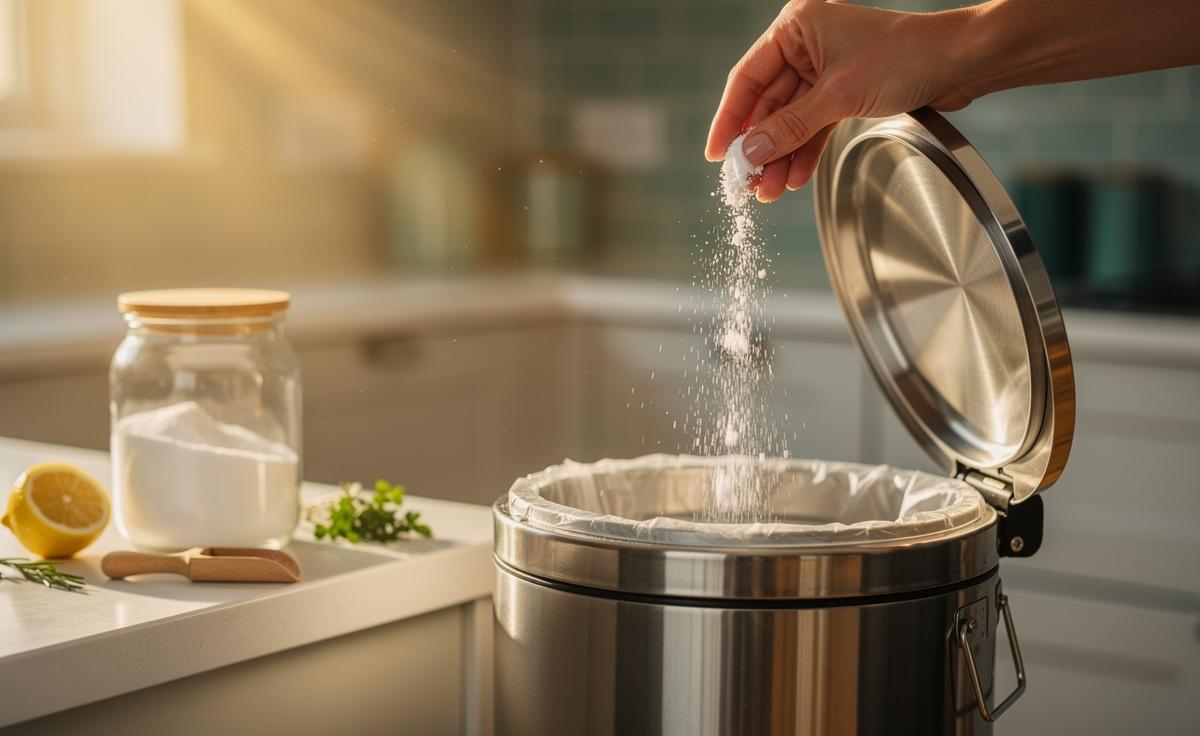
That sour waft when you lift the bin lid can make an otherwise spotless kitchen feel unclean. The simplest fix, according to cleaning coaches and waste pros I’ve interviewed over the years, is also the cheapest: baking soda. The humble powder sitting at the back of the cupboard is a quiet workhorse that traps odours rather than masking them. Below, I set out the expert-approved method, explain why sodium bicarbonate works so well, and share field notes from British households that have kept their kitchen caddies and wheelie bins fresh through heatwaves and delayed collections. The key is a small, steady dose used consistently—not a one-off blitz.
What Makes Baking Soda So Effective
The science is disarmingly simple. Sodium bicarbonate (NaHCO₃) is amphoteric, so it reacts with both acids and bases—the chemical families that produce many stubborn smells. When food waste breaks down, volatile compounds are released; bicarbonate neutralises some of those, while its crystalline structure also adsorbs (holds on to) odour molecules. In plain English: it doesn’t perfume the bin—it captures the stink.
Baking soda also helps manage microclimates inside liners. A light dusting absorbs a touch of moisture, slowing bacterial growth that thrives in damp corners. That’s especially useful in UK summers or in homes that keep bins near radiators. Unlike fragranced gels, bicarbonate is non-toxic, non-abrasive to most plastics, and safe around pets when used sensibly. It’s inexpensive and available in any supermarket or corner shop, which makes the habit easy to sustain week after week. The drawback? You must refresh it regularly; the powder becomes saturated and stops working if left in place too long. But with a simple schedule, it outperforms most quick-fix sprays.
The Expert-Approved Method, Step by Step
I’ve tested various routines in small London flats, family kitchens, and with a neighbour’s garden caddy; the method below consistently kept bins neutral—even after fish suppers and curry nights. The trick is layering: base, bin, bag, and lid.
Steps to follow:
- Before inserting a liner, sprinkle 1–2 teaspoons of baking soda into the clean, dry bin base.
- Fit the liner, then add a thin dusting (about 1 teaspoon) under the liner’s rim where drips collect.
- For wet organics, add a pinch after particularly pungent scraps (fish, onion skins, meat trays).
- Wipe the lid’s inner lip dry and tap on a light sprinkle; odours tend to accumulate there.
- Refresh every 3–4 days for kitchen caddies; after each collection for wheelie bins.
Quick reference for common bin sizes:
| Bin Type | Suggested Dose | Refresh Frequency |
|---|---|---|
| Kitchen caddy (5–7L) | 1–2 tsp base + 1 tsp rim | Every 3–4 days |
| Pedal bin (20–30L) | 1 tbsp base + 1 tsp lid | Weekly |
| Wheelie bin (120–240L) | 2 tbsp base + 1 tbsp lid | After each collection |
In my own flat, a week-long comparison—one caddy treated, one left plain—produced a clear difference by day three, confirmed by a blind “sniff test” among colleagues. Regular refreshes mattered more than heavy dosing. If leaks occur, rinse, dry thoroughly, and reapply; waterlogged bicarbonate won’t deodorise effectively.
Boosters, Variations, and What to Avoid
Some readers like to upgrade the routine. A popular tweak is to mix baking soda with a teaspoon of cornflour; the latter improves moisture control without clumping. You can also add 3–4 drops of tea tree or eucalyptus essential oil to a small jar of bicarbonate and shake—the scent is optional but pleasant. Always keep powders dry; moisture turns fresh soda into spent paste.
What about vinegar? Save it for periodic deep cleans. Spraying vinegar onto fresh bicarbonate in the bin causes a fizzy neutralisation that spends both ingredients at once—fun, but ineffective for long-term odour control. Coffee grounds absorb smells too, but they can attract pests if left damp, and they stain certain plastics. Cat litter works for wheelie bins but is overkill indoors.
Bottom line: stick to dry, fine baking soda for day-to-day use, and reserve other agents for an occasional reset clean (rinse, mild washing-up liquid, dry fully, reapply soda). Dryness and consistency beat novelty products every time.
Pros vs. Cons: Why Baking Soda Isn’t Always Better
Pros:
- Neutralises odours chemically rather than masking them.
- Cheap, safe, and widely available; no specialist refills.
- Gentle on plastic bins and liners; minimal residue when kept dry.
Cons and caveats:
- Needs regular refreshing; saturated powder stops working.
- Not a disinfectant; it tackles smell, not pathogens (cleaning still required).
- Moisture kills efficiency; leaks or condensation demand a reset.
Why it isn’t always better: enzyme-based products can outperform soda when food juices have soaked into scratches or porous bin walls. Likewise, if you’re dealing with maggots after a missed collection, you’ll need a targeted clean (hot water, detergent, and drying) before resuming the soda routine. Think of baking soda as your everyday maintenance hero—not an emergency responder.
Maintenance Tips for UK Homes and Collections
British households juggle mixed schedules—fortnightly refuse, weekly food waste, and variable garden pickups. The baking soda method adapts neatly if you tie refreshes to collection day. The evening before, tip out the old powder, wipe, and apply fresh. For food caddies, a midweek top-up handles onion skins and fish trimmings. Drying time is your friend: after rinsing, leave lids open for 15 minutes before reapplying soda.
Smart habits that amplify results:
- Wrap wet scraps in newspaper before binning; keep liners drier for longer.
- Keep bins out of sun or away from radiators to limit odour-producing heat.
- Label a small jar “Bin Soda” with a dedicated spoon to avoid cross-use in baking.
For wheelie bins, sprinkle soda after each collection and add a handful if heatwaves loom. If your council offers food waste liners, use them; they reduce seepage and make the soda’s job easier. Over winter, you’ll likely halve the refresh frequency; in July, revert to the stricter schedule. The pattern is seasonal, not fussy—and reliably fresh.
Used consistently, baking soda transforms the bin from a silent offender into a non-event. It’s inexpensive, safe, and genuinely effective when kept dry and refreshed on schedule. Pair it with quick rinses and a lid wipe, and even fish-night leftovers won’t haunt the kitchen. My newsroom rule of thumb holds at home too: little and often beats heavy and rare. How will you adapt the method—dose, refresh rhythm, and storage—to fit your household’s routines and collection calendar?
Did you like it?4.6/5 (30)