In a nutshell
- 🔥 Step 1 — Hot soapy flush clears biofilm and restores flow; wipe bowl and overflow; avoid pouring boiling water into PVC/composite.
- ⚗️ Step 2 — Deodorise with bicarbonate + vinegar or a bio-enzyme cleaner; allow proper contact time, then a warm rinse; don’t combine enzymes with bleach.
- 🧴 Step 3 — Sanitise with dilute bleach (or oxygen-based alternative) targeting strainer, gasket, and overflow; never mix with acids; rinse thoroughly.
- 🛡️ Prevention — Dry the sink after use, clean the strainer daily, schedule weekly/bi-weekly maintenance, and add mineral oil to protect the P-trap water seal in rarely used sinks.
- 🛠️ Troubleshooting — If odours persist, suspect a dry P-trap, loose slip-nut, failed gasket, or venting issue; sanitising won’t fix mechanical faults.
Kitchen sinks harbour more than crumbs; they collect fats, soap scum, and microscopic food fibres that feed a stubborn biofilm. Left alone, that film traps gases and odours that seem to return hours after you’ve scrubbed the bowl. Plumbers across the UK favour a practical, three-step routine that addresses flow, chemistry, and hygiene in sequence. It’s quick, uses familiar products, and protects your pipework. Below, you’ll find a routine designed for stainless-steel and composite basins as well as typical PVC waste pipes, with safety notes where it matters. Follow the steps weekly in busy kitchens—or after heavy cooking—and you’ll keep smells at bay while extending the life of your P-trap and seals.
Step 1: Dislodge Build-Up with Heat and Surfactants
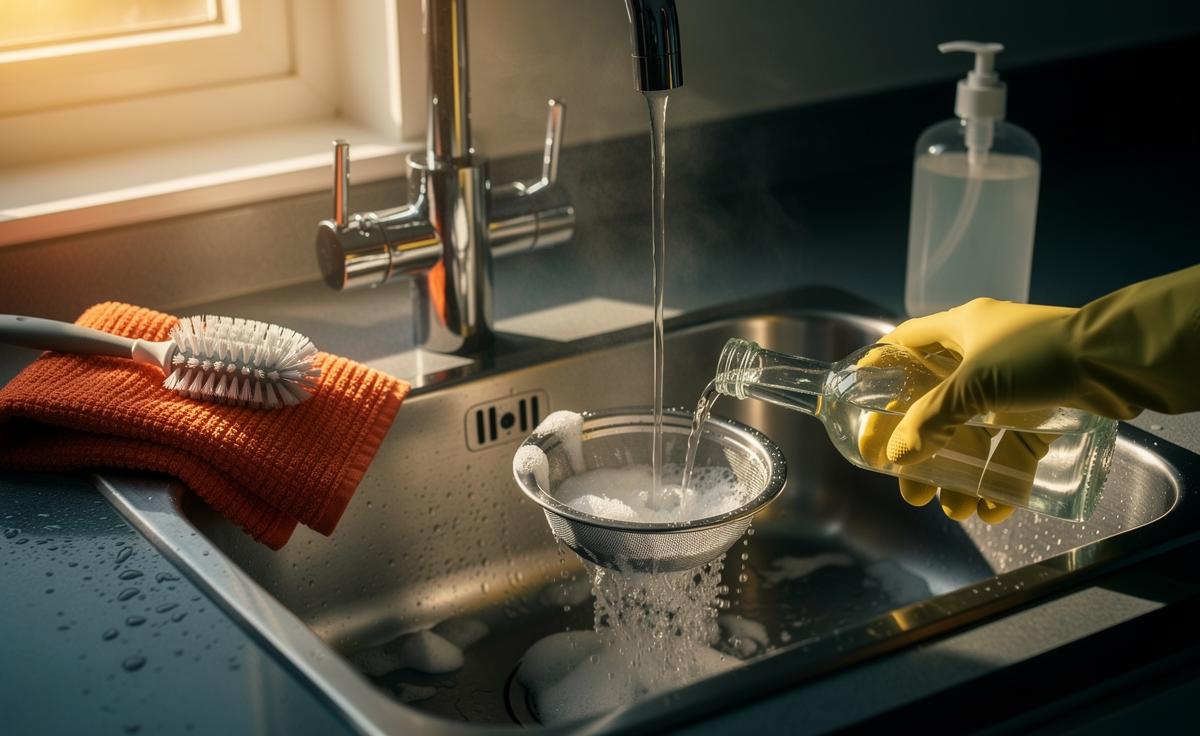
Before you mask smells, clear the source. Fill the sink halfway with the hottest safe tap water you can draw, then add a generous squeeze of washing-up liquid. Swish to create a slick solution, pull the plug, and let the water surge through. That brief “hydraulic push” scours the trap and tailpiece, while surfactants break the bond between greasy film and pipe walls. For metal basins and traps in good condition, a measured kettle top-up can help, but avoid dumping a full kettle of rolling-boil directly into PVC pipework or onto composite sinks. Heat softens residues; detergent moves them.
Now, wipe the bowl, rim, plug and strainer with a microfibre cloth and the same hot, soapy water. Don’t skip the overflow slot—odours lurk there. A soft bottle brush makes light work of that channel. Why not bleach now? Because you want flow restored first; disinfectant can’t “reach” through grease. Two minutes of preparation here makes the rest of the routine far more effective and reduces the temptation to overuse harsh chemicals.
- Tools: Hot tap water, washing-up liquid, microfibre cloth, soft brush (for overflow).
- Tip: If the sink is rarely used, top up the trap with a litre of hot water after this step to re-seal against sewer gases.
- Why “more heat” isn’t always better: Excessive boiling water risks softening PVC joints and damaging finishes.
Step 2: Deodorise and Digest with Safe Kitchen Chemistry
With flow restored, move to gentle chemistry that targets smell-causing residues. A classic is bicarbonate of soda (two heaped tablespoons) followed by a slow pour of warm water to settle it, then a half-cup of white vinegar. You’ll get fizz; leave it for 10–15 minutes. The foam won’t “dissolve” clogs, but it does loosen film and neutralise some odours. Alternatively, use a bio-enzyme drain cleaner overnight; enzymes slowly digest fats and proteins along the wet line of the pipe—especially helpful for households that cook with oils. If you choose enzymes, skip bleach for at least 24 hours or you’ll deactivate the biology.
Plumbers often pair this step with a second mini-flush of hot water (not boiling) to carry loosened residues away. Here’s a quick side-by-side to help you pick the right tactic for your week. The goal isn’t brute force; it’s matching action to residue type—fat, starch, or soap scum—so the final sanitising step can work on a clean surface rather than a greasy one.
| Method | Contact Time | Pros | Cons |
|---|---|---|---|
| Bicarb + Vinegar | 10–15 minutes | Inexpensive; lifts film; neutralises light odours | Limited on heavy grease; fizz is mechanical, not a strong cleaner |
| Enzyme Cleaner | Overnight | Digests fats/proteins; septic- and eco-friendly options | Slower; incompatible with bleach within 24 hours |
| Hot Soapy Flush | Immediate | Simplest; safe for most finishes | May need repeating if buildup is heavy |
- Why “more vinegar” isn’t better: Excess acid can etch some finishes and offers no extra odour control once bicarb is spent.
- Smell persists? You may have stagnant water in the overflow or a partial obstruction beyond the trap—note for Step 3.
Step 3: Sanitise the Drain and Air Gap, Then Keep It Dry
Sanitising locks in your win. For many households, a dilute bleach solution—mixed strictly per label, often around 1:20 for general disinfection—poured slowly around the strainer, into the overflow, and down the waste will neutralise residual bacteria. Leave for 5–10 minutes, then rinse with hot water. Never mix bleach with vinegar, ammonia, or any other cleaner. If you prefer non-bleach options, look for oxygen-based sanitisers and follow contact times precisely. The key is even coverage: a squeezy bottle helps you target the underside of the basket and the rubber gasket where biofilm clings.
Finish with prevention: wipe the sink dry after the last rinse; clean the strainer cup daily; and once a month, remove and scrub the trap’s accessible components if your installation allows. For seldom-used sinks, add a teaspoon of mineral oil after topping the trap—this slows evaporation of the water seal. If odours return within hours, you may be dealing with a loose trap slip-nut, a failed gasket, or a venting issue rather than hygiene. Sanitiser can’t fix mechanical faults, and persistent smells warrant a professional inspection.
- Pros vs. Cons of Bleach: Fast and broad-spectrum vs. corrosive if overused and incompatible with enzymes.
- Routine: Weekly for busy kitchens; bi-weekly for light use; monthly deep check on gaskets and overflow.
Handled in this order—flush, deodorise, sanitise—your sink stays fresh without heavy chemicals or frantic scrubbing. The routine tackles causes, not just symptoms, and builds habits that protect seals, finishes, and the vital water plug inside your P-trap. If anything smells “sewerish” after these steps, assume a dry trap or vent issue first, not a dirty bowl, and act accordingly. What part of this three-step plan will you adopt today—and which stubborn kitchen odour are you finally hoping to banish for good?
Did you like it?4.4/5 (21)