In a nutshell
- 🧰 Organise by Task, Not Room: Group supplies into Dust & Polish, Wet Clean, Degrease, Sanitise, and Descale to cut decisions and footsteps.
- 🏃♂️ Grab-and-Go Zone Kits: Portable caddies for Kitchen, Bathroom, and General areas prevent mid-job trips and keep momentum high.
- 🏷️ Label, Refill, Rotate: Clear dilution labels, a weekly refill rhythm, and FIFO cloth rotation maintain safety and eliminate shortages.
- 🗂️ Speed-First Storage: Use open caddies, rails, and over-door organisers; avoid deep baskets and unlabelled bottles that slow recognition.
- ⚡ Smart Placements & Micro-Habits: Keep tools where mess happens and stack “while I’m here” tasks to stop buildup and halve cleaning time.
A tidy house starts with a tidy toolkit. If your sprays, cloths, and gloves live in a jumble under the sink, every chore begins with a scavenger hunt. That’s why the smartest way to speed up housework is to reorganise what you own, where you keep it, and how quickly you can grab it. In reader homes I’ve visited across the UK, simple rearrangements have shaved minutes off every task, compounding into hours by week’s end. The principle is simple: reduce decision-making and footsteps, and cleaning time falls by half. Here’s how to overhaul your supplies so every wipe, sweep, and scrub flows without friction.
Organise by Task, Not by Room
Most households file sprays and cloths by room—bathroom box here, kitchen basket there. But grime doesn’t respect room labels; it follows tasks like degreasing, dusting, or limescale removal. When you group by task, you always have the right tool in one reach, no matter where the mess appears. Create core categories: Dust & Polish (microfibre, duster, furniture polish), Wet Clean (all-purpose spray, squeegee, mop solution), Degrease (degreaser, scraper, hob sponge), Sanitise (disinfectant, gloves, colour-coded cloths), and Descale (acidic bathroom cleaner, grout brush). Store task kits centrally to reduce duplication, then park a mini version in hot spots (kitchen, bathroom).
During a declutter in a Lewisham flat, we merged three half-used sprays and binned five redundant gadgets. We built a single Dust & Polish pouch and a Degrease caddy. The owner stopped zig-zagging for cloths and finished surfaces in a single sweep. Place tools where the mess happens, not where a cupboard happens to be: hob-side for degreaser, shower rail for squeegee, hallway for dusting kit. The result is a route that flows clockwise through the home, task by task, with no backtracking.
Create a Grab-and-Go Cleaning Kit for Each Zone
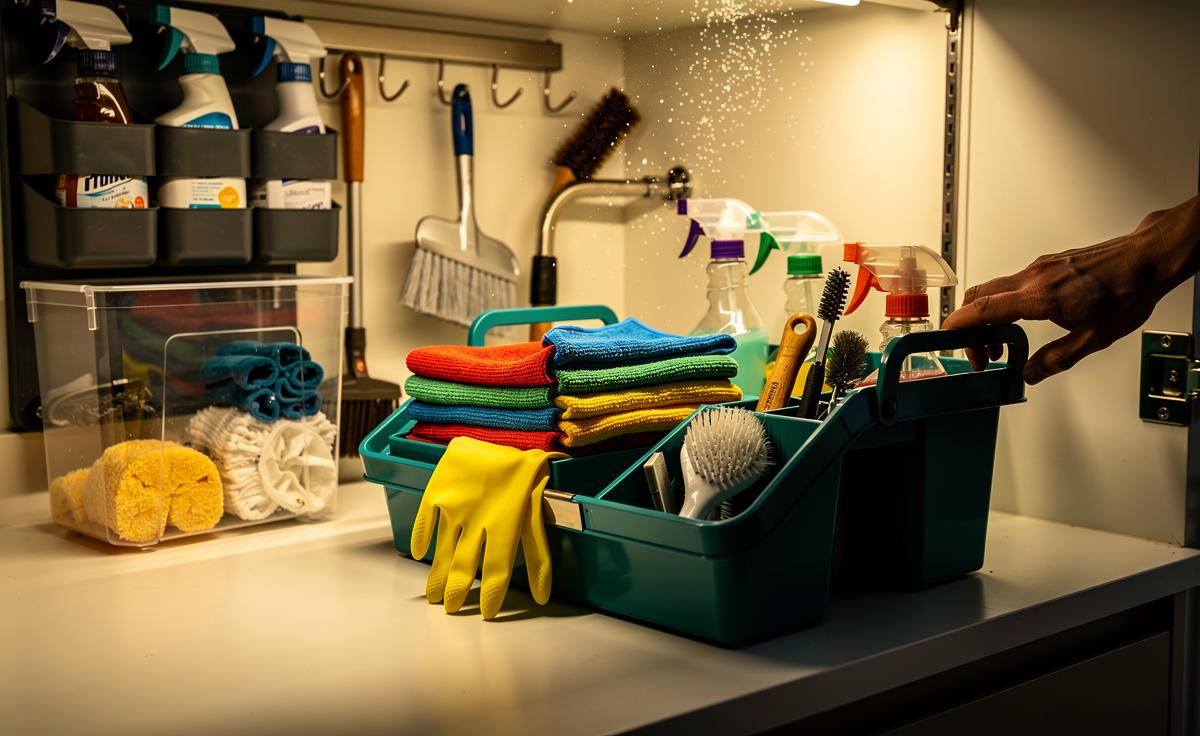
A zone kit is a portable caddy that prevents you from leaving the room mid-job. Think of it as theatre: if the prop isn’t on stage, the scene stops. Build three: one for the Kitchen, one for the Bathroom, and one General kit that follows you everywhere else. Preloading the caddy removes the pause that kills momentum. Keep decanted, clearly labelled bottles and colour-coded microfibre to prevent cross-contamination.
- Kitchen: Degreaser, washing-up liquid, scraper, hob sponge, stainless-steel spray, glass cloth.
- Bathroom: Limescale remover, disinfectant, grout brush, squeegee, loo brush tabs, nitrile gloves.
- General: All-purpose spray, furniture polish, extendable duster, lint roller, spare microfibre, bin liners.
Keep each kit on the route you naturally walk: kitchen caddy near the bin or under the sink on a pull-out tray; bathroom kit on a high shelf or over-door organiser; general kit on a hallway shelf or utility pegboard. In my notes from a Manchester terrace, moving the bathroom kit from the airing cupboard to an over-door pouch cut shower cleanup from 11 minutes to 6 because everything lived within arm’s length. If you can lift it with one hand, you’ll use it daily.
Label, Refill, and Rotate: The Maintenance Loop
Organisation fails when bottles run dry or labels fade. Build a simple maintenance loop so the system runs itself. First, decant concentrates into uniform trigger bottles and write dilution ratios directly on the label (e.g., “1:10 floors”). Add a use-by month for anything that weakens over time. Clear labels remove hesitation and reduce waste from overpouring.
Second, set a refill rhythm: every first Saturday, top up and wash microfibre on a 40°C cycle (no fabric softener). Keep a tiny “shop shelf” bin with one spare for each essential—when you open a spare, add the item to your shopping list. Finally, rotate cloths and brushes: heaviest-duty items retire to muddy jobs (trainers, outdoor furniture) before being binned. This FIFO (first in, first out) approach prevents the graveyard of grey cloths and mystery sprays. In a Surrey semi, adding a laminated refill checklist to the inside of the under-sink door stopped mid-week shortages cold. Systems beat willpower; make the routine visible and automatic.
Storage That Speeds You Up: What Works and What Doesn’t
Not all storage is equal. The aim is zero-friction access, not pretty containers that trap your tools. Here’s a quick grid to help you choose speed over aesthetics. Remember: a lid you have to wrestle is a lid that won’t be used.
| Storage Option | Pros | Cons | Best For |
|---|---|---|---|
| Open caddy with handle | Portable, all tools visible, light | Can tip if overfilled | Daily kits (kitchen, general) |
| Wall rail/pegboard | One-grab access, dries tools | Needs wall space and anchors | Mops, brushes, spray hooks |
| Over-door organiser | Uses dead space, segmented | Can slam/rattle | Bathrooms, rental-friendly |
| Clear bins (no lids) | Visual inventory, stackable | Dust can settle; easy to overstack | Back stock and refills |
| Lazy Susan turntable | Quick spin access in corners | Tall bottles may topple | Under-sink corners |
| High shelf cupboard | Child-safe, out of sight | Fewer visual cues; hard to reach | Hazardous concentrates |
Why “Prettier” Isn’t Always Better: decanting into identical, unlabelled amber bottles looks chic but slows recognition and risks misuse. Likewise, deep baskets hide tools and encourage overbuying. Visibility beats vanity when speed is the goal. Choose breathable storage so sponges dry, add S-hooks for sprays on a rail, and fit a pull-out tray under the sink to stop the “back-row graveyard.”
Smart Placements and Micro-Habits That Compound
Speed comes from distance shaved and decisions removed. Hang a squeegee on the shower rail and swipe after each rinse—limescale doesn’t build, so you skip weekend scrubs. Keep a pack of microfibre cloths in the hallway to hit dusty skirting on the school-run exit. Drop bin liners at the bottom of every bin so one bag out, one bag in is a single movement. Each micro-habit is a minute you don’t spend later.
Adopt “while I’m here” rules: if you’re brewing tea, spritz and wipe the hob; if the bath is draining, mist descaler and squeegee glass; when toothpaste caps are off, disinfect the tap. These piggyback tasks exploit dwell time you already have. In one Hackney house-share, placing a disinfectant wipe tub by the loo cut Saturday bathroom time by a third because splashes and fingerprints never accumulated. Make the right action the easy action, and deep cleans become light touch-ups.
When your supplies are where your habits live, chores stop feeling like projects and start running on rails. Kits reduce faff, labels remove doubt, and smart storage keeps everything in your line of sight. Most importantly, you spend time cleaning, not preparing to clean. Try one caddy and one rail this week, then add refills and labels next. In a fortnight, you’ll notice you’re doing less and finishing sooner. Which zone will you overhaul first—and what single change would save you the most minutes every day?
Did you like it?4.6/5 (28)