In a nutshell
- 🧽 Pros favour natural overnight cleaning: a mild-alkali baking soda paste plus time disrupts polymerised grease, delivering low-fume, precise results that protect enamel, seals and indoor air.
- ⏳ Follow the step-by-step: spread 1/2 cup bicarb + 2–3 tbsp water (optional castile soap), keep damp for 8–12 hours, then spritz a 1:1 vinegar–water mix, wipe with microfibre, and briefly heat to dry—never coat heating elements or vents.
- 🪟 Tackle problem areas: reapply thicker paste for stubborn spots, use a plastic scraper; treat glass doors with a thin bicarb + washing-up liquid layer (30–60 mins); soak racks overnight in hot water with bicarb and salt, taking care with aluminium.
- ⚖️ Pros vs. cons: Natural methods are affordable, low-fume and surface-safe but need patience; caustic sprays act fast yet risk fumes, etched aluminium and damaged gaskets.
- 🧪 Pro tips and safeguards: keep paste moist, avoid premature neutralisation with vinegar, consider lemon steam as a pre-softener, ventilate, wear gloves and use non-scratch tools for a gentle, repeatable clean.
Ask any seasoned cleaner and they’ll tell you: the simplest way to restore a gummed-up oven is to let chemistry and time do the work while you sleep. By pairing mild alkalis and natural acids with an overnight dwell, professionals loosen baked-on grease without the choking fumes of caustic sprays. Let dwell time do the heavy lifting, not your wrists. Below, I unpack the pro playbook—how to use pantry staples like baking soda, white vinegar, and citrus steam to unglue grime, protect finishes, and wake up to a wipe-clean cavity. Expect practical ratios, safety notes UK cleaners live by, and smart workarounds for glass doors and racks.
Why Professionals Prefer Natural Overnight Methods
Professional housekeepers lean on natural cleaners because they’re dependable, inexpensive, and kinder to both lungs and materials. The trick isn’t exotic ingredients; it’s contact time. Grease in ovens undergoes polymerisation as it heats, forming tough films. A baking soda paste (alkaline) slowly disrupts those bonds overnight, creating a soft residue that lifts with minimal pressure by morning. This is the crucial insight: give the product time, and the grime gives way.
Pros also favour natural methods for safety and control. With a paste, you decide where it goes—away from vents, fans and heating elements—reducing the risk of damage. There’s no acrid fog, less risk to door seals, and far fewer complaints in small UK flats where ventilation can be poor. It’s cheaper too: staples like bicarb and vinegar often cost pence per clean, so they’re go-to choices on recurring schedules. Key advantages professionals cite include:
- Low fume, low risk for tenants, pets, and delicate finishes.
- Precision: targeted application avoids soaked insulation or sensitive sensors.
- Consistency: reliable results with repeatable ratios and dwell times.
Overnight isn’t about waiting; it’s about working smarter—chemistry continues while you rest.
Step-By-Step: The Overnight Baking Soda Method
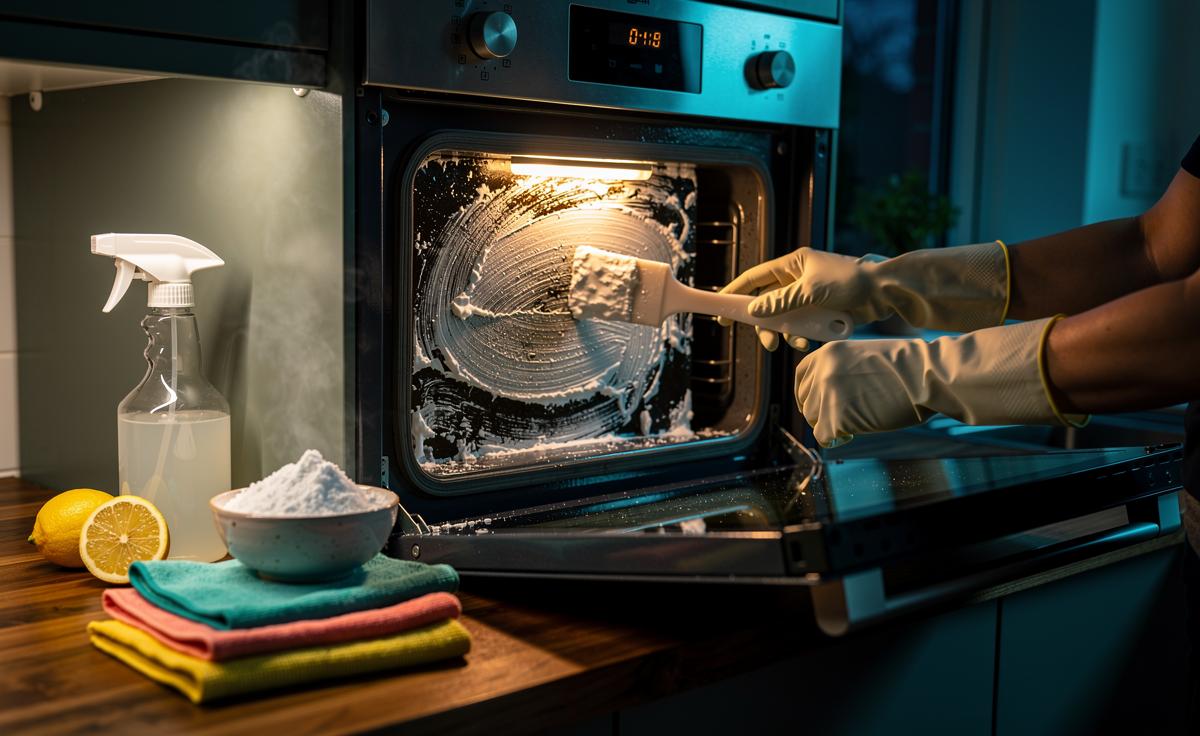
Before you begin, switch the oven off at the wall, ensure it’s cool, open a window, and put on gloves. Remove racks and trays so you can treat them separately. Mix a paste of 100–120 g baking soda (about 1/2 cup) with 2–3 tbsp water. For extra slip, add 1 tsp liquid castile soap (optional). Spread a 2–3 mm layer over the cavity—avoiding heating elements, vents, and light fittings. Never coat elements or fan housings; moisture and residue there are trouble. Lightly mist the paste with water and lay sheets of damp kitchen paper on top to prevent drying.
- Leave for 8–12 hours (overnight). If the paste dries, re-mist lightly.
- In the morning, lift off the paper and loosened soils with a plastic scraper.
- Spritz with a 1:1 white vinegar–water mix; the fizz helps break films.
- Wipe with a microfibre cloth, rinsing frequently with hot water.
- Finish with a clean damp cloth, then a dry polish. Heat the empty oven at 90°C for 10 minutes to drive off moisture.
Don’t rush to the vinegar stage: early acid will neutralise your alkali, slowing the clean.
| Ingredient | Ratio | Where It Shines | Wait Time | Pro Note |
|---|---|---|---|---|
| Baking soda paste | 1/2 cup bicarb + 2–3 tbsp water | Cavity walls, floor, door frame | 8–12 hours | Keep damp with paper to prevent crusting. |
| White vinegar spray | 1:1 vinegar to water | Neutralising and final lift | 2–5 minutes | Spritz after dwell to avoid premature neutralisation. |
| Lemon steam | 2 lemons in 500 ml water | Softening light films | 20–30 minutes (warm oven off) | Use as a pre-softener before paste on light soils. |
Stubborn Spots, Glass Doors, and Racks: Pro Fixes Without Harsh Chemicals
For burnt-on spots that outlast a single overnight, reapply a thicker paste, cover with cling film or damp paper, and extend the dwell to 14 hours. Then dislodge residues with a plastic scraper or a wooden spatula used at a shallow angle. Skip steel wool: it scratches enamel and traps future grime. On glass doors, mix 3 tbsp bicarb with a few drops of washing-up liquid (plant-based), spread thinly, and leave 30–60 minutes; wipe with a microfibre, buff dry with newspaper for a streak-free finish.
Racks respond well to a soak: line a bathtub with an old towel, lay racks on top, cover with very hot water, dissolve 1/2 cup baking soda and 1/4 cup salt, and leave overnight. Wipe with a non-scratch pad, rinse and dry. If your racks are bare aluminium, keep contact times shorter to avoid dulling. A citrus pre-steam helps too—heat a tray of water with lemon halves at 120°C for 20 minutes, switch off, and shut the door so vapour softens residue before the paste goes on.
Professionals also sequence tasks for speed: clean the cavity first, then treat glass and racks while the vinegar fizz subsides, returning for a final polish. Two light applications beat one aggressive scrub every time. On older ovens, pros expect a second overnight on the worst panels; the cumulative effect is gentler on enamel and seals.
Pros vs. Cons: Natural Cleaners vs. Caustic Sprays
Natural overnight approaches win on air quality, cost, and control. They’re ideal for regular maintenance and tenant-friendly schedules. But they’re not instant. If you need a same-hour turnaround, natural may require a repeat pass. By contrast, caustic sprays can blitz heavy carbon quickly—but at a price: harsh fumes, potential for etched aluminium, and risk to rubber gaskets and decorative trims if misapplied. Here’s the professional calculus:
- Natural pros: low fumes, low cost, precise, safer on finishes.
- Natural cons: requires dwell time; stubborn carbon may need a second round.
- Caustic pros: fast on thick carbon; less waiting.
- Caustic cons: fumes, PPE needed, higher risk to seals, coatings, and you.
Common mistakes to avoid with natural methods include: flooding paste into vents, letting paste dry rock-hard (keep it damp), attacking glass with abrasives, and neutralising the bicarb too early with vinegar. Always spot-test on a hidden edge, and never apply any cleaner to heating elements or fan assemblies. As a rule, time + mild alkalinity beats brute force, preserves enamel, and keeps your kitchen breathable.
Natural overnight cleaning rewards patience with an easier morning: softened films, fewer fumes, and a surface that wipes clean with a cloth rather than a fight. Stock the basics—baking soda, vinegar, lemons, and quality microfibres—and you can create a rhythm that outpaces grime before it hardens again. Let the chemistry work quietly while you sleep, and scrub less in the daylight. What part of your oven gives you the most grief—cavity corners, the glass, or racks—and which of these pro tactics will you try first to make tomorrow’s wipe-down effortless?
Did you like it?4.5/5 (30)