In a nutshell
- 🔥 Darker roof shingles can drive indoor temperatures up by as much as 4°C during extended heatwaves due to low solar reflectance, limited thermal emittance, and heat stored in building thermal mass.
- 🏠 The UK’s housing stock is built for cold, leaving top‑floor rooms, loft conversions, and renters especially exposed; vulnerable groups face a growing public‑health risk as night‑time cooling falters.
- ⚖️ Pros vs. Cons: Dark shingles offer familiar aesthetics and minor winter gains, but elevate roof temps, speed material wear, and fuel the urban heat island; light/cool roofs cut peak room temps and energy use, with heritage or glare as manageable trade‑offs.
- 🛠️ Practical fixes now: enhance eaves/ridge ventilation, top up loft insulation, use night‑purge ventilation, add external shading, apply selective cool‑roof coatings, and consider solar PV for shading plus power.
- 🏙️ Policy lever: Councils and landlords can specify higher‑reflectance products, prioritise overheating in stock surveys, and align grants with risk—because every degree avoided eases strain on the grid and the NHS.
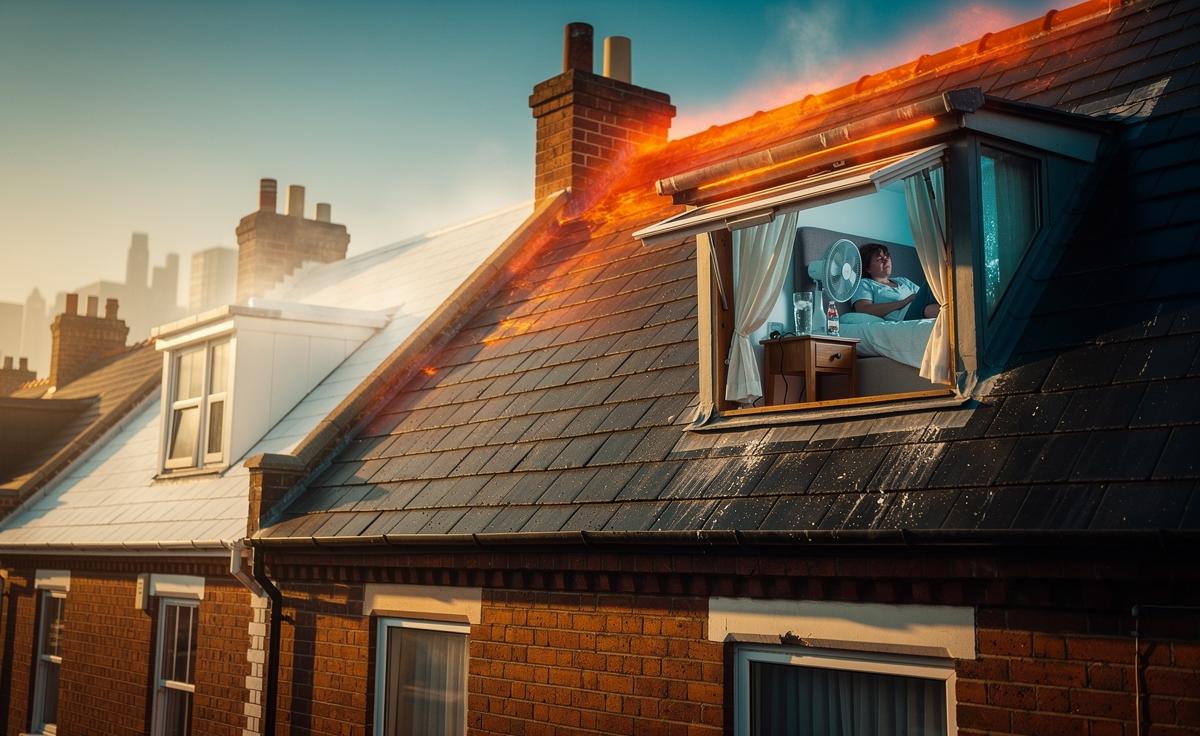
As Britain braces for longer, fiercer heatwaves, climate specialists are warning of a quiet culprit overhead: darker roof shingles. During multi‑day heat events, low‑reflectance roofs can push indoor temperatures by as much as 4°C, compounding health risks, lost sleep, and energy stress for households unaccustomed to mechanical cooling. In a nation whose housing stock was engineered to hoard warmth, that uplift is more than discomfort; it’s a public‑health and infrastructure concern. After 2022’s 40°C record and rising urban heat, the colour and chemistry of our roofs have entered the climate‑adaptation mainstream. The evidence is building, the physics are plain, and the choices we make now will echo through the next decade of summer nights.
Why Darker Roofs Trap More Heat
Darker shingles absorb more of the sun’s energy, leading to hotter roof surfaces and warmer rooms below. Two properties drive the effect: solar reflectance (how much sunlight is bounced away) and thermal emittance (how effectively a material sheds heat as infrared). Conventional dark asphalt or concrete tiles often have low reflectance, heating to well above ambient air. That heat conducts into rafters and plasterboard, while hot roof cavities radiate into top‑floor rooms. Over several scorching days, the building’s thermal mass stores energy, and night‑time cooling struggles to reset the clock, leaving bedrooms uncomfortably warm by dusk on day three.
| Roof Finish | Typical Solar Reflectance | Surface Temp on 30°C Day | Indicative Indoor Uplift in Prolonged Heat |
|---|---|---|---|
| Dark asphalt/concrete shingle | 0.05–0.15 | 65–80°C | Up to ~4°C |
| Mid‑tone tile | 0.20–0.35 | 55–65°C | ~2–3°C |
| “Cool” light‑coloured shingle/coating | 0.50–0.70+ | 40–55°C | ~0–2°C |
The much‑discussed 4°C indoor rise is most evident in top‑storey spaces under dark, poorly vented roofs during extended hot spells. Heat enters via conduction, cavity radiation, and “stack effect” airflows that pull hot air down. Once the loft space is super‑heated, every hour of sun compounds the problem. While insulation slows the pulse, low reflectance keeps pumping energy into the system. Reduce the input—by reflecting more sun—and the whole heat balance shifts in your favour.
Context matters. Orientation, roof pitch, shading from trees or adjacent buildings, loft insulation thickness, vapour control layers, and ventilation all modulate the outcome. Industry measurements and building‑physics models consistently show the same direction of travel: higher reflectance, cooler roofs, and lower peak indoor temperatures. That is why reflective finishes—long used on flat roofs—are now being considered for pitched roofs across UK towns wrestling with the urban heat island.
UK Housing Stock: Built for Cold, Exposed to Heat
Britain’s homes were designed to keep heat in, not out. Solid‑wall terraces, post‑war semis, and loft conversions frequently pair dark tiles with limited summer ventilation paths. New‑build standards have begun to acknowledge overheating risk—most notably through updated rules addressing summertime gains—but millions of existing dwellings still face the old reality. Top‑floor flats, converted attics, and south‑facing bedrooms are the frontline, and when heatwaves linger beyond 48 hours, internal gains from cooking, electronics, and occupants stack atop roof‑driven warming. For renters, restricted alterations and cost constraints often mean fans, foil blinds, and a hope for breeze—rarely enough when nighttime minima stay elevated in cities.
- High‑risk features: dark shingles, low eaves ventilation, thin loft insulation, single‑aspect layouts, large rooflights without external shading.
- High‑risk occupants: older adults, infants, those with cardiovascular or respiratory conditions, and shift workers needing daytime sleep.
- High‑risk locations: dense urban areas with scant tree cover and extensive dark surfaces intensifying the urban heat island.
Building modelers commonly report that swapping a dark, low‑reflectance roof for a lighter, higher‑reflectance finish can trim peak bedroom temperatures by a few degrees, especially when paired with night‑purge ventilation and shading. In practice, a reflective roof won’t cure every case; glazing, orientation, and internal loads still matter. But as a retrofit lever, the roof is unusually powerful because it moderates the heat source itself. Stop the sun at the surface, and the whole house breathes easier.
Pros vs. Cons: Dark Shingles in a Warming Climate
Not every homeowner will rush to repaint or replace their roof, and there are trade‑offs to weigh. In cooler months, darker roofs can provide a modest benefit by absorbing solar heat, potentially shaving a sliver off heating demand on bright winter days. They can also blend with local vernaculars and satisfy conservation sensibilities. Yet the calculus is changing. More frequent, longer heat events tilt the balance toward summer comfort and health, particularly for vulnerable residents in top‑storey rooms.
- Pros (Dark Shingles): familiar aesthetics; possible minor winter warmth; may align with heritage palettes; materials widely available.
- Cons (Dark Shingles): higher roof surface temperatures; up to ~4°C indoor uplift in prolonged heat; faster material weathering from thermal cycling; elevated cooling demand if AC is installed; contribution to the urban heat island.
- Pros (Light/Cool Roofs): lower peak attic and room temperatures; improved sleep quality; reduced fan/AC use; potentially longer roof life by limiting heat stress.
- Cons (Light/Cool Roofs): heritage constraints; risk of glare in specific contexts; small winter “penalty” in solar gains that matters most in very efficient, sun‑exposed homes.
The emerging consensus from building‑services experts is pragmatic: prioritise summer safety while designing sensitively. In conservation areas, higher‑reflectance finishes that mimic traditional tones now exist, and some coatings deliver better emittance without dramatic colour shifts. Where roofs must remain dark, pairing them with robust loft insulation, external shading, and effective night‑time ventilation helps keep homes within safe, tolerable temperatures.
What Homeowners and Councils Can Do Now
Households don’t need to wait for a re‑roof to act. Start with the roof cavity: ensure adequate eaves and ridge ventilation, top up loft insulation to modern standards, and seal air leaks between living spaces and the loft to block radiant and convective heat transfer. For existing dark roofs, consider selective cool‑roof coatings where appropriate—always following manufacturer guidance and heritage rules—to boost reflectance without a wholesale aesthetic shift. Small, inexpensive measures can shave crucial degrees off peak temperatures and improve night‑time recovery.
- Add external shading (awnings, shutters) to rooflights and top‑floor windows before internal blinds; stop heat outside the glass.
- Deploy controlled night‑purge ventilation when outdoor temperatures drop; use secure window latches or stack ventilation where possible.
- Plant shade trees and light‑coloured hard landscaping to cool façades and reduce local heat build‑up.
- Consider solar PV; modules shade roof surfaces and convert part of the solar load into electricity, a double win.
- For councils and landlords: update specifications to favour higher‑reflectance, high‑emittance products where compatible; target overheating risk in stock surveys; prioritise retrofits for vulnerable tenants.
Costs scale with ambition—from modest ventilation tweaks to full re‑roofing—but many measures dovetail with routine maintenance cycles. Crucially, upgrades should be bundled: reflective roofs, shading, airtightness, and ventilation work best as a system. Local authorities can accelerate progress by integrating cool‑roof criteria into procurement, aligning grants with overheating risk, and coordinating street‑level shade. Every degree avoided at the roofline ripples through the grid, the NHS, and our sleep.
The message is plain: in an era of longer UK heatwaves, roof colour and composition are health infrastructure. Dark shingles can look timeless, but their thermal load isn’t. Tackling the roof first reduces the heat at source, buys resilience for top‑floor rooms, and lowers energy demand if cooling becomes necessary. As communities retrofit for a warmer future, will we redesign our rooftops to reflect the sun—and our new climate reality—or keep absorbing heat we can no longer afford to carry?
Did you like it?4.5/5 (28)