In a nutshell
- 🌿 Rosemary revival: A grandmother’s habit returns as a quick, low-cost way to refresh rooms; its crisp, herbal aroma (with compounds like 1,8-cineole) cuts cooking odours and boosts mood through powerful scent-memory links.
- 🔧 How-to, the grandmother way: Use a simmer pot (sprig + lemon), a radiator sprig on a dish, drawer sachets, and rosemary-infused vinegar for cleaning—prioritising small, daily rituals and basic safety (e.g., don’t leave pots unattended).
- ⚖️ Pros vs. Cons: Pros—fast odour reset, low-tox, budget-friendly, renter-safe, biophilic lift. Cons—herbal note isn’t universal, essential oil overuse can irritate, simmer pots need supervision; diffusers aren’t always better due to synthetic bases and constant power.
- 💷 Budget, sourcing, and care: £1–£2 for a pack or £3–£6 for a plant; grow on a sunny windowsill, trim lightly, dry extra sprigs, and swap cuttings—one plant scents rooms, seasons food, and supplies cleaning infusions.
- 🏡 Customisable ritual: Pair with bay or sweet orange to soften sharpness; use intermittently to avoid nose fatigue; apply seasonally (summer cold-water jugs, winter heat release) for a home that feels cleaner, calmer, and more intentional.
Before plug-ins and paraffin candles, British households had a simpler trick: a sprig of rosemary by the stove, on the mantle, or stitched into a little linen bag. That grandmother’s rosemary habit is trending again on TikTok and in kitchen-table chats, and for good reason. The herb’s resinous, piney aroma cuts through winter heaviness and damp, while its evergreen presence feels quietly optimistic. Small, habitual rituals can transform the mood of a home faster than a shopping spree, and rosemary proves it. From a kettle-side simmer pot to a thrifted jar of infused vinegar, here’s how a humble herb is reshaping domestic life—quickly, cheaply, and with unmistakable character.
Why Rosemary Is Back: Scent, Memory, and Microbiome
Walk into a room scented with fresh rosemary and you’ll notice it at once: a clear, camphor-bright note that lands somewhere between forest and citrus. Neuroscientists often link scent to recall, and British literature nodded to the idea centuries ago—“rosemary for remembrance” has become folklore shorthand. That’s part of the comeback. But there’s also practicality. In tightly sealed modern flats, air can get stale fast; rosemary’s volatile oils help cut cooking odours and pet mustiness without heavy, lingering sweetness. It delivers a crisp, “windows-open” feeling even when the sash stays shut. The effect is less perfume, more atmosphere—a change you feel as much as smell.
There’s also the matter of domestic ecology. We’ve grown wary of harsh aerosols, and rosemary slips neatly into low-tox routines. While you shouldn’t treat it like medicine, its constituents—such as 1,8-cineole and rosmarinic acid—are well-documented in lab literature for odour-neutralising and surface-freshening roles. Add the biophilic lift of seeing green sprigs in a jug by the sink and you’ve got a sensory trifecta: visual calm, cleaner-smelling air, and a ritual that marks transitions—morning coffee, post-school chaos, or the quiet after supper. In my own London flat, ten minutes of rosemary simmering made the hallway feel lighter, almost like a brisk walk along the Heath.
How to Use Rosemary at Home, the Grandmother Way
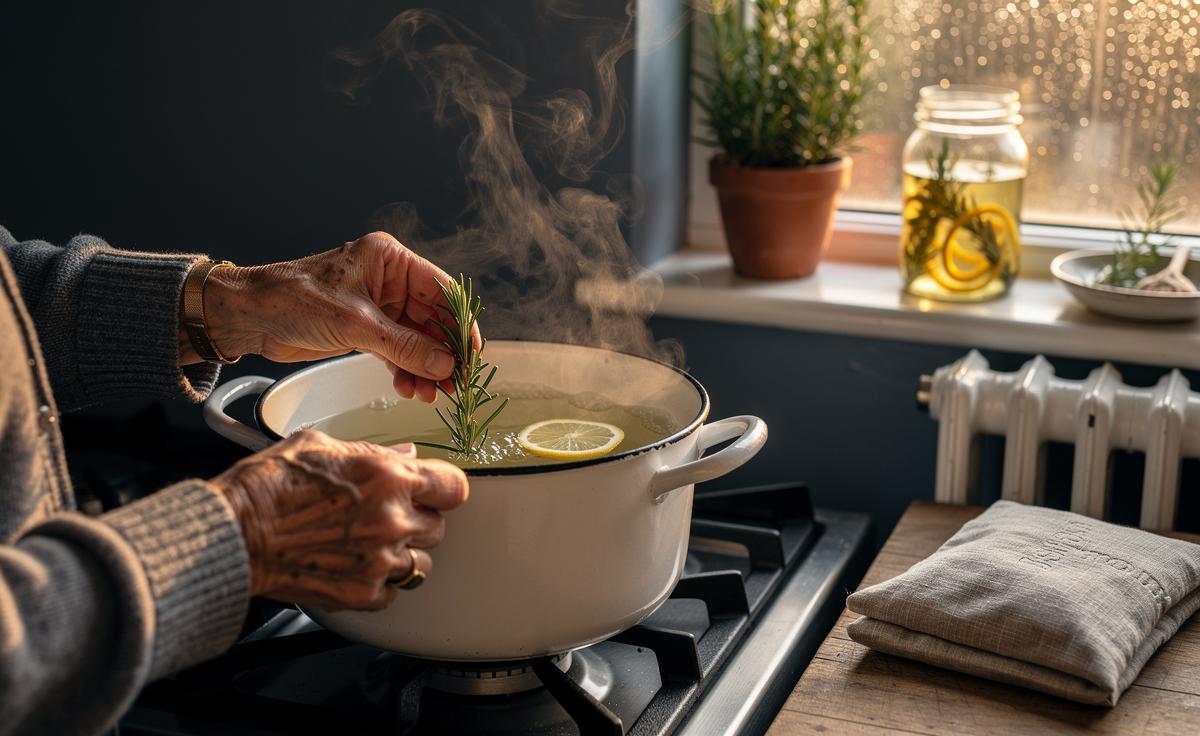
My grandmother swore by three simple moves: a simmer pot (one sprig, a slice of lemon, cover with water), a radiator sprig (tucked safely on a ceramic dish so rising heat lifts the scent), and sachets (dried rosemary and lavender in old handkerchiefs for drawers). Never leave a simmer pot unattended on the hob, and keep sprigs clear of direct contact with heat sources. For cleaning, decant white vinegar over rosemary and peel; leave two weeks, then strain—brilliant for tiles and the bin. If you prefer essential oil, stay sparing: two or three drops in a bowl of hot water ready to mop, not a glug in the air.
These methods cost pennies and invite variation. Pair rosemary with bay for a kitchen that smells kitchen-y (not bakery-sweet), or with orange peel for a festive note. A sprig tied to a wreath by the front door adds a local, cottagecore touch without fuss. The key is consistency: tiny, daily gestures trump rare, grand ones. Below is a quick reference for what works, when.
| Method | Approx. Cost (UK) | Scent Intensity | Set-up Time | Best For |
|---|---|---|---|---|
| Simmer Pot (sprig + lemon) | £0–£2 | High (fast) | 2–3 mins | Post-cooking freshness |
| Radiator Sprig on Dish | £0 | Low–Medium | 1 min | Gentle background scent |
| Drawer Sachet (dried) | £0–£1 | Low | 10 mins | Linen cupboards, wardrobes |
| Vinegar Infusion Cleaner | £0.50–£1 | Fresh after-use | 5 mins (+ steeping) | Bins, tiles, handles |
| Wreath or Mantle Posy | £0–£3 | Medium (nearby) | 15 mins | Entryway lift |
Pros and Cons of the Rosemary Habit
Every trend has a shadow, and this one’s refreshingly honest. On the upside, rosemary is accessible (often free from a neighbour’s shrub), adaptable, and instantly effective at shifting the domestic mood. It slots into existing rhythms—kettle on, pot on; laundry day, sachet day—and invites thrift. For renters wary of candles or landlords’ rules on diffusers, it’s blessedly old-school. It’s also less performative than a “haul”—more practice than product. Yet there are limits: not everyone loves herbal, and essential oils demand a light hand. Sensitive pets and people may prefer ventilation over vapour.
- Pros: fast odour reset; low cost; biophilic visual; aligns with low-tox cleaning; ritualises daily life; no plug sockets needed.
- Cons: herbal note isn’t universal; essential oils can irritate if overused; simmer pots require supervision; fresh sprigs dry out quickly.
Why diffusers aren’t always better? They’re convenient, but many rely on synthetic fragrance bases and constant electricity. A rosemary habit is intermittent by design, which means your nose doesn’t “tune out” as quickly. And it’s season-agnostic: in summer, a few crushed leaves in a jug of cold water scent the table; in winter, heat does the work. If you find the aroma sharp, pair rosemary with sweet orange or a bay leaf to round the edges. The point is control—your home, your blend, your pace.
From Kitchen Garden to Living Room: Budget, Sourcing, and Care
In the UK, a supermarket pack of rosemary runs about £1–£2; a small potted plant from a garden centre might cost £3–£6 and provide sprigs all year. Grow it on a sunny windowsill or balcony in free-draining compost; water sparingly and trim lightly to keep it bushy. Snips taken often produce more growth and a better shape. If you don’t garden, ask at a community allotment or swap group—herbs are top candidates for cuttings. Dry extra sprigs by hanging them somewhere airy; once crisp, crumble into sachets or store in a jar for simmer pots.
Sustainability is part of the charm. One plant can scent a flat, flavour roast potatoes, and still spare enough for cleaning infusions. That’s good news for budgets and bins. If you prefer ready-made, look for simple ingredient lists: alcohol, water, herbal extracts—not long chains of undisclosed fragrance. Store essential oil cool and dark, and respect dilution guidelines. Finally, mind safety: keep simmer pots to the back ring, avoid open flames near dried posies, and check pet-care resources if your household includes animals. The ritual should lift a room, never add risk or fuss.
Old habits endure because they work. The rosemary revival isn’t nostalgia for its own sake; it’s a small, repeatable ritual that changes how a home feels—brighter, cleaner, more intentional—without new gadgets or debt. From a simmer pot on a grey morning to a quiet drawer sachet that greets you in the evening, the herb offers a grounded kind of comfort and control. So, will you raid the garden, ask a neighbour for a cutting, or start with a supermarket sprig—and which rosemary ritual will you try first to reset your space this week?
Did you like it?4.5/5 (26)