In a nutshell
- 🌬️ Master the physiological sigh: a double nasal inhale followed by a slow mouth exhale that naturally reduces stress in under five minutes.
- 🧠 Science-backed calm: Exhale-emphasis boosts vagal tone, improves HRV, and helps clear excess CO₂, easing heart rate and tension quickly.
- 🛠️ Simple steps: Inhale 2–3s, top-up inhale 1s, then exhale 4–8s; repeat 2–5 rounds—comfort over heroics and avoid over-breathing to prevent dizziness.
- ⏱️ Use anywhere: Before meetings, at bedtime, or on commutes; effects include steadier pulse, relaxed muscles, and sharper focus—fast relief without equipment.
- ⚖️ Pros vs. Cons: Faster and more discreet than box breathing or 4-7-8, though overuse can feel light-headed and it won’t fix chronic stressors alone.
Modern life piles on emails, deadlines, and notifications, yet the fastest relief sits right beneath your nose. A simple science-backed breathing drill—the physiological sigh—can dial down stress in well under five minutes, no equipment required. It blends a double nasal inhale with a long, unhurried exhale to clear excess carbon dioxide and nudge the nervous system from red alert to rest. In the time it takes for a kettle to boil, you can measurably steady your pulse, soften tense shoulders, and regain focus. Below, I unpack how it works, how to do it properly, and why this quick reset can beat longer meditations when you’re under the gun.
What Is the Physiological Sigh and Why It Works
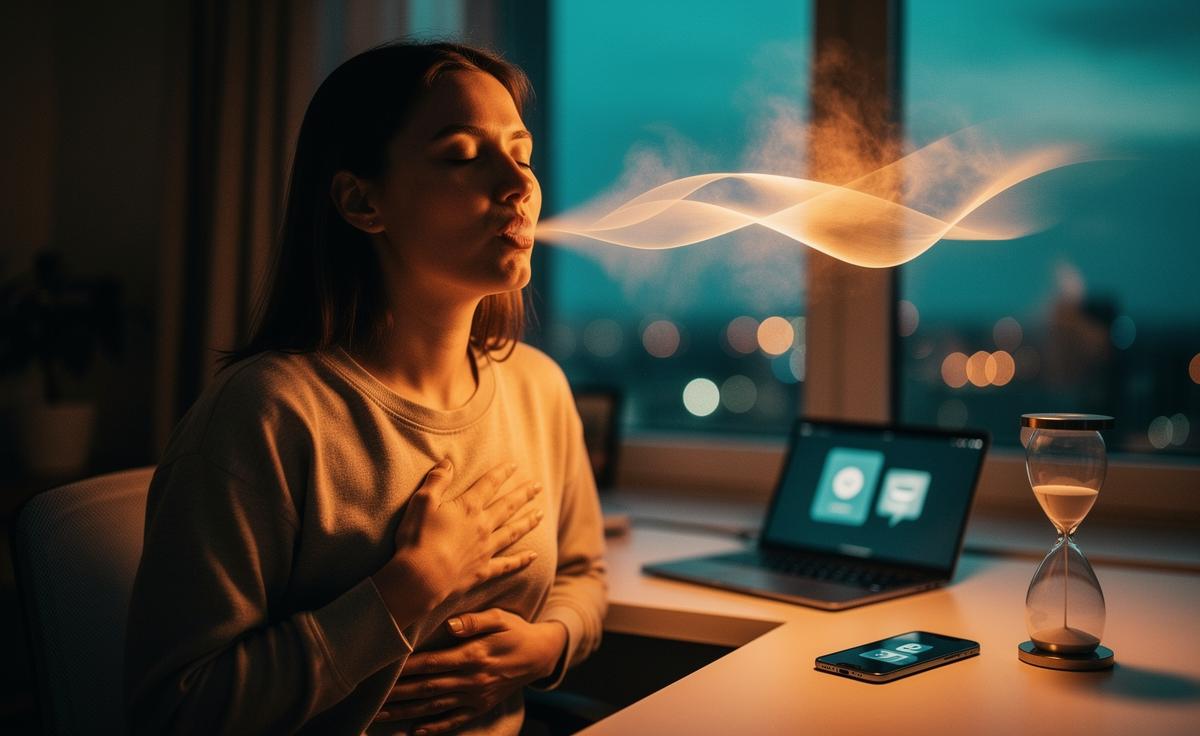
The physiological sigh is a brief pattern: inhale through the nose, then take a second, shorter top-up inhale, followed by a slow, extended exhale through the mouth. That double in-breath re-expands tiny lung sacs (alveoli) that can collapse under stress, improving oxygen exchange and clearing trapped CO₂. The long exhale signals your vagus nerve—your body’s “rest-and-digest” brake—to ease heart rate and muscle tension. This is not woo; it’s a fast-acting lever for your autonomic nervous system.
In 2023, a Stanford-led study reported that brief, structured exhale-focused breathing practices, especially cyclic sighing, yielded greater mood improvements and reduced physiological arousal compared with mindfulness alone. UK clinicians increasingly include paced breathing in stress toolkits because it boosts heart rate variability (HRV), a marker of resilience. The genius here is time: when you’re anxious, you rarely have twenty minutes to meditate. Two to four rounds of sigh breathing—often under two minutes—can cut through spiralling thoughts by changing your body’s chemistry first, letting the mind follow suit.
Step-By-Step Guide: Master It in Under Five Minutes
Think of this as a recipe. Sit or stand tall, shoulders relaxed, jaw unclenched. Keep the inhale nasal to humidify and filter air; let the exhale fall out of the mouth like a slow sigh. Aim for comfort, not perfection—precision comes with practice. Start with two to three rounds, and if it feels helpful, work up to five. Your only job is to make the final exhale longer than the inhale.
| Step | Duration | Purpose |
|---|---|---|
| Inhale through nose | 2–3 seconds | Fill lungs, begin oxygenation |
| Top-up nasal inhale | 1 second | Reopen alveoli, balance CO₂ |
| Slow mouth exhale | 4–8 seconds | Activate vagal tone, calm heart |
| Repeat | 2–5 rounds | Consolidate relaxation |
Common pitfalls to avoid include over-breathing (gasping), breath-holding to the point of strain, and rushing the exhale. If you feel light-headed, pause, breathe normally for a minute, and resume more gently. For a stealth version—on the Tube or before a high-stakes call—close your lips on the exhale and breathe through the nose throughout. Consistency trumps intensity: a few smooth rounds daily will prime your body to relax on cue when pressure spikes.
When to Use It and What You’ll Feel
This is a “micro-break” you can deploy almost anywhere: between back-to-back meetings, in a parked car before school pick-up, or lying in bed when worry loops won’t switch off. A London PR I interviewed keeps it on a sticky note: double inhale, long exhale, repeat thrice. She swears it turns pre-pitch jitters into steady poise. The shift isn’t mystical; it’s tactile: a gentle drop in heart rate, a loosening of the jaw, and thoughts that sound less like alarms and more like options.
You may notice the first round cuts the edge, the second deepens calm, and by the third your focus returns. Before sleep, extend the exhale further to invite drowsiness; before a presentation, keep it brisk to sharpen attention without becoming sedated. Pair it with a brief posture reset—roll shoulders, un-hunch the neck—and you compound the benefit. If you live with asthma, COPD, or are pregnant, you can still try gentle versions, but stop if uncomfortable and follow clinical guidance. The golden rule: comfort over heroics, always.
Pros vs. Cons: Why Slow Breathing Isn’t Always Better
Not all breathwork is created equal when you’re strapped for time. The physiological sigh has a few standout advantages.
- Pros: Ultra-quick, discreet, and exhale-emphasised (which directly taps calming pathways). Minimal learning curve. Measurable effects on pulse and tension within minutes.
- Cons: If overdone, it can feel dizzy; it won’t resolve chronic stressors by itself; and some may prefer guided audio to stay engaged.
How it stacks up: Box breathing (inhale-hold-exhale-hold in equal counts) is superb for focus but the holds can feel tight for anxious beginners. 4-7-8 breathing lengthens the exhale powerfully but the long breath-hold won’t suit everyone and may be impractical mid-meeting. When seconds matter, a long exhale without a hold is often the simplest, safest win. The takeaway: pick the tool that fits the moment. If you’re wound up, start with two or three physiological sighs; if you need laser focus, follow with a minute of box breathing.
Small habits beat grand plans. Slip this drill next to existing routines: after you log in each morning, before lunch, and when you close your laptop. Track a quick metric—resting pulse, a one-line mood note, or minutes to fall asleep—to reinforce progress. After a fortnight, most people report fewer “spikes” and a steadier baseline. Your breath is portable, free, and astonishingly effective when used on purpose. Tomorrow morning, as the kettle hums, will you give yourself three quiet rounds and notice what shifts?
Did you like it?4.5/5 (22)