In a nutshell
- 🪑 Seated yoga after 60 builds confidence by reducing fall risk; breath-led moves improve posture, flexibility, and balance—with consistency over intensity driving steady gains.
- 🧭 Practical routines: start with a sturdy chair, 5–10 minutes, 3x weekly; include seated marches, cat–cow, gentle twists, and hamstring strap stretches—prioritising quality over quantity.
- 🛡️ Safety first: avoid sharp pain, warm up before holds, adapt for osteoporosis and high blood pressure; seek NHS/community classes for coaching and technique.
- ⚖️ Pros vs. Cons: Pros—low impact, joint-friendly, scalable, posture/breath benefits; Cons—limited bone-loading and cardio; best used as a foundation with walking and light strength work, then progression to standing.
- 📈 Real-world results: a UK case study shows less stiffness and steadier walking in six weeks; community groups add social support, with many moving to hybrid chair-and-standing sessions as confidence grows.
Past 60, the body’s priorities shift from high-intensity gains to steady, joint-friendly progress. That is why seated yoga—a sequence of movements performed from a stable chair—is being recommended by physios and yoga therapists across the UK to enhance flexibility and balance without the fear of falls. The approach blends slow mobility drills, supported stretches, and breath-led mindfulness that calm the nervous system. Small, consistent practice often outperforms occasional heroic workouts in later life. What makes seated yoga stand out is its inclusivity: whether you’re returning after an injury, managing arthritis, or just feeling stiff after years at a desk, it offers a safe place to begin and a reliable path to keep moving.
Why Seated Yoga Works After 60
Seated yoga reduces the two biggest barriers to exercise in later life: fear of falling and joint discomfort. By anchoring the hips on a firm chair, the spine, shoulders, and ankles can move with more precision and less bracing. That stability allows you to explore gentle range of motion—rotation, side-bending, ankle circles—without fighting for balance. When the brain trusts the base of support, it permits greater mobility upstairs. This neurological confidence is why simple chair-based twists and marches can quickly translate into steadier steps on the pavement.
Another reason it works: breath coordination. Pairing inhalations with lengthening movements and exhalations with gentle compression invites the ribcage and diaphragm to participate. Over time, that can ease upper-back stiffness and improve posture, which is a quiet ally of balance. Stronger postural muscles mean the head stays aligned over the pelvis, reducing sway. Add in repeatable, low-load stretching of hamstrings and hip rotators and you have a program that steadily expands your movement “budget” without spiking soreness. Consistency beats intensity for sustainable gains after 60.
Practical Routines You Can Do From a Chair
Set up with a sturdy, non-wheeled chair; feet planted, knees roughly hip-width, toes pointing forward. Start with five minutes, three times a week, then build. A simple progression pairs joint mobility with brief holds. Move within comfort, never into sharp pain. Begin with ankle pumps, knee lifts, and shoulder rolls to switch on the circulation. Follow with a sequence of spinal motions—cat-cow, side bends, and gentle twists—then finish with hamstring and calf stretches using a strap or towel. The goal is to leave the session feeling warmer, taller, and more at ease in your gait.
Try this sample flow—timings are guides, not rules. Prioritise smooth breathing and relaxed jaw/shoulders. Quality over quantity will pay off quickly in everyday tasks: getting out of a taxi, gardening, or navigating stairs.
| Move | Goal | How to Do It | Reps/Time |
|---|---|---|---|
| Seated Marches | Hip strength, circulation | Lift one knee at a time, tall spine, slow lower | 2 x 20 alternating |
| Cat–Cow (Seated) | Spinal mobility | Inhale lengthen chest; exhale gently round | 1–2 minutes |
| Chair Twist | Thoracic rotation | Hands to thighs, rotate from mid-back, keep hips square | 5 breaths each side |
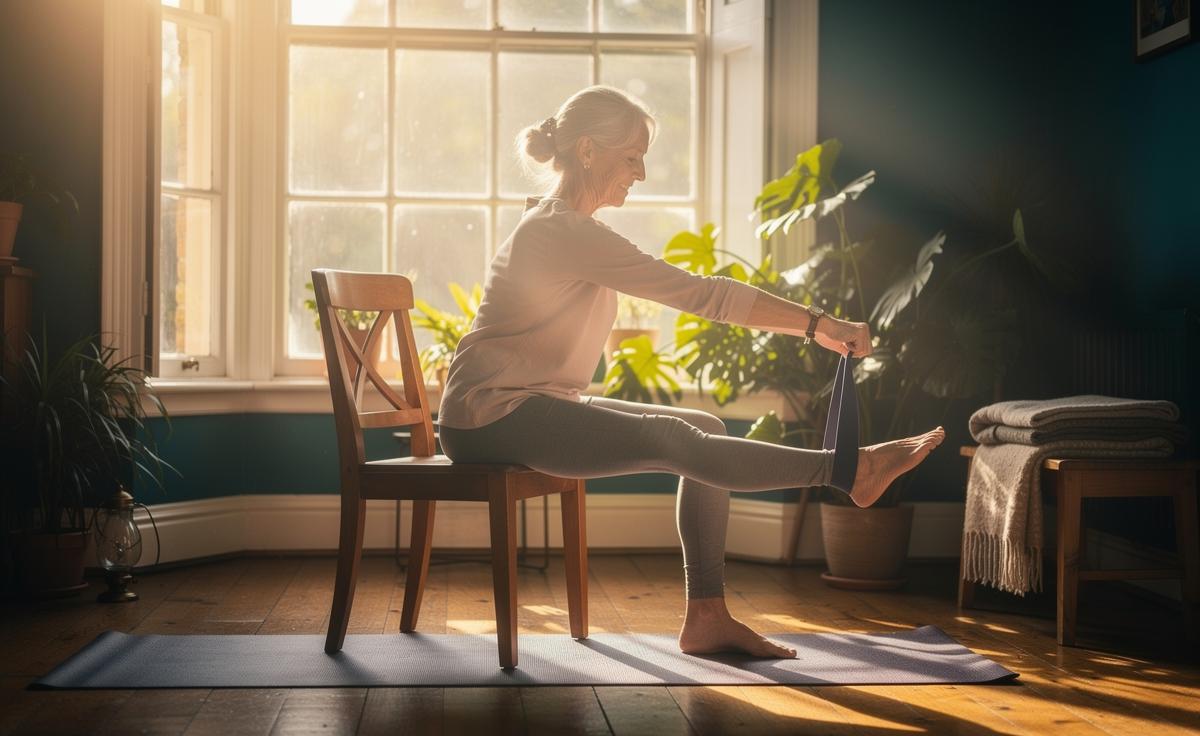
| Hamstring Strap Stretch | Posterior chain length | Heel on floor, strap round forefoot, hinge forward | 2 x 30–45s per leg |
Safety, Adaptations, and When to Seek Advice
Safety begins with set-up: choose a chair with a firm seat and backrest, place it against a wall if you feel unsteady, and clear floor space. Warm up joints before longer holds; “cold stretching” is a common cause of next-day grumbles. Stop any move that produces sharp, electric, or worsening pain. For knees, reduce the depth of marching and avoid aggressive twists; for shoulders, keep elbows bent to shorten the lever and protect the rotator cuff. If dizziness appears on looking up, keep your gaze level and shorten breath holds.
Some situations call for professional input. If you manage osteoporosis, focus on neutral-spine patterns and avoid forceful forward flexion. With high blood pressure, skip long breath retentions and tight binds. Recent joint replacements benefit from surgeon or physio guidance on range. And for any new chest pain, sudden breathlessness, or unexplained swelling, seek urgent medical help. Many community centres and NHS-backed classes now offer chair-based sessions; a few coached starts can lock in safe technique. Adapt the pose to your body, never your body to the pose.
Pros vs. Cons of Seated Yoga for Older Adults
For many over-60s, the chair is not a downgrade—it’s a precision tool. The format shines for regaining confidence after a fall, building baseline balance capacity, and maintaining joint nutrition via gentle movement. Because it’s low-impact and modular, it pairs well with walking or light resistance training, creating a balanced week without recovery bottlenecks. Think of seated yoga as your maintenance plan that quietly powers everything else you enjoy.
That said, the chair is not a cure-all. Some goals—like bone-strength gains—also need progressive resistance or standing weight-bearing. And those who feel very stable may outgrow purely seated work. The smart path is phased: begin seated, add standing holds using the chair as support, then, if desired, move to mat or balance drills. Below is a quick contrast to guide expectations.
- Pros: Low fall risk; joint-friendly; easy to start; improves posture and breath; scalable; minimal kit.
- Cons: Limited load for bone density; may not challenge cardiovascular fitness; risk of “too easy” unless progressed.
- Best Use: Foundation for mobility and balance; bridge between rehab and fuller activity; complement to walking/strength work.
Real-World Results: A UK Case Study and Community Insights
At 68, “Moira,” a retired receptionist from Bristol, described feeling “wobbly on buses” and tight in her lower back. She started with ten-minute chair sessions—marches, twists, and strap stretches—three times a week. After six weeks, she reported steadier step-offs at curbs and less morning stiffness. Her win wasn’t dramatic; it was cumulative: she could stand to cook for 20 minutes without needing a break. In later life, quality-of-life gains often arrive as fewer bad days rather than spectacular personal bests.
Community instructors echo this pattern: older adults who pair seated flows with daily walks tend to progress fastest. Simple cues help—“grow tall through the crown,” “knees track over toes,” “exhale to return to centre.” Many find a social boost, too, in small group classes at libraries or church halls, where accountability is built-in. Over time, some graduates shift to hybrid sessions: first half in the chair, second half standing with the chair as a “barre.” The shared thread is confidence—once people feel capable again, they’re more likely to keep moving, which is the real engine of change.
Seated yoga is not a compromise; it’s a smart, accessible gateway to better flexibility, steadier balance, and renewed confidence in everyday life. Start small, keep breath-led, and progress the challenge when movements feel easy. If you already walk or lift light weights, use the chair to patch mobility gaps; if you’re restarting after a lull, let it be your launchpad. Your next chapter of movement can be calmer, safer, and more consistent than the last. What would change in your week if ten minutes of chair-based practice reliably made stairs, shopping, or gardening feel easier?
Did you like it?4.5/5 (22)