In a nutshell
- 🧪 Start with a soil test, tidy spent crops, and map beds to guide crop rotation; run a simple drainage check to spot issues before winter sets in.
- 🌱 Build structure with organic matter—compost, well-rotted manure, and leaf mould—then mulch smartly; prefer no-dig to preserve fungi, using a broadfork only for one-off compaction fixes.
- 🌿 Choose green manures for UK winters (rye, field beans, clover, phacelia), weighing Pros vs. Cons and timing termination so residues don’t tie up nutrients in early spring.
- ⚖️ Fine-tune pH with lime (for brassicas) or sulfur, improve clay with gypsum, and trial biochar; avoid the “add sand to clay” trap that can worsen compaction.
- 🛡️ Protect bare ground with compost, tarps, and path woodchip; plan rotations, slug defenses, and seed orders now for faster, cleaner sowing when spring arrives.
Autumn in the UK isn’t downtime; it’s the quiet engine room where next spring’s harvest is made. Cool rain, falling leaves, and longer nights create the perfect window to tune your soil biology, balance its chemistry, and fix its structure before the rush of sowing returns. Healthy soil acts like a savings account—invest now and withdraw heavy crops later. Healthy soil is built in autumn, not in spring. From quick pH tests to laying green manures and smart mulches, the work you do over the next eight weeks will set up your beds for stronger roots, fewer pests, and steadier moisture when April’s temperamental weather arrives.
Test, Tidy, and Map Your Beds Now
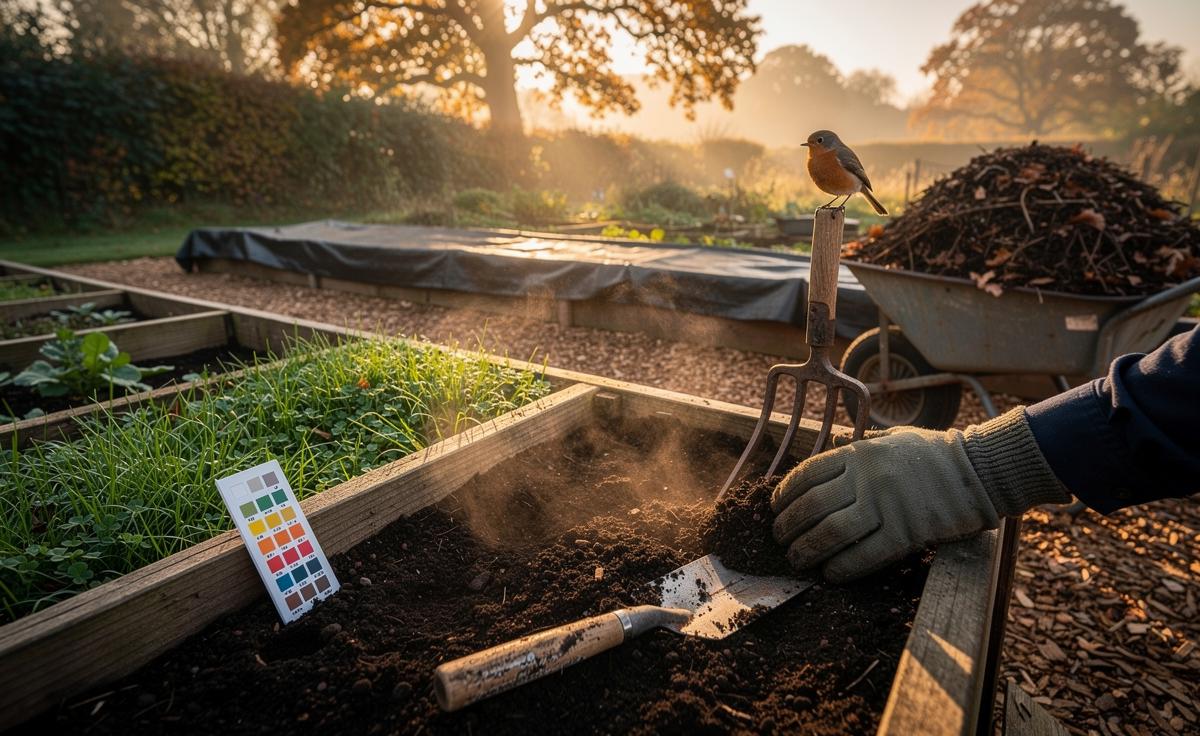
Start with a simple soil test. A cheap kit reveals pH and key nutrients, letting you choose the right amendments rather than gambling with guesswork. In the UK’s rainfall, nutrients leach; potassium and magnesium especially can slip away over winter. Sample several points per bed, mix into a composite, and note the results. When you measure, you manage—and prevent costly, springtime overcorrections.
Clear summer residues, but leave roots of peas, beans, and salad crops to rot in place, feeding soil life. Chop diseased foliage (blight, clubroot, allium rust) and bin it—don’t compost. Then, map your plot. Sketch what grew where, yields, and any problems with slugs or drought. That record will guide crop rotation and targeted amendments. On my South London allotment, one damp, shaded bed failed for brassicas until I logged the afternoon shade and shifted them two beds over; the following June, cabbages hearted two weeks earlier.
Finish with a drainage check: dig a 30 cm hole, fill with water, and time the drain. If it’s still full after four hours, plan for raised beds, more organic matter, or gypsum (on clay) this autumn rather than battling puddles in April.
Build Structure With Organic Matter and Smart Mulches
Structure beats fertiliser. Incorporate 2–5 cm of compost or well-rotted manure on beds now. Worms and winter frosts integrate it, creating crumbly aggregates that hold air and water. Heavy clay responds brilliantly to leaf mould—spread 3–5 cm and let time do the tillage. For sandy soils, add compost blended with seaweed or comfrey to bolster cation exchange and water retention. Autumn is the cheapest time to improve soil because biology does the labour while you rest.
Mulch intelligently:
- Leaf mould: gentle, fungal-leaning, ideal for woodland-loving crops (brassicas, leeks later).
- Woodchip on paths: improves access and feeds fungi; avoid digging it into beds.
- Composted bark as a winter blanket: slows leaching and buffers temperature swings.
Why Digging Isn’t Always Better: rotovating in autumn can smear wet clay, bury weed seeds to sprout in spring, and fracture fungal networks. A no-dig layer of compost preserves soil structure—and I’ve seen fewer spring weeds and easier transplanting as a result. For compacted zones, try a one-off broadforking when soil is just moist, not saturated, and then return to surface mulches. Let roots, worms, and frost do the deep work.
Choose the Right Green Manure for UK Winters
Green manures—also called cover crops—shield soil from rain, feed microbes, and can fix or scavenge nutrients. Choose varieties that match your region and timing. Sow by mid-autumn on still-warm soil, then terminate in late winter or early spring, two to four weeks before planting. Living covers prevent erosion and hand you free fertility in spring.
| Green Manure | Best Sowing Window | Main Benefits | Pros vs. Cons | Termination Tips |
|---|---|---|---|---|
| Winter Rye | Sep–Oct | Weed suppression, nutrient scavenging | Pros: Hardy; Cons: Tough to kill if left late | Crimp/hood and mulch 3–4 weeks pre-planting |
| Field Beans | Oct–Nov | Nitrogen fixation, deep rooting | Pros: Easy chop; Cons: Can host blackfly in spring | Cut at first flowers; leave roots in soil |
| Crimson Clover | Aug–Sep | Nitrogen, pollinator support | Pros: Quick; Cons: Less hardy in hard frosts | Scythe before seed set; mulch in place |
| Phacelia | Aug–Sep | Weed suppression, rapid cover | Pros: Fast; Cons: Often winter-killed | Frost will knock it back; rake residue |
Why Rye Isn’t Always Better: rye dominates weeds brilliantly, but if you plan an early April carrot sowing, it can linger and tie up nitrogen while decomposing. In that case, choose field beans or clover for easier spring transitions. Mixes (e.g., rye + vetch) diversify roots and biology, reducing risk from weather extremes.
Fine-Tune pH, Drainage, and Mineral Balance
Once your test results are in, correct pH gradually. UK veg beds often edge acidic after wet summers. Apply garden lime on brassica beds if pH is below ~6.5; split doses across autumn and late winter to avoid shock. For alkaline pockets (rare here), elemental sulfur can nudge pH down slowly. Small, data-led tweaks beat blanket applications every time.
For sticky clay, gypsum (calcium sulfate) can improve flocculation without raising pH—useful where lime would overshoot. Don’t reflexively add sand to clay; it can create concrete-like clods unless you add vast organic matter. Why Sand Isn’t Always Better: the wrong ratio worsens compaction. Instead:
- Run a 30-minute infiltration test and repeat after mulching to track gains.
- Trial biochar pre-charged with compost tea on one bed; it often stabilises nutrients and moisture in wet-dry swings.
- Top up trace elements via seaweed meal on sandy or coastal plots.
Case note: A reader in North Yorkshire layered 5 cm leaf mould plus 1 kg gypsum per 10 m² on heavy clay; by March, spade resistance dropped and early beetroot germinated evenly despite late cold snaps. Structure first, chemistry second, fertiliser last.
Protect Bare Ground and Plan Rotations
Never leave soil naked over winter. Where you’re not sowing a cover crop, lay 5–8 cm of compost and, in very weedy beds, add a tarp or biodegradable membrane. This blocks winter germination and keeps beds workable in March. Protect paths with woodchip to prevent compaction from soggy footfall. For slug-prone areas, lift all debris, deploy wildlife-friendly traps, and encourage predators with hedgehog gaps and log piles. Prevention now beats pellet panic later.
Design your crop rotation while the season is fresh in mind: brassicas follow legumes, roots follow brassicas, then fruiting crops. Keep alliums away from last year’s onion beds to reduce white rot pressure. Pencil in irrigation lines and a cold frame area for early salads. From experience, pencilling an April–June sowing calendar alongside bed plans closes the loop: you’ll know exactly where your first lettuce, carrots, and early potatoes slot in—no spring dithering.
Finally, order seeds early, label beds clearly, and stash a bucket of crumbly leaf mould near the greenhouse for seed mix blends. Prepared soil equals calmer spring mornings and straighter rows.
Autumn is the gardener’s strategic season: quiet, methodical, and immensely rewarding. By testing and recording, feeding soil biology with compost and leaf mould, choosing targeted green manures, and correcting pH and drainage with a light touch, you create resilient beds that shrug off April’s cold snaps and June’s dry spells. The payoff is tangible—cleaner germination, sturdier stems, and fewer emergencies. Invest a little attention now, reap generous harvests later. Which step will you prioritise on your plot this week: testing, mulching, or sowing a cover crop—and what result are you hoping to see by spring?
Did you like it?4.6/5 (25)