In a nutshell
- 🧀 Offer grated mild, low-salt cheese as a winter supplement that mimics insect energy; serve breadcrumb-fine pieces and avoid blue or mould-ripened varieties.
- 📍 Optimise placement and timing: scatter on a flat tray near cover at dawn and before dusk, and clear leftovers by nightfall to deter rodents.
- 🧼 Prioritise hygiene: rinse trays daily, rotate feeding spots weekly, and use small, fresh portions to prevent spoilage and disease spread; guard from pets with mesh if needed.
- ⚖️ Pros vs. Cons: Pros—high energy/protein, works in frost, encourages quick, safe feeding; Cons—salt content, risk of overfeeding, unsuitable cheeses, and potential for attracting unwanted visitors if over-supplied.
- 🐦 Field-tested routine: a UK garden trial saw robins choose cheese on 6/7 cold mornings; smaller grate and closer cover boosted visits, with the hour before dusk proving most reliable.
There’s a quietly brilliant trick keeping British gardens lively when temperatures drop: offer grated cheese to your local robins. This humble kitchen staple—mild cheddar or similar—mimics high-energy insect fare when the ground is frozen and worms are scarce. In midwinter, robins need fast calories to survive long nights, and cheese provides concentrated fat and protein with minimal effort. Used sparingly, it’s safe, affordable, and wonderfully effective at coaxing these bright-eyed birds onto a patio, fence post, or low feeder tray. Below, I unpack the nutritional logic, the safe method, and a field-tested routine that turned my frosty garden into a robin rendezvous, morning and dusk, week after week.
The Surprisingly Effective Kitchen Staple: Grated Cheese
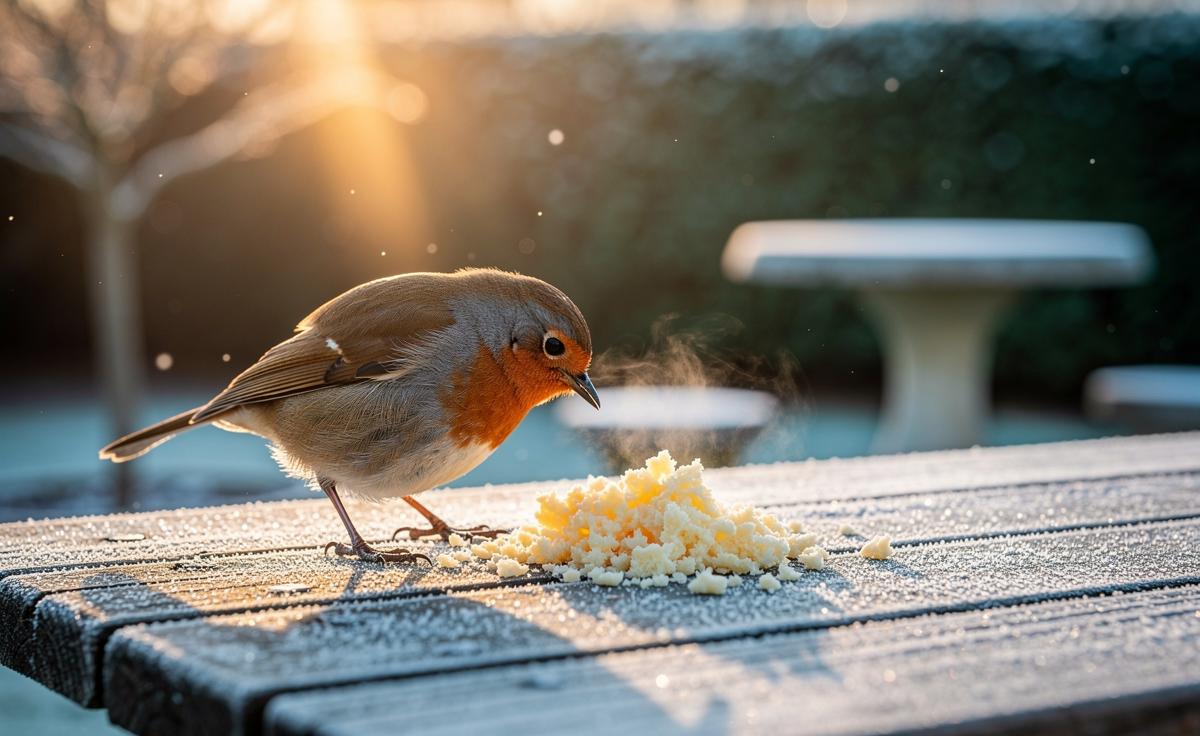
Robins are opportunists. Insects power them through the cold, but when frosts harden the soil, they pivot to high-energy alternatives. Mild grated cheese—lightly scattered—delivers an easily digestible hit of calories and amino acids. It’s soft enough for a robin’s fine bill, doesn’t freeze into bricks like some fats, and, when used in small, frequent pinches, won’t clutter your garden with waste. Choose mild, low-salt varieties such as young cheddar or Red Leicester. Think crumbs, not cubes: about the size of breadcrumbs so a bird can grab and go. Avoid blue and mould-ripened cheeses; the cultures aren’t ideal for wildlife, and hard rinds can be tough to handle.
Another advantage: grated cheese blends well with other winter staples. Mix a pinch with dried mealworms or suet crumbs to create a balanced “scatter.” Robins feed low to the ground, so place servings on a flat, sheltered surface—paving, a bird table, or a tray near shrubs—where they can dart out, feed, and retreat. Freshness matters: offer only what will be eaten in an hour or two, and clear leftovers before nightfall to avoid attracting rodents. Handled carefully, this one everyday ingredient becomes a lifeline in lean months.
How to Serve Cheese to Robins Without Risk
The golden rule is portion control. Serve teaspoon-sized amounts of grated cheese two to three times a day in cold snaps, and once daily in milder weather. Each portion should be finely grated and scattered, not clumped. Keep it close to cover—hedges, pots, or low shrubs—so robins feel secure. If you have pets, feed in a cordoned spot or place a mesh guard over the tray. Never leave large piles: aside from waste, it invites less welcome visitors at dusk.
Hygiene keeps birds healthy. Use a dedicated tray or stone, rinse it daily, and rotate feeding spots weekly to prevent faecal build-up. Keep portions indoors until serving to avoid dampness, and replace any wet cheese promptly. If you’re concerned about salt, pick lower-salt cheese and dilute the portion with oats or suet crumbs. Avoid feeding cheese to hedgehogs or dogs, which may be sensitive—place food where only birds can reach.
| Step | Amount | Placement | Notes |
|---|---|---|---|
| Grate | 1 tsp per serving | Tray or paving near cover | Use mild, low-salt cheese |
| Scatter | Fine crumbs | Morning and late afternoon | Clear leftovers by dusk |
| Rotate | — | Change spots weekly | Rinse tray daily |
Why Cheese Isn’t Always Better: Pros and Cons
Used judiciously, grated cheese can be a winter hero. Pros first: it’s accessible, quick to prepare, and packs vital energy and protein when insects vanish. It’s forgiving in frost, adheres to tray surfaces, and encourages brief, low-risk feeding sorties for timid robins. It also helps bridge morning and late-afternoon cold snaps, when birds need extra fuel before the long night fast.
Now the caveats. Cheese contains salt and should be a supplement, not a staple. Overfeeding risks dietary imbalance and can leave greasy residue on perches if clumped. Blue, mould-ripened, or heavily processed cheeses aren’t suitable, and big chunks pose choking risks. There’s also a garden-management angle: any food left out overnight attracts rodents, and daytime oversupply invites bolder species to dominate the tray. That’s why I pair cheese with variety: soaked sultanas for blackbirds, mealworms for insectivores, seeds for finches. The balance keeps traffic flowing and reduces competition. In short, cheese is a strategic tool—brilliant in frost—but it works best as one component of a broader winter menu.
Case Study From a British Garden and What I Learned
On a cold snap in January, I tested three micro-servings in a South Yorkshire courtyard: a pinch of grated mild cheddar, a teaspoon of soaked sultanas, and a mix of suet crumbs with oats. Over seven days, the robin visited the cheese first six mornings out of seven—usually within ten minutes of sunrise—then pivoted to the suet. Early afternoons saw fewer visits, but the last hour before dusk was consistently busy. Rain reduced overall traffic, yet the grated cheese still outperformed the other options on wet days, likely because it clung to the tray and didn’t turn to mush like suet.
Two tweaks made the biggest difference. First, downsizing the grate to breadcrumb-fine pieces sped feeding—less time exposed to sparrowhawk patrols. Second, moving the tray closer to a bay tree cut the flight distance to safety. A final note: the robin ignored cheese left in sticky clumps; scattering evenly increased take-up dramatically. The pattern was clear: small, fresh, frequent servings win. That routine now anchors my winter schedule, keeping visits regular without overwhelming the garden’s menu or attracting unwanted guests.
Used wisely, grated cheese is a deceptively simple way to keep robins returning through the darkest months. It dovetails with good hygiene, portion control, and variety, and it shines precisely when worms hide deep and daylight is brief. Think of it as the spark that gets your winter feeding plan started, not the entire fire. If you try it this week—at dawn and again before dusk—watch how quickly a robin learns your timetable. What small adjustment could you make tomorrow to turn your garden into a reliable winter refuelling stop?
Did you like it?4.4/5 (21)