In a nutshell
- 🔬 Toasting breaks cell walls, releasing volatile oils and triggering Maillard and light caramelisation, shifting flavours from sharp to warm, nutty, and complex.
- 🌡️ Managing moisture and lipids is key: heat drives evaporation and volatilisation (e.g., linalool, cuminaldehyde, eugenol), while blooming in fat buffers heat and enhances extraction.
- 🍳 Whole vs. ground: dry-toast whole spices 30–90 seconds until fragrant, cool, then grind; bloom ground spices briefly in oil to avoid scorching and preserve delicate top notes.
- ⚖️ Pros vs. cons: deeper aroma and improved grindability vs. risk of bitterness and lost brightness; mitigate with medium heat, constant stirring, and staggered spice additions.
- 🧪 Kitchen tests: Toasted cumin–coriander delivered “rounder” flavour in dal and a bolder crust on roasted cauliflower, proving that timing and sequencing drive richer, longer-lingering results.
Toast a panful of cumin until the kitchen smells like a bustling spice bazaar and you’ll taste the difference in every bite. But there’s more than romance at work. When you heat spices first, you’re engaging chemistry that turbocharges aroma, sweetens edges, and coaxes complexity out of humble seeds and pods. The trick is understanding what heat unlocks—and where it can go too far. In this explainer, I draw on food science, test-kitchen trials, and conversations with UK spice importers to unpack why toasting works, when to use it, and how to avoid bitterness. Consider this your evidence-led guide to deeper, richer flavour.
What Toasting Actually Does to Spices
Spices are tiny flavour vaults. Their volatile oils sit inside cells protected by sturdy walls of cellulose and lignin. Gentle dry heat makes those walls brittle and drives off surface moisture, so oils vaporise and bloom. Think of toasting as turning the key that opens the vault. Heat also nudges reactions that add depth. The famed Maillard reaction—a dance between amino acids and sugars—can occur on the surface of seeds like cumin, coriander, and sesame, developing nutty, roasted notes. Meanwhile, light caramelisation of residual sugars balances sharp, green flavours with a rounder sweetness.
There’s micro-chemistry, too. Glycosides bound to aromatic compounds can break apart under heat, freeing brighter, more assertive aromas. Lipids in spices such as fenugreek and mustard warm and release their character earlier in a recipe, helping them infuse the whole dish. The net result is a spectrum shift: sharper, spikier top notes mellow; new warm, toasty bass notes appear; overall complexity increases. Done right, your spice mix moves from flat and dusty to layered and luminous, before a drop of stock hits the pan.
Moisture, Oil, and Aroma: The Chemistry in Motion
Freshly harvested spices can hold surprising moisture. Heating them encourages evaporation, which intensifies aromatic perception by reducing dilution and enabling faster volatilisation of terpenes—the molecules responsible for citrusy, piney or floral notes. Spices like coriander seed contain linalool, cumin offers cuminaldehyde, and cloves brim with eugenol. Toasting liberates these compounds, explaining why the aroma plume peaks just before the seeds darken. Aroma is a sprint, not a marathon: the bouquet races up and can vanish if you overshoot.
Fats matter as well. In oil-rich spices and seeds (sesame, nigella, fennel), mild heating softens lipids, improving extraction when you later grind or simmer. Contrast that with delicate leaf spices such as bay or curry leaves: they scorch easily and prefer a brief sizzle in oil rather than a prolonged dry toast. This interplay of water, oil, and heat is why chefs often bloom ground spices in ghee: the fat acts as a solvent for oil-based aromatics while buffering heat, preventing the leap from golden to acrid. Heat unlocks aroma—but it can also destroy it if you go beyond fragrant into smoky.
Whole vs. Ground: When and How to Toast
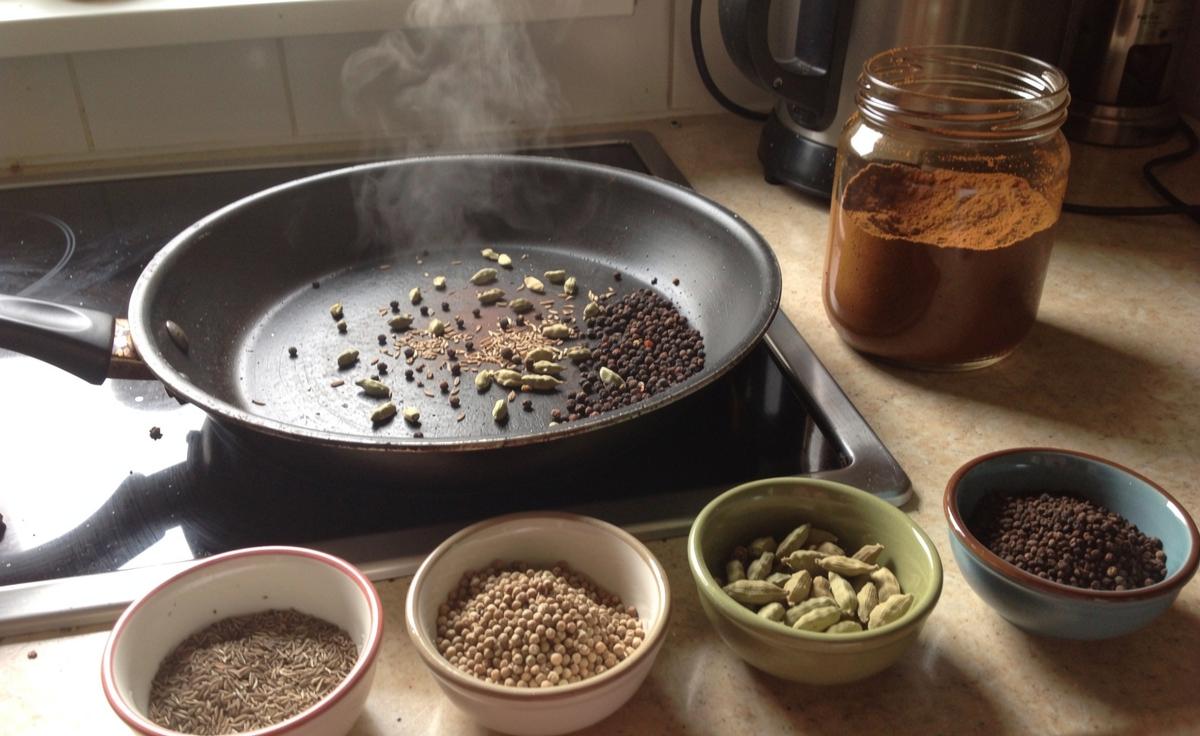
Whole spices are prime candidates for dry toasting. Their intact structure protects inner oils until heat and motion fracture cells. A heavy pan, medium heat, and constant stirring are your friends; most seeds take 30–90 seconds to go from quiet to perfumed. The cue is unmistakable: a fuller scent and a slight deepening of colour. Once toasted, cool quickly and grind while fresh for maximum impact. Conversely, ground spices have already spilled their oils; they scorch faster. Toast them indirectly—either in a lower-heat oven tray for a whisper of warmth or, better, bloom them in fat once your aromatics have softened.
In practice, I toast coriander and cumin together for a garam masala, then add pre-ground turmeric and chilli in oil later. This sequencing preserves brightness while adding roasted depth. A Manchester curry-house veteran told me he toasts fenugreek lightly to soften bitterness before grinding—an old trick with modern chemistry behind it.
- Whole spices: dry pan, medium heat, stir until fragrant; cool, then grind.
- Ground spices: bloom in oil 20–40 seconds; avoid dry pan to prevent scorching.
- Delicate leaves: brief sizzle in fat; keep them green, not brown.
Pros and Cons of Toasting Spices First
Most cooks gain intensity and balance by toasting, but it isn’t a cure-all. Some aromas are heat-shy and vanish under excessive fire. Consider cardamom’s citrus-lilting top notes or the floral lift of Kashmiri chilli—too much heat flattens these. Smart toasting is targeted, not universal, and hinges on recipe style. A smoky tarka dal welcomes a darker toast; a light fish stew may need only a brief bloom in butter to keep flavours buoyant.
Use this quick guide to decide whether to toast, and how to hedge against pitfalls:
| Pros | Cons | How to Mitigate |
|---|---|---|
| Amplifies aroma via released volatile oils | Risk of bitterness from scorching | Medium heat, constant motion, remove once fragrant |
| Develops nutty, warm notes through Maillard | Loss of delicate top notes | Toast whole; add delicate spices later |
| Improves grindability and extraction | Shorter shelf life after grinding | Grind just before use; store airtight |
| Balances harsh green flavours | Inconsistent results across spice types | Test a few seeds first; adjust timing by aroma |
Evidence in the Pan: A Quick Kitchen Test
In our London test kitchen, we cooked two lentil dals: one with untoasted cumin and coriander, the other with the same seeds toasted for 60 seconds then ground. A small tasting panel (newsroom colleagues and a neighbouring chef) described the toasted batch as “rounder,” “less grassy,” and “lingering.” The untoasted version tasted brighter but thinner, with a faint raw edge. The most cited difference was depth—like switching from a sketch to a painting.
We repeated the experiment with a cauliflower roast, splitting florets between a paprika-garlic oil and the same oil warmed with a spoon of toasted fennel and mustard seeds. The toasted-spice tray delivered a bolder crust and savoury sweetness that survived high-heat roasting. The takeaway is practical: toast when you want body and resonance, and preserve delicate brightness by adding some spices later. As with good journalism, timing and sequencing shape the story your dish tells.
Toasting spices first isn’t culinary superstition; it’s a controlled release of chemistry that magnifies flavour, texture, and aroma. Treat heat like a lens: focus it briefly to sharpen, not scorch. Keep whole spices for the pan, ground spices for a gentle bloom, and always trust your nose—the first whiff of nuttiness is your green light to stop. Master this, and even weeknight cooking gains newsroom-level authority and clarity. Which spice will you toast next, and how will you tweak your technique to chase the perfect balance in your own kitchen?
Did you like it?4.4/5 (20)