In a nutshell
- 🔪 The pinch grip—thumb and index on the blade—delivers superior control, cleaner cuts, faster chopping, and safer tracking when paired with the claw.
- ⚡ Speed follows accuracy: a shorter lever arm reduces wobble, keeps a consistent edge angle, and cuts fatigue for smoother, repeatable strokes.
- 🧪 One-week training: 10 minutes daily with Rail Drill, Tip Anchor, and Stack-and-Shift, using a metronome to build rhythm and uniformity.
- ⚖️ Pros vs. Cons: Control and precision outweigh initial awkwardness; avoid errors like finger on the spine, over-choking, white-knuckle gripping, and neglecting the claw.
- 🧰 Setup wins: Choose a knife with an eased spine and comfy choil, keep it sharp, stabilise the board, and organise containers to maximise consistency and speed.
Chefs like to say that knife skills are more about physics than flair. Ask around any professional kitchen and you’ll hear the same tip: switch to the pinch grip and your chopping becomes faster, safer, and more consistent. Hold the blade, not just the handle, and you instantly gain control where it matters most. In lessons from culinary schools to community workshops, teachers stress how a small change in hand position can turn ragged slices into clean dice and cut prep times without brute force. This isn’t a trend; it’s a simple, transferable technique that works whether you own a £30 chef’s knife or a handmade Japanese gyuto.
What Chefs Mean by the Pinch Grip
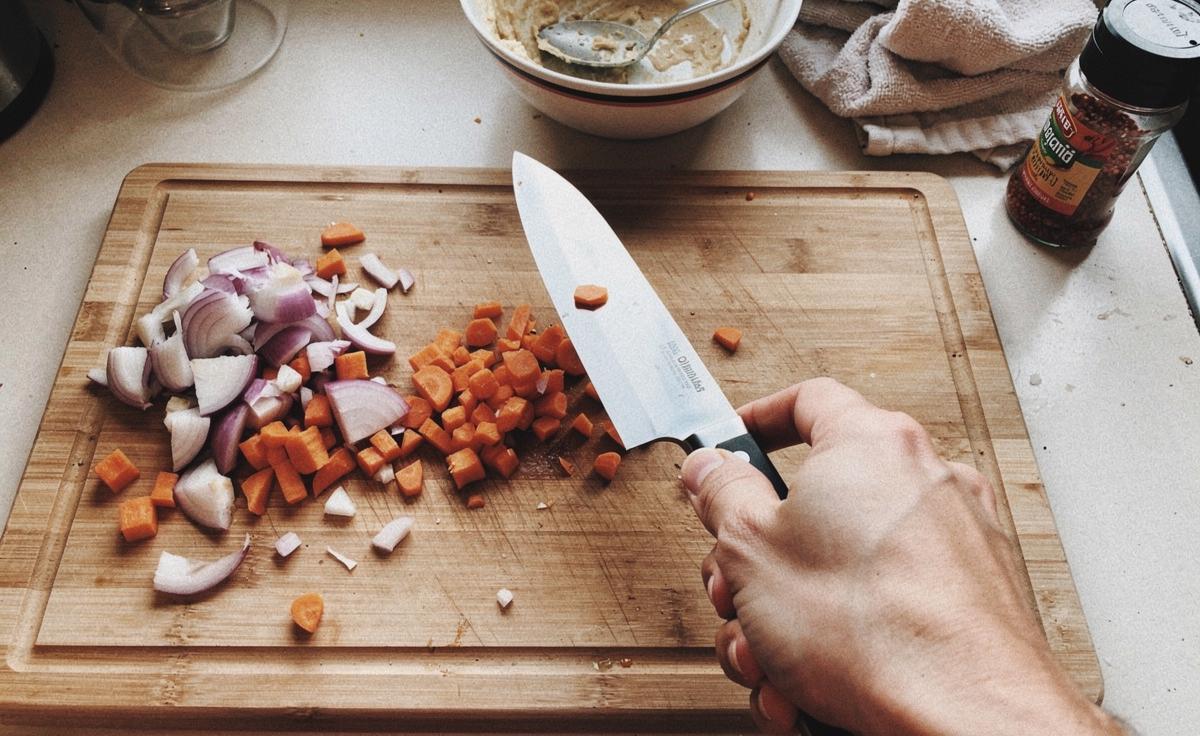
The pinch grip places your thumb and the side of your index finger directly on the blade, just ahead of the bolster or heel. Your remaining fingers wrap the handle naturally—no white knuckles. This puts your hand over the knife’s centre of mass and aligns your wrist so the blade tracks straight. Think of it as moving your “steering wheel” from the tail of the car to its front axle. The immediate payoff is stability: less wobble and fewer accidental curves in your cuts. It also reduces fatigue because you’re leveraging balance, not gripping harder.
In professional settings, chefs pair the pinch grip with the claw on the guide hand—fingertips tucked, knuckles forward—to create a safe “fence” that guides the blade. That partnership is what unlocks rhythm. Beginners often fear touching the blade, but the pinch happens on the dull section above the edge. Once you feel how the blade obeys small wrist inputs, you stop muscling the cut and start gliding. This is particularly noticeable on onions, carrots, and herbs, where precision reduces bruising and waste.
| Grip | Control | Speed | Fatigue | Risk |
|---|---|---|---|---|
| Pinch Grip | High—blade tracks true | High with practice | Low to moderate | Lower (with claw) |
| Hammer/Handle Grip | Medium—tip wobbles | Moderate | Higher—overgripping | Higher (edge drifts) |
| Index on Spine | Low—torque imbalance | Low | Wrist strain | Inconsistent cuts |
Speed Gains: Technique, Not Strength
Speed comes from efficient travel and repeatable motion. By moving your hand onto the blade, the lever arm shortens, which lowers rotational wobble and lets the edge fall where you intend. Speed follows accuracy. With a pinch grip, you can use the blade’s weight for a gentle rock or straight chop, keeping the tip anchored when mincing or lifting the heel for tall veg. Because the wrist is neutral, the edge meets the board at the same angle every stroke, which means fewer “half cuts” and less sawing.
Chefs describe a repeatable cadence: push, down, reset—rather than a heavy up-and-down thump. You’ll notice herbs stay greener because a cleaner chop crushes less. You’ll also waste fewer millimetres on each slice; across a kilo of onions, those savings add up. For home cooks, a quick self-test is revealing: time 60 seconds dicing with a handle grip, then repeat with a pinch grip. Expect more uniform pieces and less fatigue. The aim isn’t to move your hand faster; it’s to move it smarter with shorter, cleaner pathways.
How to Learn the Grip in a Week
A small, regular routine cements the habit. Day one is awareness: place thumb and index on the blade, soften the other fingers, and practice the claw with your off-hand. Every time you pick up the knife, reset the pinch before you cut. Next, build rhythm with low-risk ingredients: halved onions (flat side down), cucumber “coins,” and carrot batons. Work slowly; consistency beats speed early on. Set a metronome at 60–70 BPM and make one cut per click to train even spacing.
Three drills help most cooks:
- Rail Drill: Slice long carrots into “rails,” focusing on vertical cuts that leave perfect rectangles.
- Tip Anchor: Mince herbs with the tip planted; lift the heel and roll through, keeping the pinch intact.
- Stack and Shift: For onions, slice north–south, rotate, then crosscut, nudging with knuckles as a guide.
Do 10 minutes a day for a week. By day four or five, introduce speed only after your dice looks even. If tension creeps into your forearm, shake out your hand and lighten the grip. Grip the blade firmly enough to guide, loosely enough to glide.
Pros vs. Cons and Common Mistakes
The pinch grip’s pros are clear: superior control, cleaner slices, reduced fatigue, and safer blade tracking. It’s versatile across knife styles (chef’s, santoku, petty) and excels with both rocking and push cuts. Still, there are cons worth noting: it can feel awkward at first, bolsters on some Western knives can pinch large hands, and very thin Japanese blades may feel “sharp” on the spine until you adjust your finger placement. Why the Old Handle Grip Isn’t Always Better: it relies on force, not balance, and quickly breaks down at speed.
Avoid common errors:
- Finger on spine: creates torque that steers the edge off line.
- Over-choking: pinching too far forward near the edge risks nicks.
- Death grip: white-knuckling causes forearm burn and jerky cuts.
- Ignoring the claw: without knuckles forward, your guide hand can’t set the cut width.
- Board too high/low: aim for a board that sits around waist level; use a damp towel to stabilise.
When in doubt, slow down, correct the hand position, and rebuild rhythm. Precision first, tempo second.
Knife, Board, and Setup: Small Tweaks, Big Payoffs
The right kit makes the pinch grip effortless. Choose a knife with a comfortable choil (the curve by the heel) and a spine that’s eased so your index finger rests without discomfort. Many cooks prefer blades without a full bolster because they allow a closer pinch and easier sharpening. A medium blade height (45–50 mm on a 20 cm chef’s knife) gives finger clearance over the board. Sharp knives are safer and faster; maintain a consistent bevel and touch up regularly with a ceramic rod or fine stone.
Set your station for flow:
- Board: End-grain or a quality plastic board; stabilise with a damp cloth.
- Containers: Left for waste, right for product (swap if left-handed) to reduce shuttling.
- Lighting: Good overhead light enhances accuracy and speed.
- Wipe-downs: Keep the board dry; wet herbs and onions slip and smudge.
With the environment optimised, the pinch grip becomes second nature, turning repetitive prep into an efficient, almost metronomic routine. Small setup choices unlock big consistency gains.
Mastering the pinch grip is less a chef’s secret than a chef’s standard: a compact technique that multiplies control, rhythm, and speed. It won’t win any style points on its own, but it will make every salad, stew, and stir-fry sharper—literally and figuratively. Practice little and often, use the claw, and build speed only after your cuts are consistent. Then, when the dinner rush—home or professional—arrives, your hands will do the thinking. What ingredient will you test first to feel the difference for yourself?
Did you like it?4.6/5 (23)