In a nutshell
- 🥛 Junket is a softly set milk dessert made with rennet, cherished in British farmhouse tradition for its tender, trembling texture and clean dairy flavour.
- 💸 It’s back due to the cost-of-living squeeze, low-energy cooking, and nostalgia—plus sustainability benefits for using milk near its date.
- 🍮 Method: warm whole milk to 37–40°C, sweeten, add rennet, and let it set undisturbed; modern twists include tea infusions, citrus, spices, and fruit—while vegetarian rennet broadens access.
- 📊 Quick snapshot: 3–4 core ingredients, 5–10 minutes active time, 30–60 minutes to set, yielding a light, custard-adjacent texture that showcases quality milk.
- ⚖️ Pros vs. Cons: pros—budget-friendly, fast, adaptable; cons—not vegan, temperature-sensitive, short fridge life—yet it’s a skill bridge toward beginner cheesemaking.
Call it nursery food, farmhouse fare, or a dairy daydream: junket is the forgotten milk dessert many British households are quietly rediscovering. Its charm lies in understatement—milk gently warmed, sweetened, and set with rennet into a trembling spoonful that tastes of the pasture as much as the pantry. As budgets tighten and kitchens tilt toward low-energy cooking, this relic of the dairy past suddenly feels modern again. It takes minutes to assemble, barely sips electricity, and rewards patience with satin softness. More than nostalgia, junket offers a blueprint for simple, honest eating—rooted in British milk, revived by curious home cooks, and now reimagined by a new generation.
What Exactly Is Junket, and Where Did It Come From?
Junket is a softly set milk dessert made by warming milk, sweetening it lightly, and adding rennet—an enzyme that coagulates milk proteins—to create a delicate, quivering curd. Unlike custard or crème brûlée, there are no eggs, no high-heat baking, and no caramel caps: it is the essence of dairy, barely altered. The set is tender rather than gelatinous, closer to a trembling panna cotta than a firm blancmange, yet the flavour is clean and pastoral, shaped by the milk you use.
Historically, junket sits at the crossroads of utility and indulgence. Medieval cooks knew it as a way to celebrate fresh milk; West Country dairies kept the tradition alive, often seasoning with nutmeg, vanilla, or a splash of brandy for winter warmth. Victorians served it in cut-glass dishes; farmhouse kitchens ladled it into bowls as a restorative after milking. Its rhythm is rural: milk warmed to roughly body temperature, then left to set undisturbed. Temperature discipline is everything; too hot and the curd turns grainy, too cool and it refuses to set.
That rustic reliability explains its staying power. It is as much technique as recipe—a gentle lesson in how milk behaves. And while “junket tablets” once lined chemists’ shelves, today’s home cooks reach for vegetarian rennet or tiny bottles used by cheesemakers, rediscovering an old craft in a small, sweet bowl.
Why Junket Is Back: Cost, Comfort, and Convenience
Three forces power junket’s revival. First, the cost-of-living squeeze has made desserts that rely on a single staple—milk—feel canny rather than quaint. A pan, a spoon, and three ingredients deliver something softly luxurious. Second, low-energy cooking matters. Junket asks only for a brief warm-through, not a roaring oven or hours of chill time. In an age of air fryers and energy monitors, a dessert that sets quietly on the counter is a small act of thrift. Third, there’s nostalgia: the comfort of nursery flavours without the heaviness of steam puddings.
But the comeback isn’t merely sentimental. Modern palates are more attuned to dairy provenance and texture: raw-milk junket (where legal and safe) tastes different from standard supermarket milk; Jersey milk gives extra silk. Vegetarian rennet opens the dish to cooks who avoid animal rennet, and the neutral base invites infusions—Earl Grey, roasted strawberries, or bay and lemon. Junket becomes a canvas, not a relic.
There’s also a sustainability thread. Many households are trying to reduce waste; junket is a smart way to use milk approaching its date while still valuing quality. And unlike yogurt, it doesn’t ask for starter cultures or controlled incubation. It is not a probiotic food, nor a fermentation—just an elegant coagulation with a deep dairy glow. Simpler than custard, lighter than rice pudding, it slips easily into weeknight cooking.
How to Make Classic Junket (and Modern Twists)
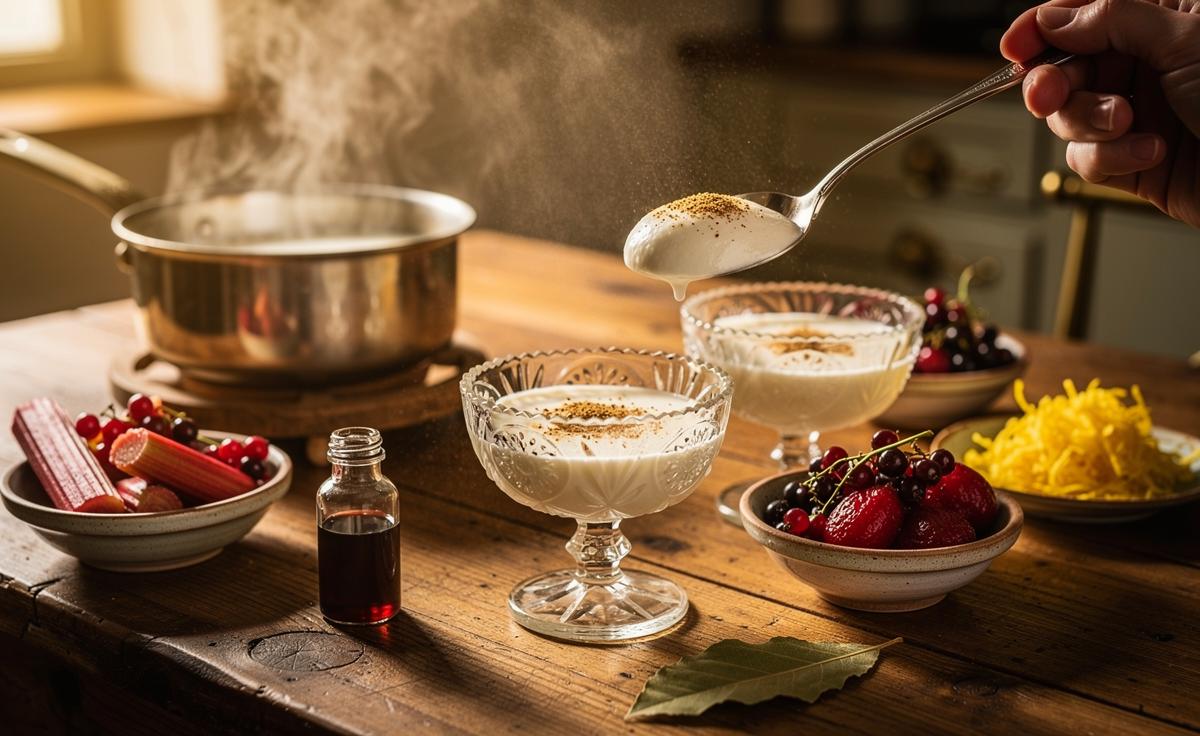
Heat 1 litre of whole milk to roughly 37–40°C—about body temperature; if you can comfortably hold a clean finger in the milk for a few seconds, you’re near the mark. Stir in 50–80g sugar (to taste) and a whisper of vanilla. Remove from the heat, then stir in the instructed amount of rennet (check your bottle; strengths vary). Pour into dishes, dust with nutmeg, and leave undisturbed for 30–60 minutes. Chill lightly if you like, or serve just set. Do not shake, whisk, or move the dishes while setting—the tenderness depends on stillness.
Twists are where the fun begins. Infuse the milk first with tea (Earl Grey, Assam), coffee (a short espresso), or botanicals (bay, lemon zest, rosemary), then strain. For fruit, spoon cooled rhubarb compote or poached gooseberries on top just before serving. Caramel lovers can drizzle a light miso caramel for savoury contrast. If using plant-based milks, note that most won’t set with rennet because they lack casein; a gelled alternative demands agar or gelatine instead. Authentic junket is, by nature, a dairy dish.
Success boils down to three rules: precise warmth, measured rennet, and patience. Use fresh whole milk (semi-skim will set, but with less plushness). Sweeten modestly; the point is milk’s flavour, not sugar’s. Garnish with clotted cream for decadence, or a pinch of sea salt to sharpen the dairy notes. Treat it like a quiet cheese lesson in a spoon.
| Junket At A Glance | Details |
|---|---|
| Main ingredients | Whole milk, sugar, rennet, optional spice |
| Active time | 5–10 minutes |
| Set time | 30–60 minutes (room temperature), plus optional chilling |
| Texture | Soft, trembly, custard-adjacent |
| Good with | Nutmeg, citrus zest, stewed fruits, light syrups |
Pros vs. Cons: Junket in a Contemporary Kitchen
For all its charm, junket invites a clear-eyed assessment. Why panna cotta isn’t always better: cream-heavy desserts can feel rich after a weekday supper, while junket rests lightly. Why junket isn’t perfect: it depends on dairy and a calm setting period. The goal is to cook with intent—choose the right dessert for the moment and the ingredients you have. Below, a practical snapshot for modern cooks.
- Pros — Budget-friendly; low-energy; fast; honours good milk; adaptable to tea, spice, and fruit; vegetarian rennet options available. A small effort yields an elegant result.
- Cons — Not vegan; plant milks won’t set with rennet; temperature-sensitive; texture can turn grainy if overheated; short fridge life (best within a day). It rewards care and fresh milk.
From a cook’s perspective, junket is a kitchen skill multiplier: understand rennet’s gentle touch and you’re halfway to beginner cheesemaking. And the flavour story evolves with British seasons—nutmeg and brandy in winter, elderflower and strawberries in June. For families, it’s a tactile lesson kids can help with (measuring, dusting nutmeg) without open-oven hazards. In a world of maximal desserts, its restraint tastes refreshing. The verdict: keep junket in your repertoire for nights when you want comfort without heaviness—and when milk deserves the spotlight.
In the end, junket’s return says something hopeful about how we’re cooking now: valuing simplicity, frugality, and a sense of place. With only milk, sweetness, and an enzyme, it turns patience into pleasure and thrift into theatre. It’s the quiet dessert that invites you to taste the farm, not the fridge. Whether you dust it with nutmeg or crown it with gooseberries, the effect is the same: calm, scented, softly set. If you haven’t tried it since childhood—or ever—what flavour twist would tempt you to put a pan of milk on the hob tonight?
Did you like it?4.4/5 (30)