In a nutshell
- 🧊 Why the fridge isn’t always better: Cold, humid air drives condensation, mould, and sprouting in whole, cured onions; keep them dry, dark, and ventilated, away from potatoes and never in plastic.
- 🧺 Basket storage extends shelf life: Airflow + shade + ~10–15°C preserve firmness; use wire/mesh baskets, layer lightly, rotate weekly (FIFO), and separate water-rich sweet onions.
- 📊 Expert shelf-life numbers: Basket (whole) 4–8 weeks (up to ~12 ideal); Whole in fridge 2–3 weeks; Cut/peeled (fridge) 7–10 days; Cooked (fridge) 3–5 days; Scallions 1–2 weeks; Shallots 6–8 weeks.
- 🧰 No-fuss onion station: Two-tier rack + linen light baffle, cool shaded wall, first-in, first-out, monthly wipe-down; Pros vs. Cons: longer life/less waste vs occasional checks and a cool corner needed.
- ⚠️ When the fridge is right: After cutting or for spring onions; if chilling whole bulbs, bag loosely, keep dry, and avoid temperature swings to limit sprouting.
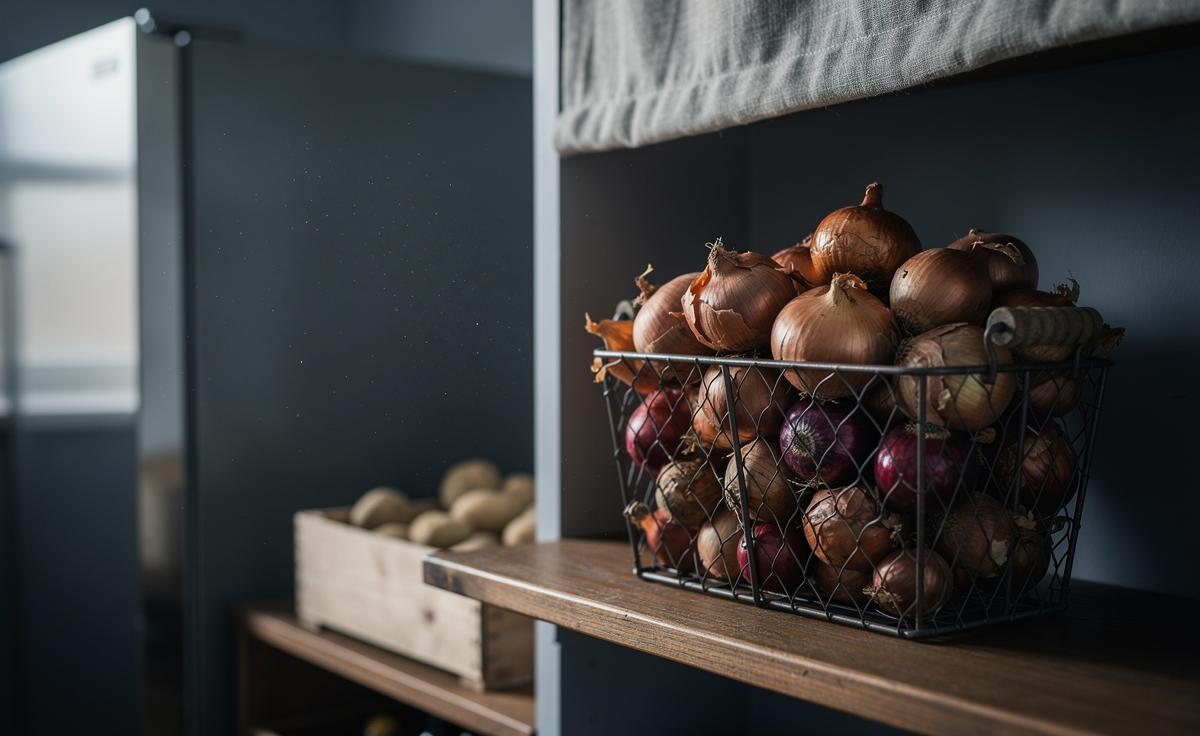
I recently stopped stashing whole onions in the fridge and moved them into airy baskets by a cool, shaded wall. The change was immediate: fewer soft spots, far less sprouting, and a sweeter sting when sliced. Horticulture advisers have long hinted at this, but many of us default to the refrigerator out of habit. The truth is simple: onions thrive with ventilation and low humidity, not cold, damp compartments. Treat whole, cured onions like pantry produce and they will reward you with better texture and longer life. Here is what the experts say, the numbers I found most useful, and a practical setup that works in a UK home.
Why the Fridge Isn’t Always Better for Onions
The domestic fridge is a marvel for many foods—but not for whole, cured onions. Its cold, moist environment encourages condensation under papery skins, creating perfect conditions for mould and bacterial soft rot. Meanwhile, the chill can nudge sugars and water activity in ways that speed up sprouting once the onion returns to room temperature. Cold plus humidity is the exact opposite of what a storage onion wants.
There are caveats. The fridge is correct for cut or peeled onions (sealed container, top shelf), and it suits spring onions (scallions), which behave like leafy greens. But for whole, cured brown, red, or yellow bulbs, a dry, dark, ventilated spot works best. In many UK kitchens that means a cool cupboard, an under-stairs nook, or a wire basket on a shaded shelf—never above the hob or next to the dishwasher, where heat and steam accumulate.
Two more pitfalls: don’t suffocate onions in plastic bags, and keep them away from potatoes. Potatoes give off moisture (and some gases) that can hasten onion sprouting; onions can, in turn, nudge potatoes to spoil. A little distance pays dividends in both directions.
How Basket Storage Extends Shelf Life
Once I shifted to baskets, the difference was tactile: skins stayed crisp, necks remained sealed, and the bulbs felt firm for weeks. The principle is basic post-harvest science: airflow wicks away surface moisture; shade suppresses premature greening; and steady, cool temperatures (ideally 10–15°C in a home, lower in an unheated utility room) reduce respiration without inviting condensation. Good onion storage is less about cold and more about controlled dryness and breathability.
- Choose the right basket: wire, mesh, or slatted wood; depth that prevents compression; open sides for cross-breezes.
- Layer lightly: avoid deep piles; consider two shallow baskets rather than one deep one.
- Keep it dark: out of direct sun; a linen cover or cupboard door is enough.
- Rotate weekly: first in, first out; check for soft spots and remove promptly.
- Separate varieties: water-rich sweet onions age faster; store them in their own basket.
This low-tech setup mirrors what growers do after curing: suspend, crate, or braid so bulbs “breathe.” In my flat, a narrow wire rack by a north-facing wall turned out to be perfect—no warmth from appliances, no glare, and easy access for a quick inspection while putting the kettle on.
Expert Shelf-Life Numbers and When to Use the Fridge
Horticulture guidance from UK allotment advisers and extension bulletins converges on one takeaway: ventilation and dryness extend the clock. Refrigeration has a role, but mainly after cutting. Below is a straightforward comparison you can pin to your pantry door.
| Storage Method | Typical Shelf Life | Notes |
|---|---|---|
| Whole, cured onions in ventilated basket | 4–8 weeks (up to ~12 in ideal cool, dry rooms) | Best for brown/red/yellow types; keep dark and separate from potatoes. |
| Whole onions in fridge | 2–3 weeks | Risk of condensation, sprouting after removal to room temp. |
| Cut or peeled onion (sealed, refrigerated) | 7–10 days | Use odour-tight container; label the date. |
| Cooked onions (refrigerated) | 3–5 days | Cool quickly; reheat thoroughly. |
| Spring onions/scallions (refrigerated) | 1–2 weeks | Keep upright with a little water or wrapped to retain moisture. |
| Shallots (basket) | 6–8 weeks | Generally outlast standard onions in pantry conditions. |
If you must refrigerate whole bulbs, bag loosely, keep them dry, and avoid frequent temperature swings. Sources differ by variety and home microclimate, but the pattern holds: baskets and cool cupboards preserve texture and flavour, while the fridge is a safe harbour only after the knife comes out.
Setting Up a No-Fuss Onion Station at Home
Think of this as a mini larder you can assemble in ten minutes. I used a two-tier wire basket rack, a linen tea towel as a light baffle, and sticky labels for dates. The top tier holds fast-rotating sweet onions; the lower tier keeps standard brown and red onions. A separate crate across the room stores potatoes to avoid cross-influence. The goal is simple: stable, shaded, breezy.
- Site: north-facing or shaded wall; away from oven, dishwasher, and sunny sills.
- Hardware: wire baskets or mesh trays; avoid airtight tubs and thin plastic bags.
- Process: unpack, inspect, and cull any bruised bulbs; first-in, first-out rotation weekly.
- Hygiene: wipe baskets monthly; compost loose skins to deter pests.
- Pros vs. cons:
- Pros: longer shelf life, better flavour, less waste, no fridge odour transfer.
- Cons: needs a cool corner; occasional inspection required.
In my London kitchen, this setup quietly reduced waste: fewer “surprises” at the back of the crisper and a clearer sense of how many onions I actually had. It’s a small organisational tweak with outsized culinary payoff.
Switching onions from fridge to baskets felt counterintuitive, yet it aligns with how growers handle bulbs after harvest: cure, darken, ventilate, and forget the chill. The payoff is flavour that holds, skins that stay papery, and a pantry that works the way it should. With food prices rising, that kind of longevity matters. Are you ready to try a basket-and-breeze approach—or have you found an even better way to keep your onions firm and sprout-free in a UK home?
Did you like it?4.6/5 (29)